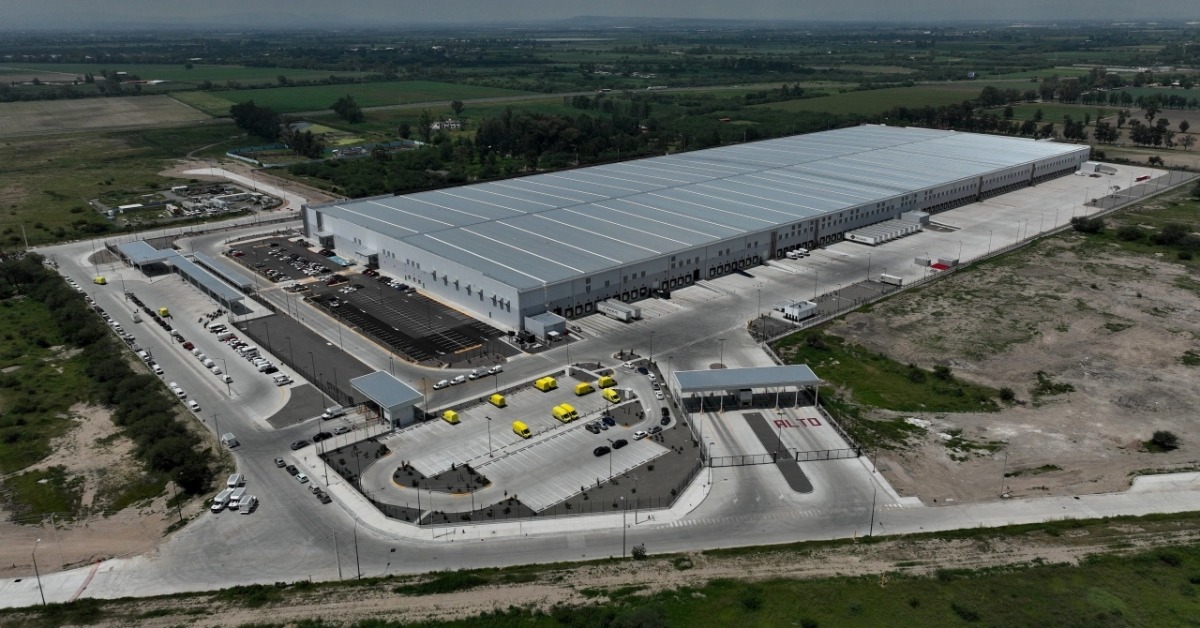
Mexico says the first industrial parks tied to Plan México are no longer just planned projects. They are already operating and ready to receive companies. The announcement points to a broader push to attract nearshoring investment, create jobs, and accelerate factory and logistics expansion. But the number needs context. Operating does not mean full, and capacity is not the same as the number of confirmed tenants. Here is what was announced, why it matters, and what to watch next.
What was announced
Mexico’s private industrial park association says 20 industrial parks linked to Plan México are already in operation. In practical terms, that means each site has at least one tenant already working from the property. These are not empty parcels waiting for permits. The association says the first wave represents more than US$711 million in investment, about 3.5 million square meters of installed capacity, room for roughly 245 companies, and an estimated 62,000 direct jobs. The parks are spread across 10 states, including Nuevo León, Baja California, Chihuahua, Jalisco, and Mexico City. The stated focus is on advanced manufacturing and logistics, especially for sectors such as automotive, aerospace, electronics, and medical devices. That matters because these are the kinds of industries most often tied to cross-border supply chains. It also adds an important detail to the headline. The parks are operating, but they are not described as fully occupied. The announcement is about usable industrial capacity coming online, not a claim that all the promised investment has already landed.
Why these parks matter
For readers outside the business world, an industrial park is more than a cluster of warehouses. It is the basic platform a company needs before it can start producing or moving goods. That includes land, internal roads, utilities, security, and the kind of planning that lets factories or distribution centers open faster. Plan México treats that platform as part of a broader effort to capture relocalization and expand domestic supply chains. The government’s larger plan links industrial infrastructure to higher investment, more local sourcing, and more manufacturing jobs. That helps explain why the new parks are being presented as more than real estate. They are being framed as a tool for economic policy. For expats and retirees who follow Mexico mainly through everyday prices and local development, this is the kind of story that can later show up in less obvious ways. It can affect hiring, trucking traffic, warehouse construction, commercial rents, and pressure on local services in the cities that attract new plants.
What the nearshoring angle really means
The nearshoring angle is central, but it should be read carefully. The push is about making Mexico easier to choose when companies want production closer to the United States market. Ready industrial space helps, but companies also look at power, water, transport links, customs efficiency, labor supply, and regulatory certainty. That is why this announcement matters as a signal, not just as a construction update. Mexico has often faced the challenge of attracting interest faster than it can deliver fully prepared industrial land. By saying these 20 parks already have operating tenants, developers are trying to show the market that some of that gap is being closed. Even so, the number should not be overstated. Capacity for 245 companies is not the same as 245 signed deals. Estimated jobs are not the same as the payrolls already in place. The stronger reading is that Mexico now has more ready-to-use industrial space in key regions, and that gives both domestic firms and foreign manufacturers a faster starting point if they decide to expand.
What comes next
The next question is whether the broader 100-park goal will move from headline to measurable results. The federal plan ties industrial growth to faster investment processing, more local suppliers, and additional jobs in strategic sectors. That gives the government and developers a clear benchmark, but it also creates expectations they must meet. Readers should watch a few practical signals over the coming months. The first is occupancy. A park that opens and fills steadily tells a very different story than one that stays half used. The second is infrastructure outside the park gates, especially power, roads, water, and freight access. The third is whether new operations deepen local supply chains or simply add isolated factories. For now, the takeaway is straightforward. Plan México has moved at least part of its industrial park strategy from paper to active sites. That does not settle the bigger debate about growth, but it does show that the nearshoring pitch is being backed by real, physical space.
With information from Proyectos México / Plan México, Gobierno de México