Mexico’s Navy has brought 20 women into one of its least visible specialties, the team that searches for and neutralizes explosive devices. The move matters on its own, but it also comes as Mexican security forces face a changing threat that includes improvised explosives and even bomb-carrying drones. For many readers outside Mexico, that raises two larger questions. What exactly does this unit do, why does it matter now, and what does this shift say about the Navy itself?
Women enter one of the Navy’s most technical roles
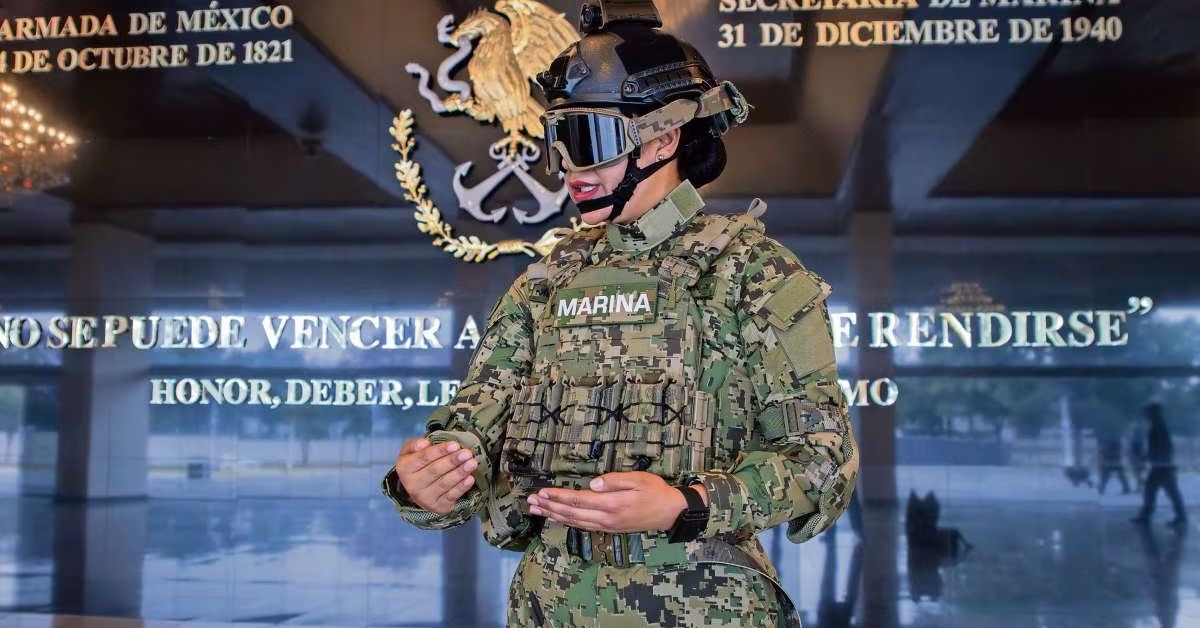
The Mexican Navy has incorporated 20 women into BLONAE, the Secretaría de Marina’s specialized group for the search, location, and neutralization of explosive devices. According to the report, the unit has 75 members. That gives women a visible place inside one of the service’s most demanding operational areas.
The report follows one naval lieutenant whose identity was withheld for security reasons. She describes a job that depends on strength and control. In her account, the work demands physical endurance, mental discipline, and constant training. She also makes clear that the role is not symbolic. The women in the unit do the same work as the men. They work under the same conditions and face the same risks.
That matters because BLONAE is not a ceremonial team. It is called when authorities detect a suspicious package, report a bomb threat, or find an improvised explosive device during a security operation. The unit’s role begins after an area has been cleared and civilians have been moved away. From there, specialists enter, search, assess, and, if necessary, neutralize the threat.
Why the unit matters now
For many international readers, a Navy bomb-disposal unit may sound like a narrow story. In Mexico, it connects to a wider security reality. In recent months, naval personnel from BLONAE have been deployed in Sinaloa to destroy improvised explosive devices found during federal operations. In January, the Navy reported the destruction of seven devices near Palo Blanco, in Culiacán. In February, it reported neutralizing 30 more in Concordia.
Those cases help explain why this is more than an internal personnel story. Mexico’s security forces are dealing with threats that now include improvised explosives in conflict zones. In some cases, they also face explosive devices attached to commercial drones. The Navy itself ran a port-protection exercise in Topolobampo in January. That drill included a simulated threat involving explosives delivered by drones. The message was clear. These are no longer abstract scenarios.
None of that means explosive threats define daily life across Mexico. They do not. But they have become a more visible part of the security picture in certain states where organized crime groups operate with battlefield-style tactics. That is the context that gives this development weight. Adding more trained personnel to a specialized explosives team is a practical move, not only an institutional message.
What BLONAE actually does
The acronym BLONAE stands for Búsqueda, Localización y Neutralización de Artefactos Explosivos. The Navy has described it as an anti-bomb unit built to respond to explosive threats, including improvised devices, with specialized training and equipment. The work is technical, slow, and procedural. It is designed to reduce uncertainty before a device can injure civilians or security personnel.
The lieutenant interviewed in the report described two main protective suits used by the group. One is lighter and supports search work, often alongside canine teams. The other is heavier and used in the neutralization stage. That suit offers more protection, but limits movement and makes breathing harder. It also includes an internal cooling system because of the physical strain involved.
She also outlined the response sequence following a possible threat report. The first step is evacuation. Then the area is secured, and the team begins its search. If a device is confirmed, personnel with the neutralization gear move in. The report also mentions special containment vessels used to handle a device more safely. That kind of detail helps explain why the unit is built around training, repetition, and coordination rather than improvisation.
What the move says about women in the Navy
There is also a broader institutional shift behind this story. Recent Navy messaging says more than 22,000 women now serve in the institution, or about 26 percent of its personnel. They already work across sea, air, and land operations. Even so, the presence of 20 women in BLONAE stands out because it places them in one of the most specialized and hazardous jobs in the force.
That is why this story carries two meanings at once. On one level, it is about representation inside a security institution that has historically been male-dominated. On another, and more important level, it is about capability. The Navy is putting women into a role where precision, judgment, and technical training matter more than old assumptions about who belongs in dangerous work.
For readers watching Mexico from abroad, that may be the clearest takeaway. This is not just a milestone headline about women moving into a new field. It is also a window into how Mexico’s armed forces are adapting to a changing security environment. When explosive threats appear, whether in a building, on a roadside, or in a conflict area, BLONAE is the kind of team that gets sent in after everyone else steps back.