
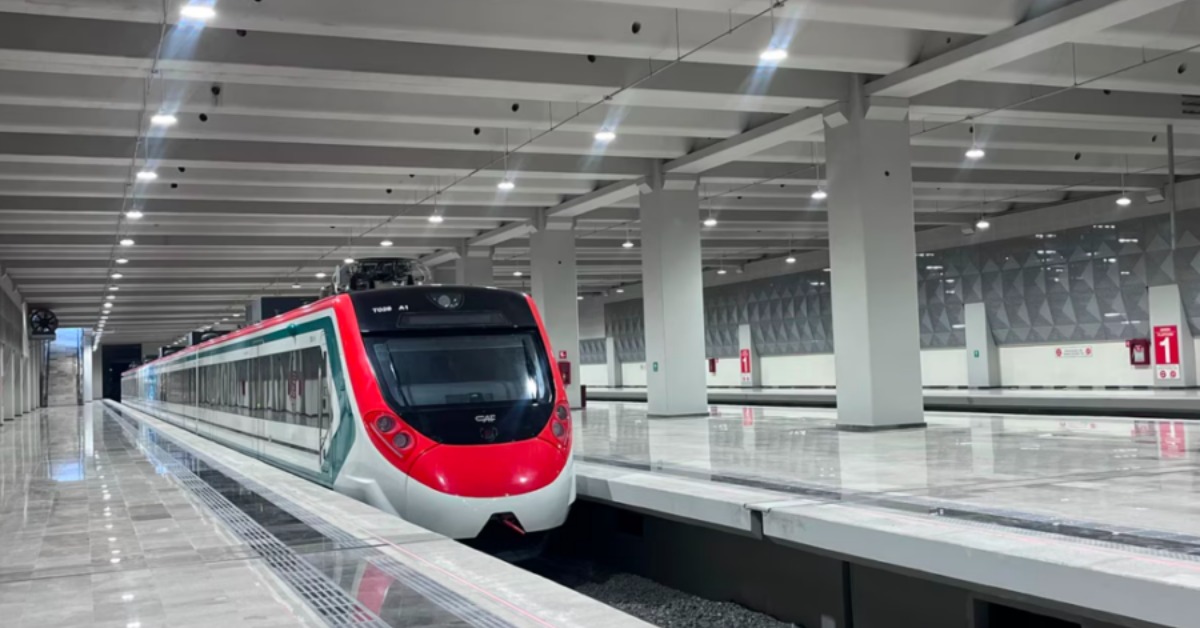
Mexico’s long-promised rail link to AIFA has slipped again, and this time the reason matters as much as the delay itself. Officials now say the line still lacks final certification, even after months of shifting deadlines. For many readers, that may sound like a technical footnote. It is not. The rail project has become a test of whether the government can turn one of its most visible transport promises into a dependable connection before pressure rises from peak travel periods and World Cup 2026 planning. The delay raises a larger question: when is “almost ready” actually ready for passengers?
A delay that changes the story
The newest delay is important because it resets expectations yet again. The government had already moved the opening more than once. First, the line was expected before Holy Week. Then the opening was pushed to after the holiday period. On March 31, officials said there is still no firm date because the rail line has not received the certification needed to begin public operations.
That explanation may frustrate passengers, but it also reveals something useful. This is no longer mainly a construction story. It is now a story about testing, safety approvals, and final readiness. In practical terms, that means the tracks, stations, and trains can look close to finished while the line still remains closed. For travelers, the result is the same. A promised airport connection is still unavailable.
What exactly is being delayed
Part of the confusion stems from how the project is described. Publicly, it is often called the Buenavista-AIFA train because that is the trip most passengers care about. Technically, the new construction is the Lechería-AIFA branch of the existing suburban rail system.
That distinction matters. The current suburban line already runs from Buenavista in Mexico City to Cuautitlán. The new work extends the system from Lechería toward the airport. Once it opens, passengers will be able to leave from Buenavista, continue through the existing corridor, and then connect onto the airport branch. That is why officials speak of a direct city-to-airport trip even though the new segment is not the full route on its own.
The project has been presented as a major improvement in ground access to AIFA, which has remained one of the airport’s biggest practical weaknesses since opening. A rail link is meant to make the airport easier to use not only for residents of the capital, but also for domestic and international visitors who may not know the region well.
Why certification matters more than speed
Rail certification is not a cosmetic step. It is the point where a project must prove that systems work together safely under real operating conditions. That includes the track, signaling, electrification, stations, rolling stock, and operating procedures. A certification delay is different from a delay caused by unfinished concrete or a missing station roof.
That does not make the setback smaller. In some ways, it makes it more revealing. A project can survive bad weather, land disputes, or contractor changes and still recover. Certification delays suggest that the final handoff from construction to operation is not complete. For passengers, that means uncertainty remains even when officials say the opening is only weeks away.
It also explains why recent public messaging has shifted. Earlier explanations focused on timing and final works around the corridor. The latest explanation centers on approval to operate. That is a more decisive hurdle, and it is why no firm opening date was offered on March 31.
A project with a long trail of missed dates
The latest postponement follows a long sequence of revised promises. In 2025, the federal government changed course and moved the project’s completion into military hands after complaining about slow progress under the original private concession framework. That decision was presented as a way to accelerate the work.
From there, the public timeline continued to move. Officials later said a July 2025 opening was planned. That did not happen. By the end of 2025, the target had shifted to the first quarter of 2026. In February 2026, the line was again presented as likely to open before Holy Week. By mid-March, that became after Holy Week. Now, the government says it still needs certification and will provide a new date later.
For international readers, the takeaway is simple. This is not a one-off delay. It is the latest turn in a project that has repeatedly reached the edge of opening without crossing it.
Why the line matters beyond the airport
The rail link matters because it is not just an airport shuttle. It is supposed to plug AIFA into the larger urban transport map. That gives the project significance beyond airline passengers.
If it works as intended, the route should reduce dependence on road travel to the airport, offer a more predictable trip from central Mexico City, and strengthen the logic behind directing more traffic through AIFA. Officials and recent reporting have also framed it as part of broader mobility preparation ahead of the 2026 World Cup, when transport reliability will come under more scrutiny.
That does not mean the entire tournament plan depends on one rail line. But it does mean the project has symbolic weight. The government has treated it as proof that large transport works tied to AIFA can become functional, visible, and useful on time. Every new postponement makes that argument harder to sustain.
What readers should watch next
The next key signal will not be another promise. It will be evidence that the line has cleared the final certification process and is moving from tests to scheduled passenger service. Until that happens, new dates should be treated cautiously.
Readers should also pay attention to how officials describe the opening. If the project debuts in phases or service begins with limited operations, that suggests the government is trying to get the line moving while still managing technical constraints. If, instead, the next announcement comes with confirmed operating details, travel times, and regular service intervals, that would be a stronger sign that the project has finally crossed from political promise to public utility.
For now, the broader picture is clear. The Buenavista-AIFA rail link still exists more as a near-finished promise than a working service. After another delay, the issue is no longer whether the line matters. It is whether the government can deliver it before the window for claiming a timely success closes.