Nearly twelve years after 43 teaching students vanished, the case still turns on paperwork the state says it cannot find. A federal judge has now ordered the army to produce 853 pages of intelligence it previously claimed did not exist. The ruling lands as the president promises another meeting with families, and as a new arrest ties an Iguala official to evidence from the night of the attacks. The question is no longer only what happened in 2014. It is also why the record still will not open.
The archive is still a crime scene
A federal ruling dated February 19, 2026, pushed the Ayotzinapa case back to a basic dispute: records. A judge in Mexico City ordered the army to hand over 853 missing pages of military intelligence. The pages come from the Regional Intelligence Fusion Center known as “Centro,” based in Iguala, in Guerrero. They are reports generated in 2014, during the first phase of the investigation and search. Families of the disappeared students have demanded these pages for years. They argue the file trail can clarify who monitored the students, what was known in real time, and what decisions followed. The military had told courts the pages did not exist. The judge rejected that claim. The order treats gaps in folio numbering as a sign of withholding, not proof of absence. It also holds that the material should not be kept secret as classified information. It frames court-ordered disclosure as part of a right to truth, tied to the continuing search.
The ruling arrived with two developments that keep the case alive in March 2026. Claudia Sheinbaum said she would meet the families again by the end of March. In the same week, federal authorities announced the arrest of Mauro Antonio Mosso Benítez. He was a senior transit official in Iguala and a former state police officer. He faces organized crime charges tied to the 2014 disappearances. Investigators also allege he used a mobile phone linked to one of the students on September 27, 2014. That is a narrow claim, but it points to the chain of custody and device records. Those details matter when most victims’ whereabouts remain unknown. They also matter because they can be tested against logs, archives, and disclosure. The near-term question is simple: Will the state produce the record in a verifiable form? Or will the case continue to move through delayed disclosure and partial access? That choice will shape what families can confirm next.
The disputed pages are from an intelligence system designed to fuse information between agencies. The families’ 2023 amparo petition argued that Secretaría de la Defensa Nacional failed to deliver the full set of 2014 reports. They said the missing sequence matters because it links monitoring, intercepted communications, and early response. The judge accepted a core point: missing folios are not neutral. A discontinuity can signal missing records, not poor filing. That matters in a disappearance case where time-stamped notes can narrow the search window. It also matters for prosecutions, because the strongest evidence is often contemporaneous. The court framed access as part of a right to truth, not a discretionary transparency favor. It said the pages cannot be withheld as confidential or secret when victims’ rights and public interest are at stake. This litigation also sits next to an older warning. In September 2023, a federal tribunal ordered the military to refrain from destroying, deleting, hiding, or removing case-related information. Preservation, in other words, became a judicial command.
How paperwork becomes a shield
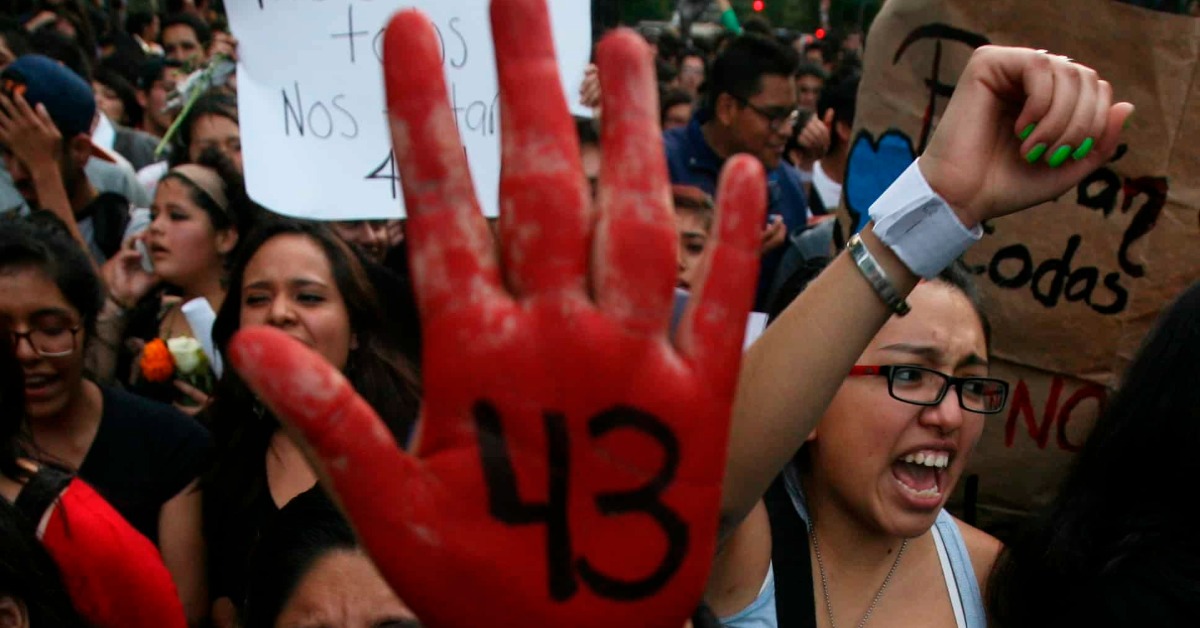
The disappearances occurred on the night of September 26 and early September 27, 2014. Students from Escuela Normal Rural Raúl Isidro Burgos traveled to Iguala in several buses. International experts later described multiple attack scenes and coordinated police action. Six people were killed that night, and dozens were injured. Forty-three students were detained and then forcibly disappeared. Two separate international probes have concluded that the students were killed by organized crime acting in collaboration with the police. A central criminal actor identified in later reporting is Guerreros Unidos. The expert reports also describe prior monitoring of students’ movements by state, federal, and army police. They point to the C-4 coordination system as a space where information circulated between agencies. They also noted that key stretches of C-4 communications were not provided during periods that coincide with major attacks. After more than a decade, the remains of only three of the 43 have been identified. Most families are still waiting for answers that can be corroborated with records.
The early federal narrative relied on a disposal scenario at the Cocula trash dump and on confessions from alleged perpetrators. That account became known as the “historical truth.” It shaped arrests and prosecutions for years. A key challenge came from Grupo Interdisciplinario de Expertos Independientes. The team was created with support from the Inter-American Commission on Human Rights. In its first summary report, the experts commissioned an independent fire assessment. The fire specialist found no evidence supporting the claim that 43 bodies were cremated at the dump on September 27, 2014. The expert also concluded that the minimum fire required could not have occurred there. This did not supply a final answer about the students’ whereabouts. It did something else. It showed how a case can advance while resting on evidence that later collapses. Once that happens, the archive becomes central because it may explain both the crime and the investigation.
Evidence problems did not stop with the fire analysis. They also emerged from how suspects were detained and questioned. A 2018 review by the UN Human Rights Office examined the early phase of the investigation. It found strong grounds to believe some detainees were arbitrarily detained and tortured. It also found that these violations were inadequately investigated and even covered up. This matters for the core question of impunity. If key statements were extracted under coercion, courts can exclude them. That can remove false evidence and protect due process. It can also weaken prosecutions that relied on those statements. When cases collapse in court, the public often learns only that “charges fell apart.” The administrative story is more specific. It is about how evidence was produced, documented, and then defended as reliable. That is why bureaucratic opacity and institutional refusal are not side themes. They can determine whether accountability survives judicial review.
The case shows how persistence becomes procedural. Families have backed their legal actions with Centro de Derechos Humanos Miguel Agustín Pro Juárez and other advocates. When administrative channels stalled, they went to the Poder Judicial de la Federación. Monitoring by the Inter-American system has linked progress to full access to military information. It has been said that advances slowed when that information was not turned over. It also reported that international experts ended their work in 2023. They cited repeated denials of requested files and limits on interviews with armed forces personnel. Those findings frame today’s dispute over missing pages as part of a longer pattern. The state can promise cooperation while still controlling what counts as the record. The coordination bodies created to unlock the investigation can also lose authority. One example is Comisión para la Verdad y Acceso a la Justicia del Caso Ayotzinapa. When those channels stall, litigation becomes the tool that forces the archive open.
Why the case stays current
The next weeks will test whether the administration can stop being a barrier. The court order requires the army to produce the 853 pages in full. That compliance is harder to measure than it sounds. Completeness depends on an inventory controlled by the same institution that denied the pages existed. Families will also judge whether the material is readable, dated, and usable for searches and prosecutions. In parallel, the Fiscalía General de la República continues investigations into the disappearances. Secretaría de Seguridad y Protección Ciudadana has described the arrest in Iguala as part of that effort. A promised meeting with families by the end of March sets a near-term political deadline. For expats living in Mexico, the case can read like an emblem. In practice, it is also a manual for how impunity can persist through bureaucratic opacity, missing records, and institutional refusal. Until the state can show its work, the archive remains part of the case.