Cash still runs many daily transactions in Mexico, including at hard-to-avoid places like toll booths and fuel stations. Banking leaders now say those “high-volume” locations are a priority for shifting payments to digital rails, with new operating rules meant to make transfers easier for users and simpler for banks to implement. The central question is not whether digital payments will grow, but whether policy and infrastructure can reduce the friction that keeps people reaching for cash—especially outside major cities, and for residents who rely on cash for budgeting, privacy, or limited connectivity.
What is being proposed
A push to cut cash use is being framed as a joint effort between the banking sector and the federal government, with a near-term focus on gas stations and toll booths. Asociación de Bancos de México president Emilio Romano described the first practical step as aligning the operating rules for CoDi and DiMo under Banco de México oversight, with the goal of making those tools easier to use and easier for institutions to roll out consistently.
The same discussion links payment digitization to broader government objectives: more formal transactions, clearer records, and easier access to credit for small businesses once payments leave the cash economy. In that framing, payment digitization is not presented as a standalone fintech project. It is positioned as a way to reduce “frictions” in opening and using accounts and to increase traceability of money flows. BBVA México CEO Eduardo Osuna is quoted praising Claudia Sheinbaum’s administration for emphasizing economic digitalization, and pointing to government collections and everyday services as leverage points for change.
Why cash remains dominant despite rising account access
The strongest recent national snapshot of payment habits still shows cash as the default for most purchases. In 2024, cash was the most frequent payment method for 85.2% of purchases of 500 pesos or less, and for 73.5% of purchases of 501 pesos or more. Over the prior three-year period, those cash shares fell, but remained high: from 90.1% to 85.2% in small purchases, and from 78.7% to 73.5% in larger purchases.
Those figures sit alongside evidence that financial inclusion has expanded, though unevenly. INEGI’s 2024 ENIF results report that 76.5% of people ages 18–70 had at least one formal financial product (such as an account, credit, insurance, or retirement account). The same report puts formal savings account ownership at 63.0% for that age group.
For the policy goal of shrinking cash use, the implication is straightforward: account access is no longer the only binding constraint. The next constraints are habit, perceived safety, acceptance infrastructure, and usability at the point of sale. That matters because the government-and-bank strategy is explicitly targeting routine, high-frequency spending locations. Those are places where people tend to pay quickly, often in small amounts, and where cash has historically been convenient.
CoDi and DiMo reveal the rails and the adoption gap
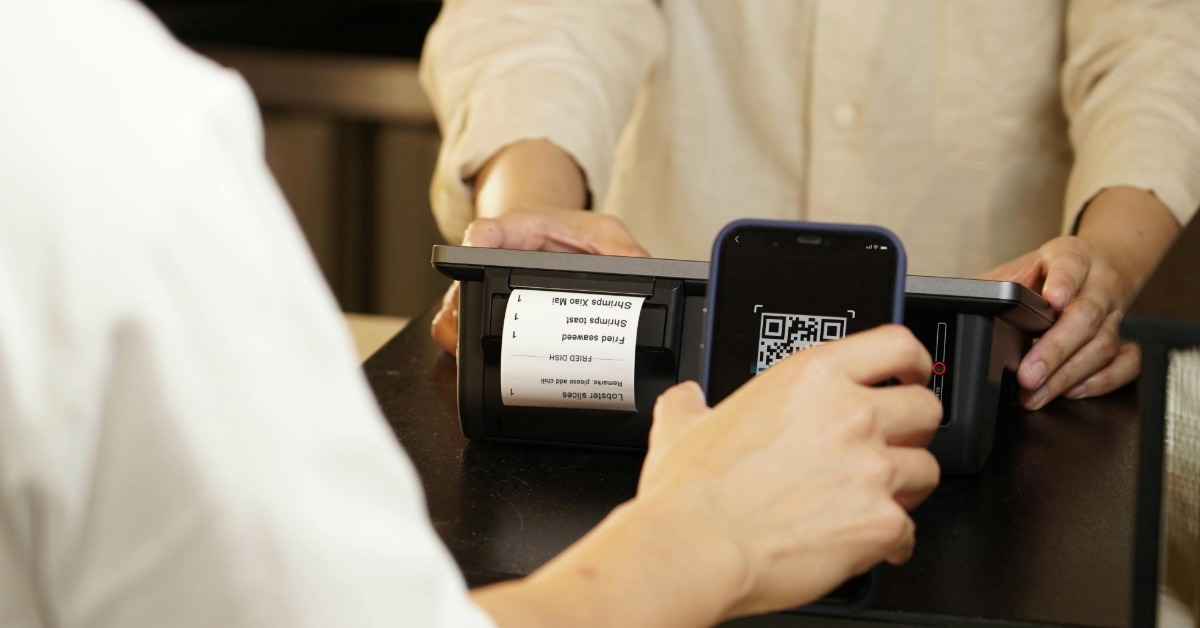
CoDi was designed as a central-bank-backed option for moving money between deposit accounts using existing transfer infrastructure (SPEI rails), with payments initiated via mobile devices and a “request to pay” flow. In a 2019 presentation introducing CoDi, Banco de México describes it as enabling real-time electronic transfers between accounts, using the existing payments infrastructure, and emphasizing security and efficiency. The same presentation highlights “no cost” as a design objective for both the payer and the recipient, alongside immediate settlement.
A recurring criticism of QR-based payments in Mexico has been limited everyday use, not just limited awareness. ENIF 2024 indicates that 38.0% of adults reported hearing of CoDi, and among those who knew it, 12.8% reported using it (up from 8.3% in 2021). These are not account-level administrative statistics; they are survey-based measures of recognition and self-reported use. Still, they help explain why banking leaders are calling for simpler operating rules and a more uniform user experience.
On the “DiMo” side, the central bank’s own description is explicit about intended ease of use. In a December 2024 press release, Banco de México says DiMo is a payment scheme it develops and operates, made available to SPEI participants in February 2023. It describes DiMo as allowing anyone with a deposit account to send and receive transfers using a mobile number linked to that account via their bank’s app. The same release reports that, as of the end of November 2024, 21 financial institutions participated, and more than 11 million accounts were linked. ENIF 2024, however, finds lower public familiarity: 18.5% of adults reported knowing DiMo, and among those who knew it, 6.8% reported using it.
Why toll roads and gas stations are first targets
The toll-road focus is partly about volume and operational simplicity: fewer payment types can mean faster throughput. It is also about aligning with a separate, ongoing modernization agenda in federal toll collection. A June 2025 report describes Caminos y Puentes Federales as moving toward ending cash payments in federal highway toll booths and replacing them with electronic tag-based collection, while keeping only limited cash lanes during the transition. A later report in November 2025 describes government efforts to expand distribution of the IAVE tag and quotes an official describing a program that would cover much of 2026, with the intention that the tag becomes the main payment method by late September 2026.
For residents and expats who drive, toll digitization is not only about paying differently. It can change trip planning. A CAPUFE telepeaje procedures manual defines a telepeaje user as someone whose tag is associated with a valid electronic payment method, and it explicitly distinguishes prepaid and postpaid users. In practice, that highlights a likely transition pattern: cash lanes may persist for a time, but habitual users are pushed toward tags and electronic account management.
Gas stations are a different case: they are already “banked” in the sense that many customers carry cards, and stations often have payment terminals. But the incentives around fuel purchases can also be fiscal. Mexico’s income tax law includes a specific rule for fuel: for the acquisition of fuels for vehicles, payment must be made in the form specified in the prior paragraph, even when the amount does not exceed 2,000 pesos, tying deductibility to non-cash payment methods and formal documentation. That legal architecture makes fuel a natural early target for “formalization-by-payment,” especially for businesses, contractors, and fleets that treat fuel as a deductible operating cost.
Implementation risks and consumer impacts
The bank-and-government goal of “less cash” is operationally harder than launching a new payment feature. It requires reliability at the point of payment, consumer confidence, and predictable dispute handling. It also intersects with fraud controls. A June 2025 regulatory modification published in Diario Oficial de la Federación strengthens requirements around the “Monto Transaccional del Usuario” (MTU). It requires institutions to allow users to modify MTU via electronic channels, and it requires additional authentication when an operation exceeds the user’s MTU, including secure alerts and confirmation steps when MTU is increased via non-presential electronic means.
From a policy perspective, the tradeoff is visible. Stronger authentication can reduce losses from account takeover and unauthorized transfers. But every added step can also reduce adoption of instant payments, particularly for everyday purchases where speed is the selling point. That tension helps explain why banking leaders are pressing for “simpler and friendlier” operating rules at the CoDi/DiMo level, while regulators push for tighter controls.
For expat residents, the immediate consumer implication is not ideological; it is practical. Both CoDi and DiMo are anchored in Mexico-based deposit accounts and bank apps, and DiMo explicitly requires that a mobile number be linked to an account through the user’s financial institution. That means expats who rely mainly on foreign accounts may not be able to use these systems directly, even if QR payments become more common. Likewise, if toll systems continue shifting toward tags, travelers who previously relied on cash may need to adapt, especially if cash-only lanes become limited or inconsistent by location. ENIF’s regional contrasts—such as heavy cash use outside Mexico City and lower knowledge of CoDi/DiMo in the south—also signal that adoption will likely be uneven, at least in the near term.