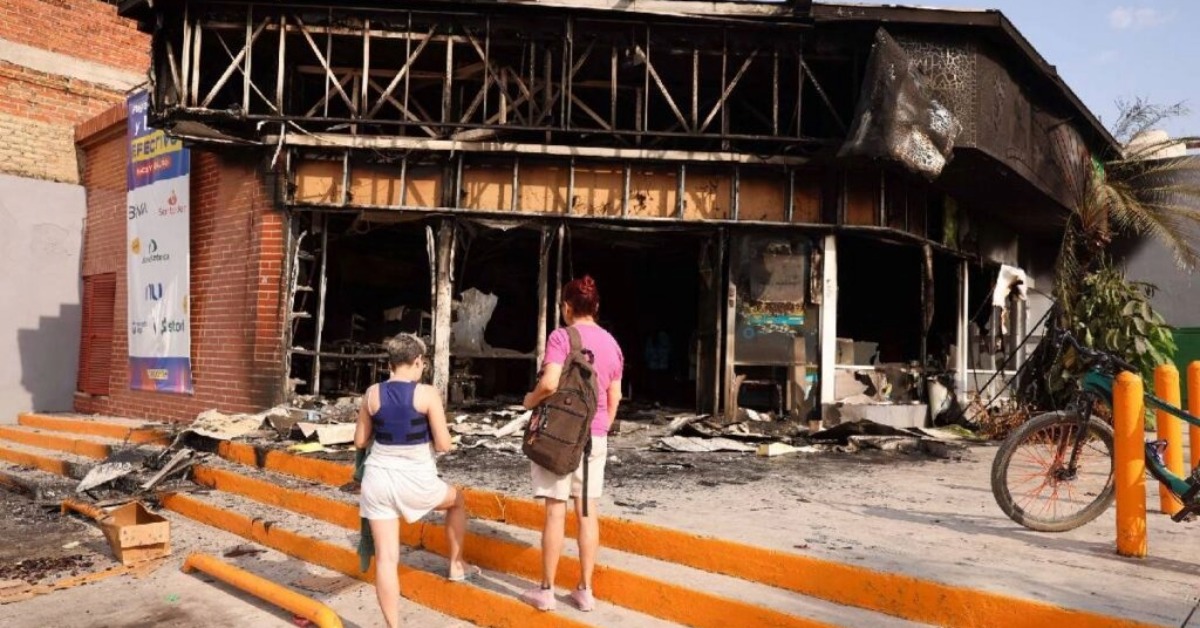
Businesses are starting to count the cost of the Feb 22 unrest. Roadblocks and precautionary closures followed the killing of CJNG leader Nemesio Oseguera Cervantes, known as El Mencho. A national business federation says affiliated firms may have lost up to 2 billion pesos. The estimate covers lost sales and reported damage from Sunday through midday Monday. The figure is preliminary, and local chambers are still compiling reports. The next update may show which sectors took the largest hit.
Mexican businesses are reporting losses of up to 2 billion pesos after violence on Feb 22. The unrest followed the reported killing of CJNG leader Nemesio Oseguera Cervantes, known as El Mencho. CJNG is short for Cártel Jalisco Nueva Generación. Authorities said he died during a federal operation in Tapalpa, Jalisco. The estimate comes from Concanaco Servytur, a national federation for commerce, services, and tourism chambers. It places losses between 1.5 and 2 billion pesos. The federation says the tally covers affiliated businesses in 24 states. It includes material damage and lost sales from precautionary closures. The disruption was concentrated from Sunday through midday Monday. Authorities reported roadblocks and vehicle fires on highways and city routes. That reduced mobility for workers and interrupted deliveries. For customers, closures meant fewer open stores and delayed services. For smaller firms, one lost day can strain payroll and suppliers. Concanaco also highlighted ongoing costs tied to security and extortion. Concanaco said it plans a fuller update on Feb 25. Many businesses reopened as conditions stabilized, but the estimate remains preliminary.
What the estimate includes
Concanaco’s initial range is built from reports by local chambers in the affected states. It combines damage to premises, vehicles, and merchandise with revenue that did not arrive during closures. The federation said transport and logistics interruptions were a key driver. Even when a shop was not attacked, it could not open if the staff could not arrive. Retailers also reported delayed restocking when highways were blocked. The estimate does not separate losses by sector, but commerce and services typically show immediate effects. Tourism operators also faced cancellations when travel plans changed. Concanaco said it will release updated figures as it receives more data. It also said the crackdown could reduce extortion costs over time. That longer‑term claim remains a projection, not a measured saving. For now, the clearest number is the short‑term hit. Businesses say it was concentrated in a single weekend, but it spread across states.
Where the disruption hit businesses
Federal authorities counted more than 250 roadblocks across 20 states on Feb 22. Officials described many incidents as coordinated narcobloqueos, or criminal roadblocks. A consolidated operational report put the number at 252, with Jalisco the most affected. Roadblocks are often set by burning vehicles to cut movement and pressure security forces. For businesses, the same tactic stops trucks, staff, and customers. Airports were also affected. Close to 300 flights were canceled in Guadalajara, Puerto Vallarta, and Tepic, according to industry figures. Stores and fuel stations in several cities shut early as a precaution. Schools were also suspended in some areas, which limited staffing. In León, a local commerce chamber estimated roughly 500 million pesos in lost economic activity after widespread closures. In Jalisco, an industrial council reported about 100 million pesos in losses tied to suspended shifts. These are partial snapshots, not a national total. They show how costs build quickly when transport links and routine operations break.
Normalization, and what remains uncertain
By Monday and Tuesday, federal and state officials said most blockades had been cleared, and vehicles were being removed. The president said schools and flights in Jalisco and Michoacán were expected to return to normal schedules. The US Embassy in Mexico later said it was no longer urging citizens to shelter at home. Many chains and independent shops began reopening, often with reduced hours. Officials also warned about false reports spreading online. The remaining business impact will hinge on repairs, inventory replacement, and delayed payments. Some losses will appear later through canceled contracts and spoiled goods. Concanaco’s range does not capture every cost, such as extra security or higher transport fees. It also may shift as more claims and reports are filed. The federation has signaled it will update numbers as local chambers confirm damage. For expats, day‑to‑day impact often tracks the pace of restored transport and deliveries.
With information from El Sol de México, La Jornada, N+, AP News, El Financiero