With Spring Break weeks away, Los Cabos business leaders want one clear plan for street vending. They say unpermitted stalls have multiplied in the Marina de Cabo San Lucas and along Playa El Médano. The issue is not just permits. It is also who has authority inside federal port areas, and how enforcement is coordinated. Meetings this week set a new tone, but the key question remains: what changes before the first student groups arrive?
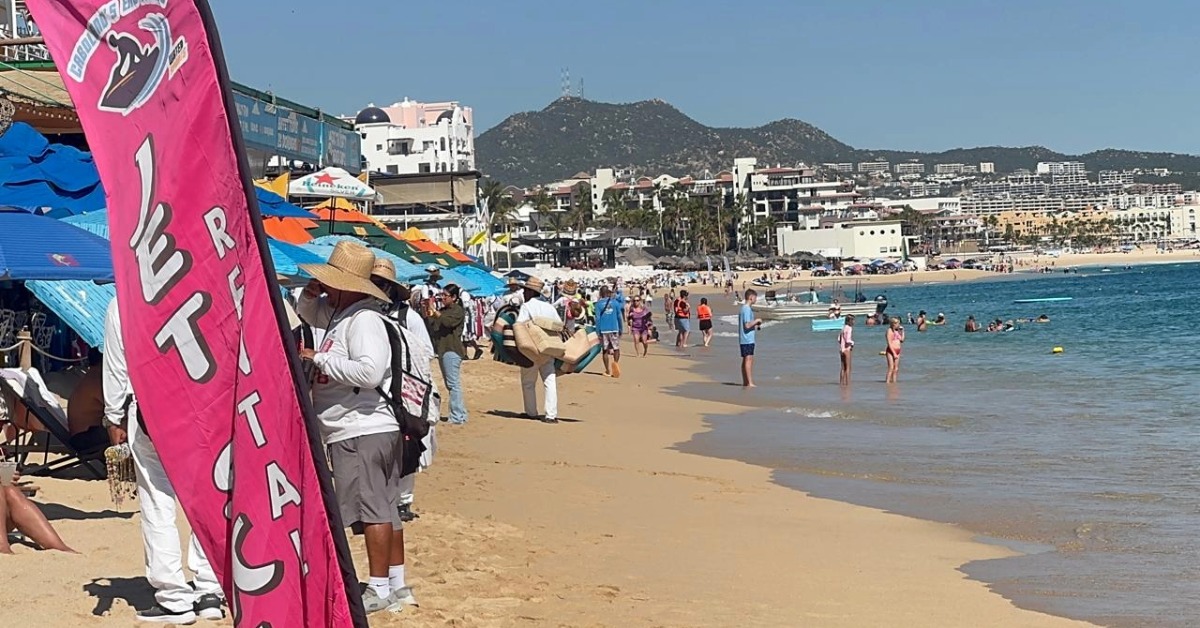
Local business leaders in Los Cabos are pressing authorities to control comercio informal before Spring Break. Their focus is on unpermitted vending in tourist zones, including the Marina de Cabo San Lucas and nearby beach corridors. The request follows months of permit checks and intermittent removals. Businesses say those steps have not produced lasting changes. They argue uneven enforcement opens space for vendors who arrive briefly and relocate fast. They also argue that it leaves permitted sellers and established businesses under different rules. Business leaders say the issue is most visible inside the marina complex. They want more inspectors during peak hours. They also want consistent rules across municipal and federal areas. Municipal officials have said they are coordinating with business groups on Spring Break planning. For many residents and expats, the debate appears as blocked walkways and disputes over space. For local government, it raises questions about pedestrian flow and liability in crowded areas. With visitor numbers expected to rise in March, both sides want clear lines and predictable enforcement.
Business council calls for one enforcement plan
On February 25, 2026, the Consejo Coordinador de Los Cabos convened a coordination table on vendedores sin permiso. The group said the pressure point is Cabo San Lucas, where vending has spread into mixed jurisdictions. Business leaders proposed a joint strategy with the Secretaría de Marina. They also asked to involve ASIPONA in areas under federal control. ASIPONA is the federal port administrator. They described federal zones as difficult to police without coordination. They said municipal and federal officials show willingness, but results have been limited. A day earlier, the Mesa de Comercio Informal inspected the Marina de Cabo San Lucas. Participants reported a high number of vendors operating without permits. The business council’s president, Julio Castillo Gómez, said they counted 20 semi-fixed stalls. He said they were operating without contracts. ASIPONA officials indicated those stalls lacked the paperwork to remain inside the port precinct. They argue the time window is narrow, with Spring Break and Semana Santa approaching. Business leaders now want a plan that shows visible enforcement before March.
Why the Marina’s status matters
The enforcement question turns on geography. Much of the Marina de Cabo San Lucas sits inside a federal port precinct. Access and security rules apply there. Business leaders say this shifts the operational role to ASIPONA and the Secretaría de Marina. At the same time, Los Cabos uses municipal rules to regulate commercial activity in public spaces. A local regulation adopted in 2008 covers streets, beaches, and the federal maritime-terrestrial zone. It also covers reclaimed land within the municipality. It distinguishes between ambulant vending, vehicle-based vending, and fixed or semi-fixed setups. The stated aims include public order, pedestrian flow, and vehicle circulation. They also include urban image and treatment of visitors. In practice, inspectors can ask for permits and verify assigned spaces. They can also remove structures that block access. The business sector’s argument is that the legal framework exists, but coordination does not. Officials have pointed to limited personnel and the ease with which temporary sellers can return.
What officials say is already happening
Municipal officials say they are increasing checks in the same corridors flagged by business leaders. In November 2025, Cabo San Lucas officials confirmed about 300 informal vendors in the Marina and Playa El Médano. The same operation cited 698 vendors on the municipal registry. In January 2026, authorities reported renewed supervision in both zones. They said inspectors verified permits for ambulant sellers and established businesses. Officials said the goal is to avoid blocked entrances and docks while keeping commercial spaces distributed. Officials also said they are supervising tianguis and other public areas. The municipal government has framed enforcement as an effort to regularize work, not only remove vendors. In a recent municipal briefing, Inspección Fiscal said it offers pathways to formalization. It also mentioned new designated spaces alongside inspections. The briefing invited informal sellers to visit the Brisas del Pacífico office in Cabo San Lucas. The stated aim was to begin a regularization process.
What to watch in the coming weeks
For expats and long-term residents, the next few weeks may bring more visible enforcement in the tourist core. Business leaders are asking for an approach that separates permitted vendors from vendedores sin permiso, instead of blanket sweeps. They also want enforcement that is consistent across the boardwalk, the marina entrances, and adjacent streets. That would reduce the practice of shifting vendors from one zone to the next. It could also reduce disputes over space during peak visitor hours. Authorities have signaled that the marina will be treated as a security installation. That may justify faster removals of semi-fixed structures. At the same time, municipal officials have emphasized regularization options. That suggests enforcement may be paired with outreach. The unresolved issue is coordination and measurement. Business leaders have said they want timelines, staffing plans, and results that can be tracked. With Spring Break approaching, any agreement will be judged where people actually walk.
With information from El Sudcaliforniano, Tribuna de México, H. XV Ayuntamiento de Los Cabos