A group wedding on the Chapala waterfront might sound like a simple community feature. It was that, but not only that. The ceremony showed how local governments use public rituals to formalize family life and lower barriers to civil marriage. In a lakeside municipality known abroad for Ajijic and its foreign-resident community, the event also raised a useful question. Who is public space for? That is why this softer story matters.
A lakeside ceremony with legal weight
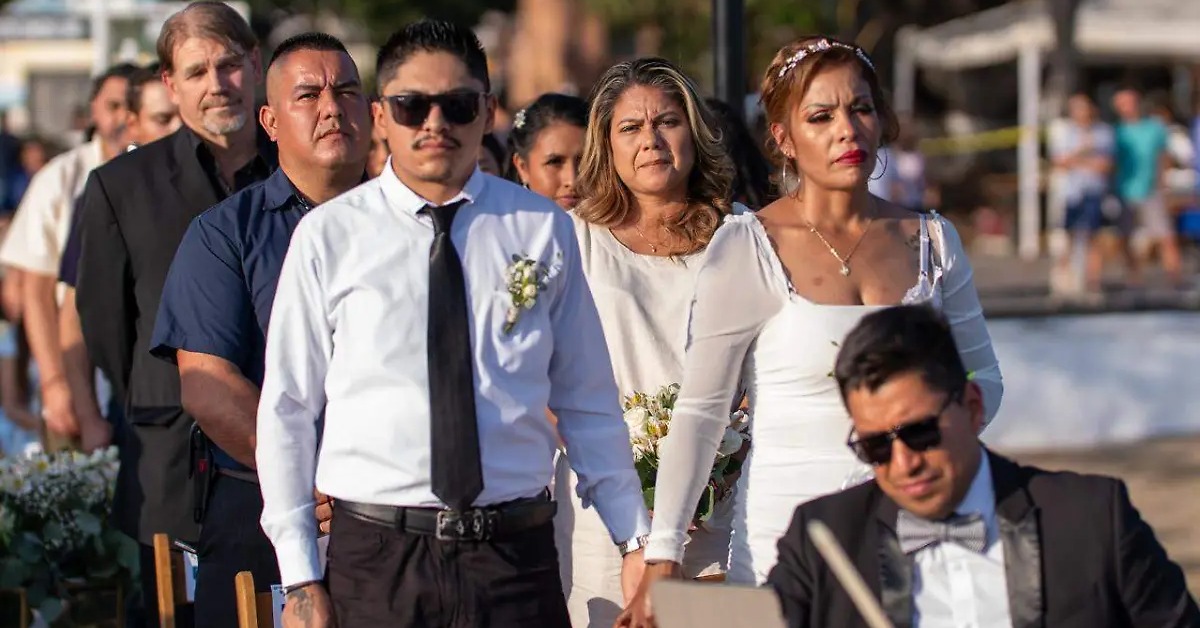
Chapala turned part of its waterfront into a wedding venue over the weekend. In a free civil ceremony on the Chapala malecón, 21 couples formalized their unions as relatives gathered by the lake. The ceremony was led by Mayor Alejandro Aguirre Curiel under the municipal program “En Chapala, sí acepto.” Music, photographs, and the sunset setting gave the event a festive feel. But the ceremony also carried legal weight. It was a public reminder that civil marriage in Mexico is not only symbolic.
That public setting mattered. According to local reports, the couples married at the Rinconcito de Amor on the malecón, then continued with cake, mariachi, photographs, and fireworks. Read one way, the scene was a simple community celebration. Read another; it was a statement about how Chapala wants to stage family life in public. The town did not tuck the marriages into an office. It placed them in one of its best-known shared spaces, beside the lake, in front of families and visitors.
Why collective weddings matter
For readers outside Mexico, collective weddings can sound unusual. In practice, they are a familiar public-service format. Civil registries use group ceremonies to help couples regularize their marital status and secure a formal civil record. The public format also gives governments a way to lower costs, simplify scheduling, and turn paperwork into a recognizable community event. That helps explain why these ceremonies keep appearing in towns and cities across the country.
In Chapala, the free format is important. A regular civil marriage still involves paperwork and fees under ordinary procedures. When a municipality absorbs some of that cost or simplifies the process, the barrier to marriage drops. Some couples may have planned to marry for years. Others may simply act when the state makes it easier. Either way, the result is the same. A private relationship becomes part of the public record.
What it says about Chapala and Ajijic
This story lands differently in the Lake Chapala–Ajijic area than it would elsewhere. Many foreign residents know Ajijic better than Chapala City Hall. But Ajijic is one of the delegations within the Chapala municipality. That means a ceremony staged by the municipal government on the waterfront is not just a downtown event. It is part of how local government presents itself to the broader lakeside community.
The choice of the malecón adds another layer. State officials recently described the Chapala waterfront as part of a broader plan to strengthen it as a pedestrian and recreational corridor. A mass wedding fits that image. It presents the waterfront as a civic space for residents and families, not only as a scenic stop for weekend visitors. In that sense, the location did more than frame the photos. It helped carry the message.
More than a feel-good local story
This is not a hard-news story in the usual sense. There was no policy clash, no crime scene, and no major budget announcement. Even so, softer civic stories can still be revealing. Chapala chose to place a legal rite in open view and wrap it in celebration. That says something about how the town wants to be seen and how it wants public space to function.
For international readers around the lake, that context matters. The area is often described in terms of retirement, tourism, and lifestyle. Stories like this add another layer. They show the municipal institutions that still shape daily life around the lake. Behind the music and the sunset, this was routine government work. It just unfolded in public, beside the water, in a way that made the legal act visible to the whole community.