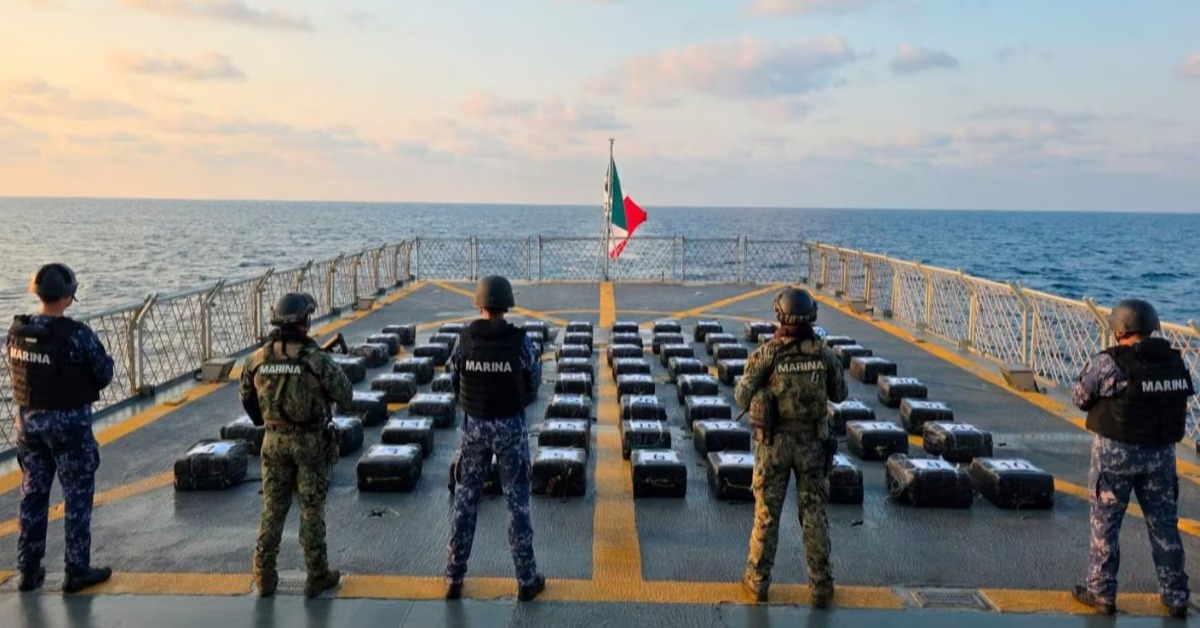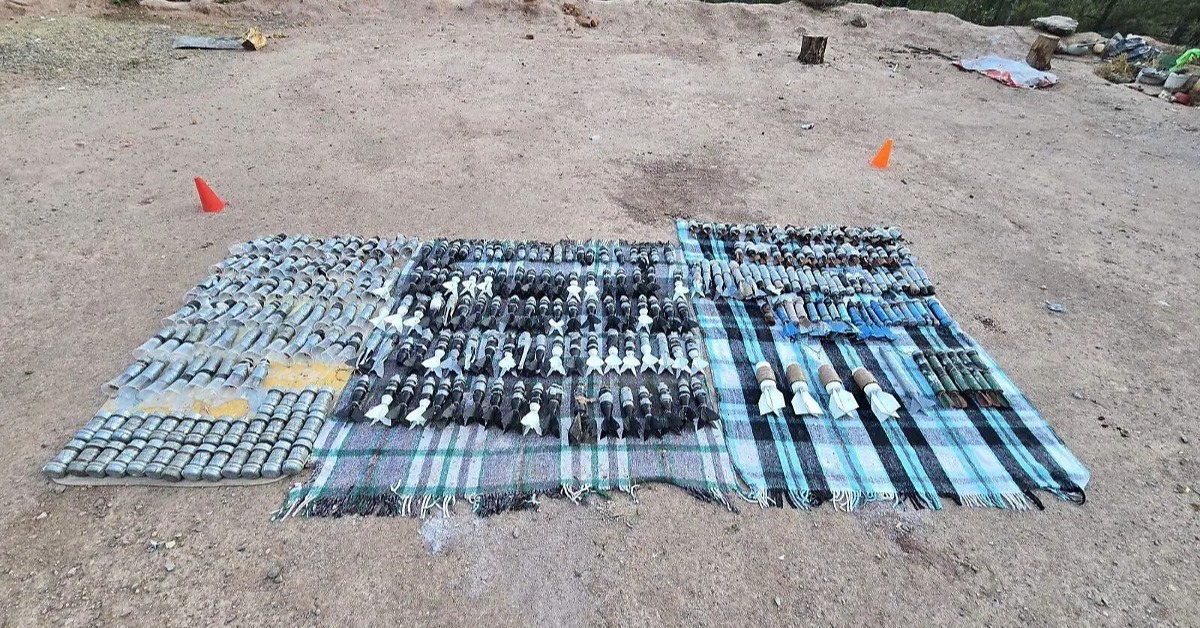
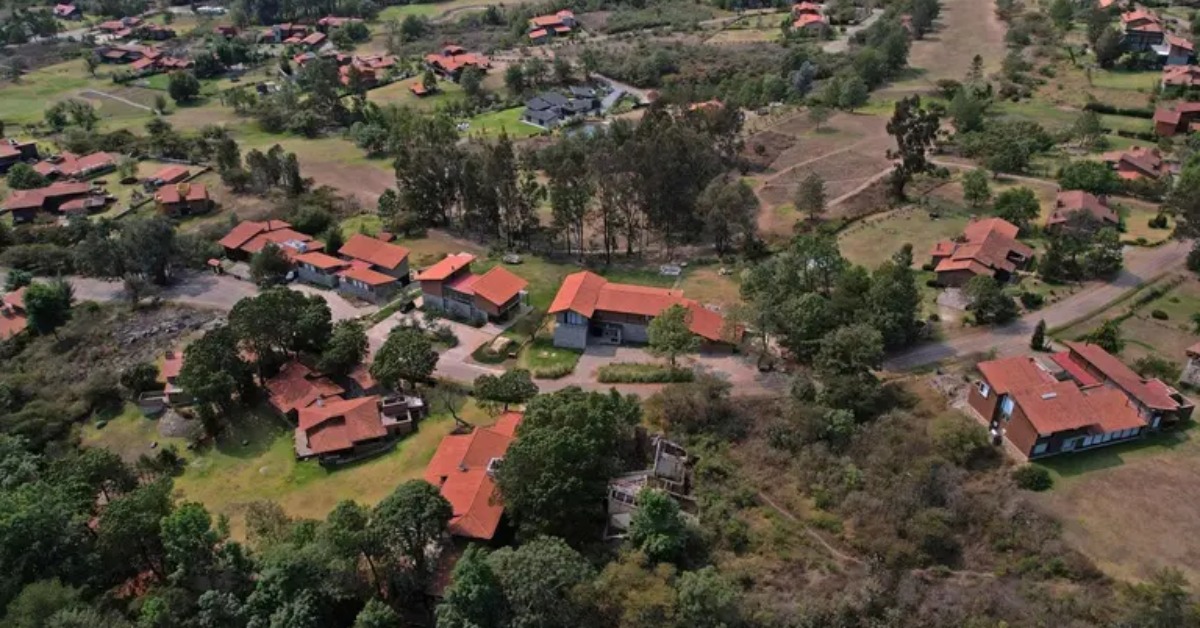
A major cartel operation in Jalisco has taken an unexpected turn. Federal prosecutors now say the properties targeted in the raid against El Mencho were not secured immediately, and unauthorized people entered before the official searches. That raises questions about what evidence can hold up in court, what may now be disputed, and whether one of Mexico’s most important security cases of the year could be weakened by a basic failure at the scene.
FGR says the scene was not secured immediately
Mexico’s Attorney General’s Office, or FGR, says the properties linked to the February 22 operation in Tapalpa, Jalisco, were not secured immediately because there were no minimum safety conditions for ministerial and forensic personnel. According to the federal account, investigators moved later, after conditions in the area had stabilized and a judge authorized searches of six properties. By then, the agency says, unauthorized people had already entered the site, creating a high probability that the scene had been altered.
That admission matters because the Tapalpa operation was not treated as an ordinary raid. It was one of the most important blows delivered this year against the Cártel Jalisco Nueva Generación, or CJNG, and the public fallout was immediate. In the days after the operation, images, documents, and descriptions of alleged evidence spread widely. The new FGR statement now puts a legal question mark over some of that material. The agency says it cannot be sure that publicly described items were preserved under proper forensic protocol, or even confirm that everything later attributed to the site was there in the same condition before outsiders entered.
Why this is a bigger problem than it sounds
For many readers outside Mexico, the key phrase here is chain of custody. In simple terms, that is the documented path evidence follows from the moment it is found until it is presented in a criminal case. Authorities are expected to record where an item was found, who handled it, how it was packaged, where it was stored, and when it changed hands. That process is meant to protect the integrity of the evidence and prevent later arguments that something was planted, moved, swapped, or contaminated.
In a case as high-profile as the Tapalpa operation, that record matters as much as the evidence itself. If defense lawyers can show that the scene was exposed and that unauthorized people entered before the official search, they gain room to challenge the reliability of whatever prosecutors say they found there. That does not automatically end the case. Under Mexico’s criminal procedure code, altered evidence does not instantly lose all value. A court can still consider it if prosecutors show it remains reliable and support it with other proof. But the FGR admission makes that task harder, especially for any evidence tied directly to those properties.
What happened in Tapalpa
The Tapalpa operation took place on February 22, after federal authorities said they confirmed the presence of El Mencho in the area. The military has said the mission was planned as a capture operation, not an execution. Authorities later said the encounter turned violent and ended with Oseguera gravely wounded after trying to flee. Officials subsequently reported that he died after being removed from the scene.
The broader context also helps explain why the case drew so much attention. Federal authorities have said the operation followed intelligence indicating that a trusted CJNG contact moved one of El Mencho’s romantic partners to Tapalpa. That detail became more important again on March 15, when federal forces detained José “N,” known as “El Pepe,” whom authorities describe as a logistics operator tied to that movement. His arrest renewed focus on how the raid came together. The FGR’s contamination warning, issued the next day, shifted attention from the operation itself to the handling of the aftermath.
What may now be in doubt
The most immediate question is not whether the Tapalpa operation happened. That is not in dispute. The question is whether specific items associated with the properties can be presented later with the same strength prosecutors might have claimed at the start. The FGR says that the unauthorized entry means it cannot establish with certainty whether publicly described objects were preserved in accordance with legal and forensic rules. That is a serious concession in a case that had already generated intense public interest because of alleged records and other material said to be found at the site.
This distinction is important. Publicly shocking material can shape headlines and political narratives. Court-quality evidence has to meet a different standard. A dramatic object, a document, or an alleged ledger may be powerful in the public conversation, but its legal value depends on whether prosecutors can show exactly where it came from and how it was preserved. Once that trail becomes unclear, every later step becomes more vulnerable to challenge. In practical terms, that means the Tapalpa case may now depend less on what the public saw after the raid and more on whatever investigators can prove through controlled seizures, forensic work, intelligence records, witness testimony, and other independently supported evidence.
Why the FGR opened an internal inquiry
The FGR says it has opened an investigation to determine whether any public servant committed an irregularity by failing to preserve the scene. That is a notable part of the story. It means the agency is not only acknowledging a possible forensic problem. It is also raising the possibility that the breakdown was preventable and may involve official responsibility.
That internal inquiry matters for two reasons. First, it could shape how much confidence courts place in the site’s handling. Second, it affects public credibility. The Tapalpa operation was presented as a major state success against a powerful cartel. If the government can carry out a complex armed operation but fails to secure the scene afterward, it risks turning a strategic win into a procedural vulnerability. In organized crime cases, those vulnerabilities can matter for years, especially when prosecutors later try to use one case to support wider investigations into money, networks, corruption or accomplices.
What comes next
The contamination issue does not erase the larger federal case around CJNG activities, nor does it automatically invalidate every piece of evidence tied to the operation. Authorities may still rely on other lines of proof, including intelligence used before the raid, legally obtained forensic results, later court-authorized searches, testimony, communications records, and evidence collected under clearer controls. But the FGR has now made clear that at least part of the Tapalpa scene may not meet the standard the public expected after such a consequential operation.
For international readers, this is the real takeaway. The Tapalpa raid may remain a major security milestone, but the legal afterlife of that operation is now more complicated. In high-profile organized crime cases, success is measured twice. First, in the field. Then, in court. The FGR’s latest statement suggests that those two things may not align as neatly in Tapalpa as the early headlines implied.