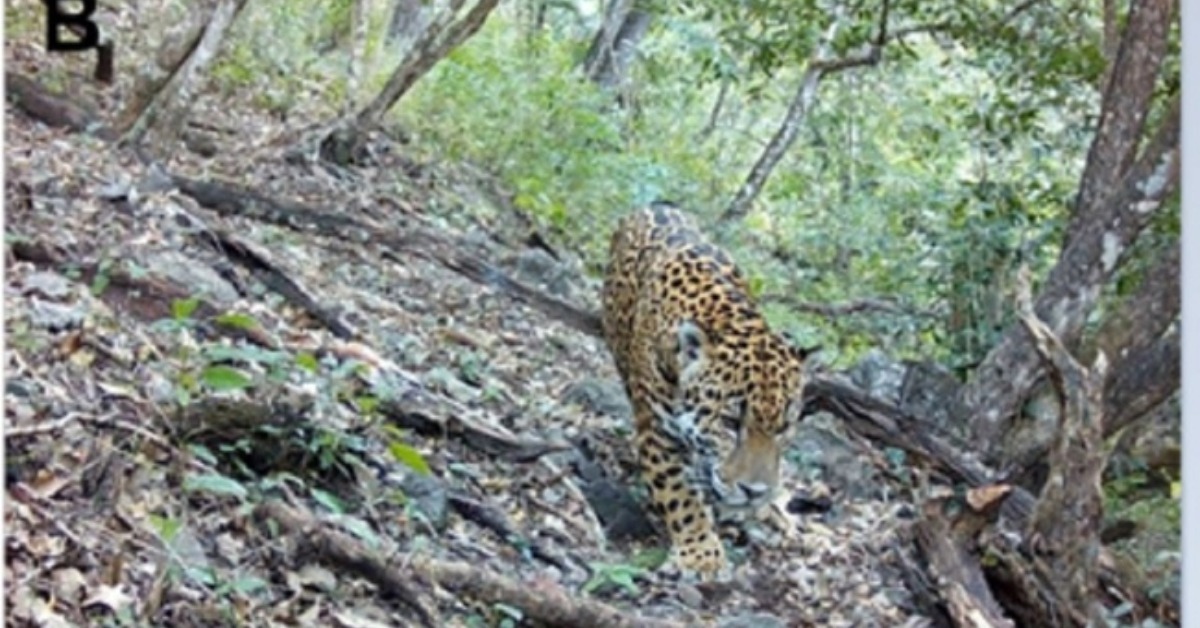
A jaguar image from Guanajuato is doing more than surprise wildlife watchers. The official confirmation gives Sierra Gorda an unusual distinction: it now has records of all six wildcat species found in Mexico. That matters because jaguars do not easily move through damaged landscapes. The finding raises broader questions about habitat corridors, conservation priorities, and what a single camera-trap record can reveal about a part of central Mexico that many people have never associated with big cats.
A new official record
Conservation authorities have formally confirmed the first official jaguar record in the Sierra Gorda Biosphere Reserve of Guanajuato. The confirmation is based on camera-trap evidence gathered during fieldwork carried out between August 2024 and May 2025. The project was led by biologist Juan Felipe Charre-Medellín and collaborators, with support from community monitors. For Guanajuato, the record matters far beyond one image. It changes the official wildlife map of a reserve that already held records of several other elusive cats.
With the jaguar now documented, the reserve has records of all six wildcat species found in Mexico. That list includes the ocelot, tigrillo, jaguarundi, lince, puma, and now the jaguar. In practical terms, the finding gives conservation officials a stronger case for treating Sierra Gorda as a key wildlife landscape rather than just a scenic protected area. It also gives international readers useful context. Big-cat conservation in Mexico is not limited to the tropical southeast.
Why one jaguar matters
The jaguar is the largest cat native to the Americas and an apex predator. It needs enough prey, cover, and space to move. That is why a jaguar record says something important about habitat quality. It does not prove that Sierra Gorda holds a large resident population. But it does confirm that the landscape can still support the needs of a species that is sensitive to fragmentation.
Officials say the animal was recorded in an area with continuous forest and low human disturbance. Just as important, the site lies in a biological corridor that can connect feline populations in central and eastern Mexico. That corridor point matters as much as the photograph itself. Jaguars need large territories, and isolated populations become more vulnerable over time. A connected landscape gives animals room to disperse, find mates, and reduce genetic isolation.
Why this matters in Guanajuato
For many readers, Guanajuato is not a place they associate with jaguars. The species is usually found in the forests and wetlands of southern Mexico. That is why this record stands out. It suggests that central Mexico still contains pieces of a broader ecological network. In other words, the jaguar is not only a symbol of wilderness. It is also a test of whether protected land still works as a living habitat, not just as a line on a map.
That is also why the story goes beyond wildlife tourism or curiosity. Across Mexico, jaguars still face habitat loss, fragmentation, and conflict with people when livestock is attacked. Scientists have long argued that conservation in central and eastern mountain systems depends on keeping corridors open. A record in Sierra Gorda does not solve those problems. It does show that protection and monitoring can preserve routes that might otherwise disappear without notice.
The Sierra Gorda of Guanajuato sits in the northeastern part of the state and covers parts of Atarjea, Santa Catarina, San Luis de la Paz, Victoria, and Xichú. The reserve spans more than 236,000 hectares. State and federal environmental authorities describe it as one of Guanajuato’s best-conserved regions, with a wide mix of ecosystems and species. That setting helps explain why the area continues to produce important records, including species rarely seen directly by people.
What comes next
The method behind this finding also deserves attention. Camera traps are remotely triggered cameras used to document elusive wildlife without disturbing it. They are especially useful for animals that move at night, avoid people, or range across difficult terrain. In this case, officials say the project used 75 camera traps with support from community monitors. That kind of long, quiet observation is often what turns rumor or anecdote into an official record.
The next stage is continued monitoring. Conservation teams will want to know whether the jaguar was passing through, how often the corridor is used, and whether more animals appear over time. Those are separate questions from the one that has now been answered. The reserve has a confirmed jaguar record. What remains unclear is whether Sierra Gorda is part of an occasional route, a repeated movement path, or something more stable.
Even with those limits, the significance is real. The record strengthens the case for protecting connected forests in central Mexico. It gives Guanajuato a larger place in national conservation planning. And it offers a reminder that some of Mexico’s most important environmental stories begin with evidence that is easy to miss: one silent camera, one passing animal, and a landscape that turns out to be more connected than many assumed.
With information from Comisión Nacional de Áreas Naturales Protegidas, CONANP ficha de Sierra Gorda de Guanajuato, WWF México