Mexico has long been seen as the home base of powerful domestic cartels. New research suggests that the view is no longer enough. Foreign criminal networks are now woven into the same landscape, helping move drugs, launder money, extort migrants, run fraud schemes, and exploit tourist corridors. The exact totals vary across the latest research and interviews, but the bigger finding remains the same: foreign groups are not operating at the margins. They are part of a broader criminal ecosystem that now reaches across almost the entire country.
A wider criminal map
Mexico’s security debate usually focuses on homegrown cartels. New research argues that frame is now too narrow. Foreign criminal groups have built a broad presence inside Mexico, often through alliances with the Jalisco New Generation Cartel (CJNG), the Sinaloa cartel, or smaller regional crews that control routes and territory.
The exact totals vary across the researcher’s published database and his interviews this week. The database documents criminal actors from 11 countries across all 32 states since 2020. The broader warning describes at least 13 countries active across nearly the whole country. The difference matters, but it does not change the main finding. Mexico is not only exporting cartel influence abroad. It is also receiving foreign criminal operators within its borders.
That shifts the story in an important way for international readers. Mexico’s crime problem is no longer only about domestic groups fighting over local turf. It is also about a transnational market. Foreign actors bring money channels, fraud models, trafficking links, chemical supply chains, and access to migrant routes. Mexican cartels and local groups, in turn, provide protection, logistics, and territorial control.
These groups do not replace the cartels
This is not a story about foreign groups replacing Mexico’s major cartels. It is a story about partnerships. In many cases, the relationship appears transactional. A foreign network may sell inputs, buy illegal goods, move cash, or run a side business that fits into the wider criminal economy. The cartel brand may remain local, but the operation behind it can be international.
That pattern appears in several recent examples. U.S. prosecutors say Chinese national Zhi Dong Zhang, known as “Brother Wang,” led a large trafficking and money laundering organization that operated in Mexico and the United States. U.S. Treasury officials have also described the Hysa network, linked to Albanian organized crime, as using casinos and restaurants in Mexico to launder money that benefited the Sinaloa cartel. Those cases matter because they show how foreign actors can strengthen cartel finances and logistics without becoming the public face of violence.
The researcher behind the new warning argues that these networks tend to arrive in Mexico for a limited set of reasons. Some come to sell or buy illicit goods. Some follow migrant populations and prey on them along the route north. Some use Mexico as a hiding place after pressure at home. Others plug into money laundering or fraud schemes that can operate behind legitimate-looking businesses. That makes the problem harder to see and harder to explain with the usual cartel map.
The crimes are not always visible
For many readers, cartel coverage still means gun battles, burned vehicles, and soldiers on highways. This story is broader. The new analysis points to migrant extortion, human trafficking, sexual exploitation, fraud, environmental crimes, and laundering operations alongside drug trafficking. Some of these activities happen in plain sight. Others are hidden behind storefronts, hospitality businesses, transport chains, or tourist services.
The research suggests Colombian-linked groups have one of the widest footprints in Mexico, especially through gota a gota schemes and related extortion models. It also points to Romanian-linked ATM fraud in tourist areas and Chinese-linked operations tied to illegal timber extraction in the southeast. That matters because it shows how criminal globalization can touch daily life in ways that do not always look like cartel warfare. A scam aimed at tourists or a laundering operation hidden inside a legal business can be just as important to the criminal economy as a drug shipment.
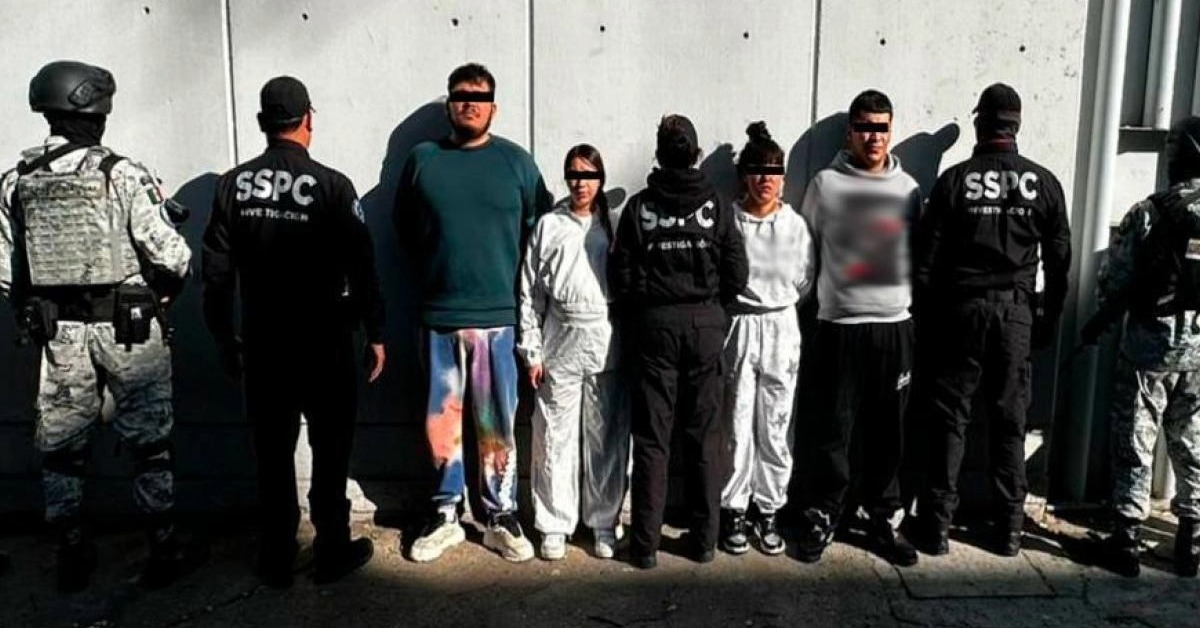
The presence of Tren de Aragua and Ecuador-linked suspects in Mexico City also shows how the capital fits into this picture. City officials have recently highlighted a case tied to Tren de Aragua and human trafficking. Federal authorities also detained a suspect known as Lobo Menor, whom authorities linked to Ecuador’s Los Lobos, after tracking his arrival in Mexico. Cases like these suggest that major cities can serve as a safe space, a meeting ground, and an operating base all at once.
Why certain places attract them
The strongest concentrations appear in border states, major cities, and tourism corridors. That makes operational sense. Airports, ports, border crossings, migrant routes, and high-cash tourist zones make it easier to move people, money, and illicit goods. They also provide cover. A foreign operator can blend in more easily in Mexico City, Cancún, the Riviera Maya, Los Cabos, Guadalajara, or Monterrey than in a smaller inland city.
For expat readers, that does not mean daily life in Mexico is suddenly defined by foreign mafias. It means the country’s crime map is more global than many headlines suggest. A fraud ring targeting visitors, a trafficking network following migrant flows, and a laundering operation hidden behind a casino or restaurant may look very different from a cartel shootout. But they can still feed the same criminal system.
That is also why the story goes beyond security jargon. When foreign crime networks become part of the local landscape, the effects can spread into tourism, migration, small business, and public trust. The result is a more specialized, less visible, and harder-to-read criminal environment.
Why this matters now
The broader lesson is strategic. Mexico has spent years trying to contain domestic cartels through arrests, military deployments, and territorial pressure. That remains part of the picture. But a criminal market that now includes foreign suppliers, fraud specialists, traffickers, and money launderers also requires better financial intelligence, migration controls, international data sharing, and coordinated investigations across borders.
It also requires a more modern public understanding of organized crime in Mexico. This is no longer only a story about local gunmen or famous cartel names. It is also a story about transnational networks that plug into Mexico’s ports, cities, borders, tourist zones, and financial channels. The numbers may shift as new cases emerge and the methodology evolves. The direction of the trend is harder to dismiss. Mexico’s criminal ecosystem is becoming more international, more connected, and more complex.