Mexico says the offshore phase of the Gulf hydrocarbon spill response is over. That does not mean the crisis is finished. Crews are still removing contaminated waste from beaches and lagoon areas in Veracruz and Tabasco, while federal agencies continue to determine where the pollution originated. For residents, fishers, and travelers, the next questions are practical: which areas remain affected, how long the cleanup will last, and whether authorities can identify who is responsible.
Containment offshore, cleanup continues ashore
Mexico says marine containment work is complete in the area off the Gulf coast where the hydrocarbon plume was first detected. Officials say no residue is currently visible in that offshore zone. The response has now shifted to shoreline cleanup, monitoring, and source identification in Veracruz and Tabasco. That distinction matters. A spill can be controlled at sea, while oil residue remains trapped in sand, marshes, lagoons, and beach debris. In plain terms, the emergency is no longer centered on stopping the plume from spreading offshore. It is now centered on cleaning what has already reached the coast and documenting the damage.
Federal authorities say Semar activated a contingency plan on March 14, bringing together environmental, civil protection, and enforcement agencies with state and municipal authorities. Overflights followed on March 15 to review shoreline conditions in both states. Officials put overall cleanup progress at about 85 percent. They also say some affected areas could reopen in the coming days. That remains tied to what crews find on the ground, not just to what is visible from the air or offshore.
Where cleanup is still happening
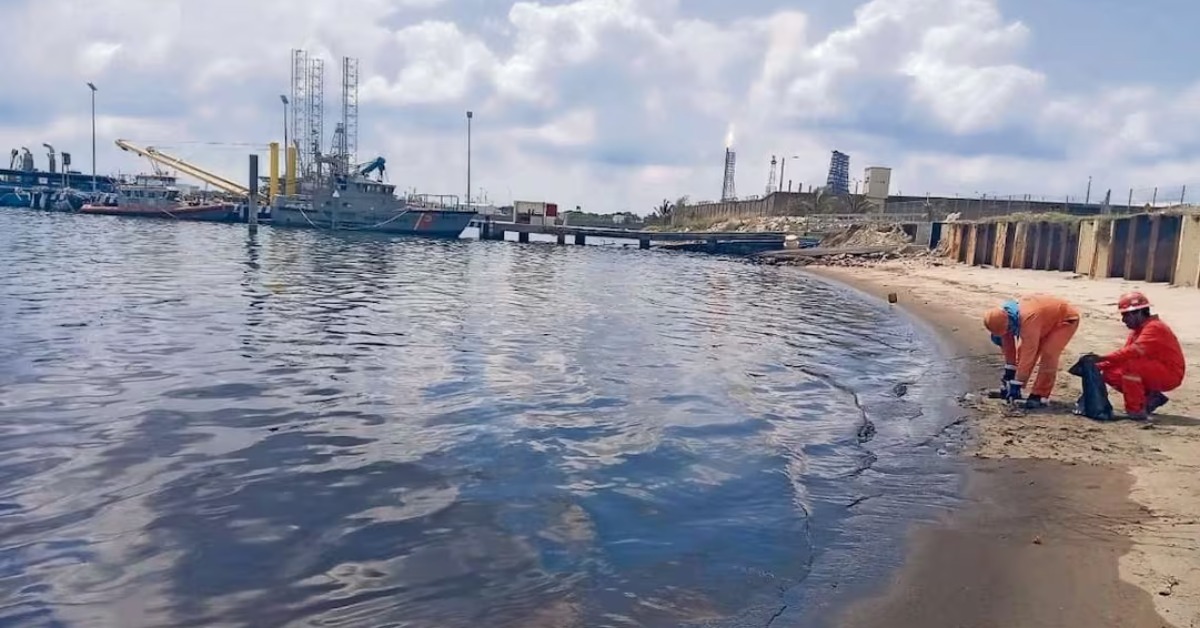
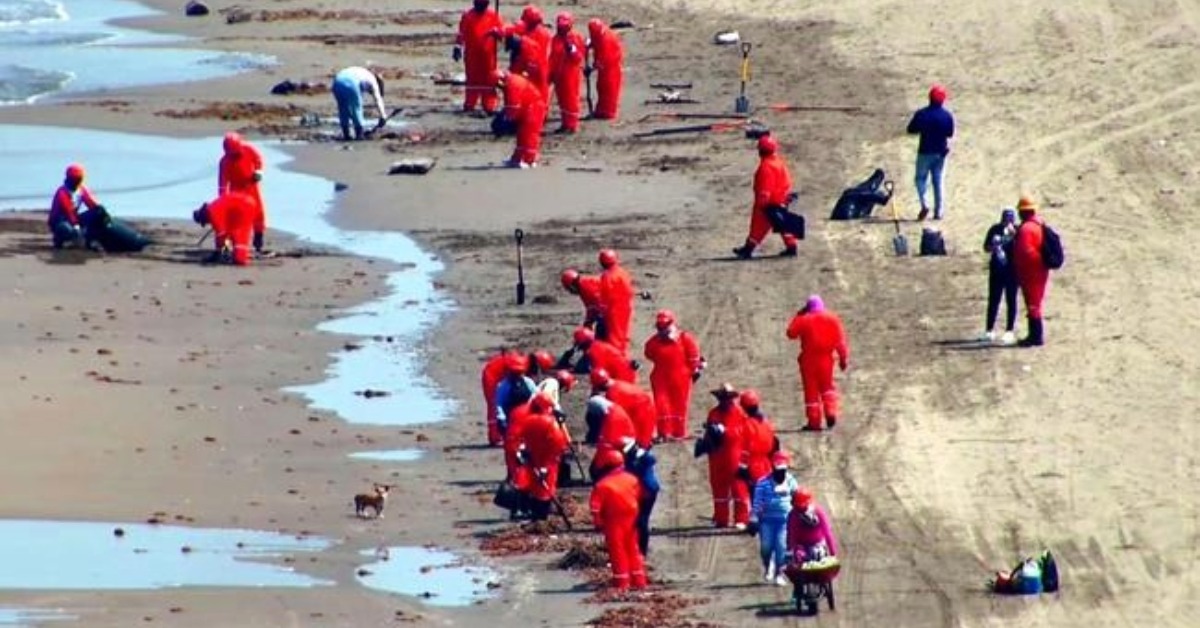
In Tabasco, work has continued in Barra de Tupilco, Arroyo Verde, Ejido Sinaloa, Ejido El Alacrán, and Manatinero. In Veracruz, the response has focused on Playa Barrillas, Playa Linda, Playa Jicacal, and Laguna del Ostión. Officials say 210 workers have been deployed in Veracruz alone and that 91 tons of hydrocarbon-tainted waste have been removed there. The waste is being stored in temporary cells for controlled handling. That point is important because poor disposal can create a second environmental problem after the first one appears to be under control.
The shoreline phase is slower than the offshore containment phase. Sand, vegetation, rocks, lagoon edges, and fishing areas need to be checked repeatedly. Some contamination arrives as thick residue. Some appear as sheens, tar balls, or weathered material mixed with natural debris. That is why the federal response still includes patrols, drones, satellite review, and current analysis. Officials are not only looking for what remains on the beach. They are also watching for material that could shift again with tides, currents, or changing weather.
The biggest unresolved issue is the source
This is where the story remains unsettled. In its March 14 update, the federal government said that early inspections did not find leaks at nearby port terminals or along coastal infrastructure. On Monday, authorities again said the source of the contamination was still being identified. That matters because the next legal step depends on that conclusion. Officials say once the origin is confirmed, they will determine responsibility under environmental law and require repair of the environmental damage.
There is also a gap between state and federal messaging. Earlier, Veracruz Governor Rocío Nahle said a private vessel operating off the coast of Tabasco had caused the spill and that the leak had already been contained. The federal government has not publicly closed the case that way. For now, the official national line is narrower: the spill at sea has been contained, but the source investigation remains open. Until that changes, the political and legal parts of the story remain unfinished.
Why this matters beyond the cleanup crews
This spill is not just a marine story. It is a story about public life and the local economy. The affected coast includes fishing communities, lagoon systems, and beach areas tied to daily income. In recent days, reports have placed the spill’s footprint across at least 39 localities and roughly 230 kilometers of coastline. Communities have described damage to fishing gear, pressure on seafood sales, and losses for small tourism operators. Even where the water looks cleaner, confidence does not return immediately. That is often the case after spills, especially when the origin is still unclear.
For international readers, one point is worth stating clearly. This is a serious regional incident, but it is not a blanket closure of Mexico’s coasts. The response has been concentrated in parts of Veracruz and Tabasco. People living in or visiting those areas should watch local beach notices, municipal updates, and seafood guidance rather than assume the situation is the same across the whole Gulf coast. The more immediate concern is local: cleanup quality, safe reopening, and whether the next travel period arrives before trust is restored.
What happens next
The next phase is less dramatic but more important. Authorities need to finish shoreline cleanup, verify that residue is no longer reappearing, determine the spill’s source, and assess environmental and economic damage. That process could outlast the headline moment. A declaration that offshore containment is complete is an important milestone. It is not the end of the story. The real test now is whether the government can move from emergency response to accountability, transparent reporting, and recovery for the communities that depend on this stretch of the Gulf.
With information from SEMARNAT