A cocaine seizure off Acapulco was already a major maritime hit. Then came the sharper claim. On Tuesday, Omar García Harfuch said the load was tied to a faction of the Sinaloa Cartel, giving the case a more pointed public frame. The government says the haul adds to more than 60 tons of cocaine seized at sea during the current administration. What stands out is not only the amount, but how clearly officials chose to name the group they say was behind it.
Why this seizure stands out
The immediate headline is simple. Omar García Harfuch said the two-ton cocaine seizure off Acapulco was tied to a faction of the Sinaloa Cartel. But the larger point is why that statement matters. In this case, federal officials did not stop at announcing the size of the haul or the agencies involved. They also publicly linked the shipment to a specific criminal organization. That gives the case a different weight. It turns a large maritime seizure into a more direct message about who authorities say is moving cocaine through Pacific routes. For readers, that distinction matters. It suggests the government wants the public to see not just the result of an operation, but also the network it says was behind it. That does not, by itself, explain the full investigation. It does show how the administration is choosing to present major security actions. It also explains why this case drew attention beyond the load itself.
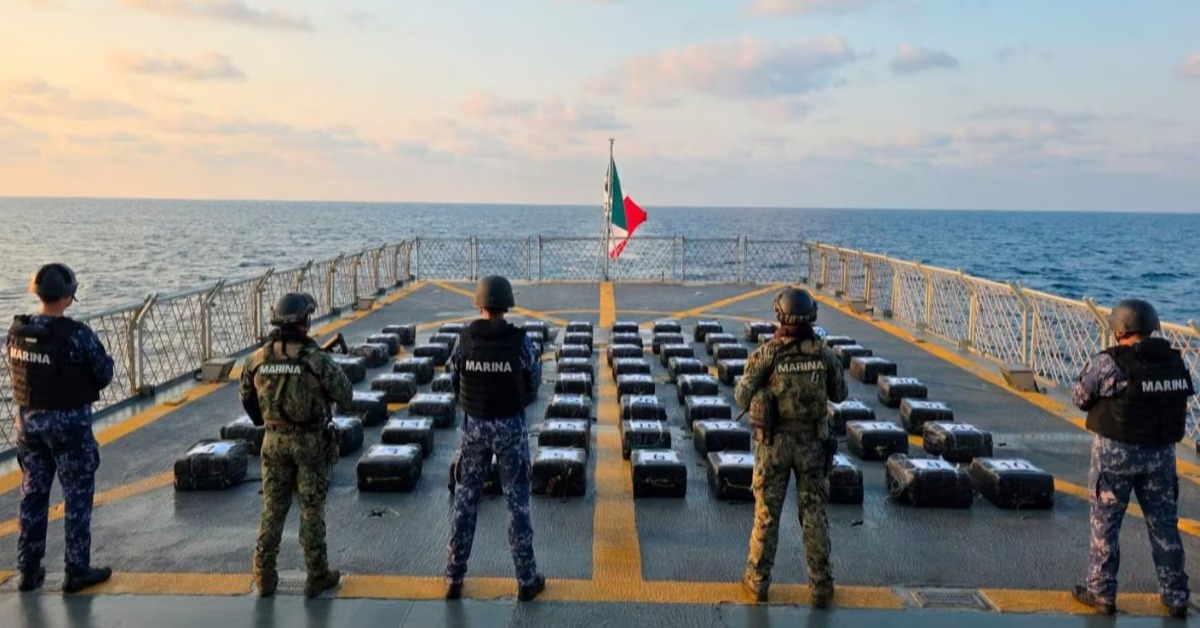
The confirmed facts are fairly clear. The seizure was reported after a joint maritime operation led by the Secretaría de Marina, with support from the FGR and the SSPC. Authorities said the load was found in 80 bultos about 200 nautical miles south-southwest of Acapulco, Guerrero. Naval personnel used aircraft, an ocean patrol vessel, and a smaller boat to locate and secure the packages. Officials described the weight as preliminary, at about two tons, pending the formal process before prosecutors. That part matters because it separates what is already public from what may still change in the case file. Even so, the operation was large by recent standards. It also fit a pattern seen in recent weeks. Federal authorities have stressed maritime surveillance, intelligence work, and seizures made before narcotics reach shore. Those details give readers a clearer picture of how the operation unfolded. The timing and location also help explain why the case received immediate national attention.
Why the Sinaloa reference matters
When Harfuch connected this shipment to a Sinaloa Cartel faction, he added a layer that was missing from the first public account of the seizure. He also said that the more than 60 tons of cocaine seized at sea during the current administration have involved different criminal groups. That makes this case more specific than a general running total. It is not just another number in a broader tally. It is a named attribution tied to one load, one route, and one organization. That matters in political terms as well as security terms. The current government has made public reporting on seizures, arrests, and tonnage a visible part of its security message. Naming the alleged group behind a shipment strengthens that message. It tells the public that officials are not only intercepting drugs but also assigning responsibility for their movement. That is a notable shift in how this seizure has been framed.
A wider pattern in Pacific waters
This seizure did not happen in isolation. It followed other recent operations in Pacific waters. One of the clearest examples was a semisubmersible intercepted off Colima with roughly four tons of cocaine. Other maritime cases also pushed the running total above 60 tons. Taken together, those cases point to a sustained focus on sea routes rather than a single standout bust. That matters because trafficking by water can move large volumes in one trip. It can also keep loads far from land until the final stage. By highlighting repeated interceptions, the government is presenting a picture of steady pressure on supply chains. The Acapulco case fits neatly into that message. It is large enough to draw national attention. It also supports the broader claim that federal forces are disrupting cartel logistics before shipments reach ports, roads, or urban distribution networks. It also shows why Pacific surveillance remains central to the federal strategy.
What this means for readers
For readers trying to make sense of Mexico’s security picture, the clearest takeaway is not simply the size of the haul. It is the combination of a major seizure, a named cartel link, and a broader federal push to show measurable results. The Acapulco case points to continued attention on Pacific trafficking corridors and on the financial impact of large interdictions. It also shows how central Harfuch has become in explaining the government’s security actions to the public. What remains open is whether officials will later release more details on the investigation itself. That could include arrests, evidence, or a fuller explanation of how they tied this shipment to a Sinaloa faction. For now, the public case rests on the operation, the amount seized, and the government’s attribution. Those three points are enough to make the story important, even before the legal case becomes clearer. It is a signal about priorities as much as enforcement.