Mexico has moved its World Cup security planning into public view. Omar García Harfuch presented Plan Kukulkán, a strategy that extends beyond stadiums to airports, hotels, roads, and fan zones. The plan links federal forces with state authorities and adds coordination with the United States, Canada, and FIFA. What matters now is not only the scale of the promise, but how the government turns that promise into visible order before millions of visitors begin arriving in June. The rollout also lands after a week of sharper scrutiny over security and mobility in Mexico’s host cities.
A plan built around the host cities
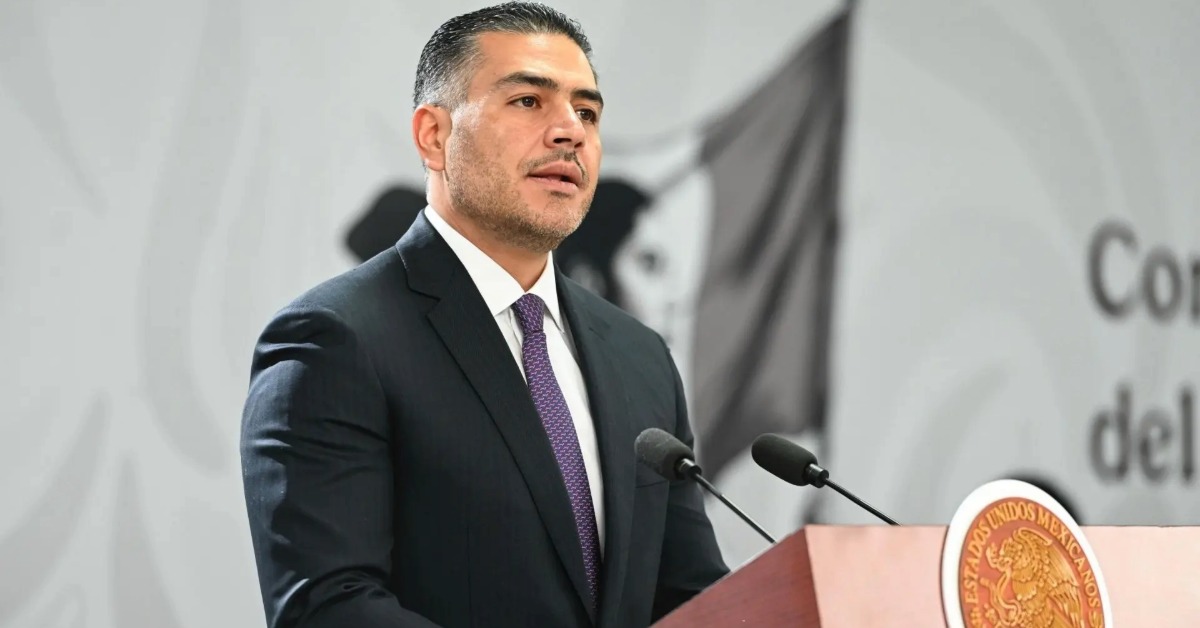
Omar García Harfuch used Friday’s presidential press conference in Zapopan to present Plan Kukulkán. It is the federal security strategy for Mexico’s role in the 2026 World Cup. The government framed it as a plan for the full life of the event, not only match days. Officials said the scheme is designed to protect the tournament before, during, and after the games. That matters because the pressure points extend well past the stadium gates. They include airports, major roads, hotels, training bases, and public gathering areas. Harfuch said the plan links more than 20 federal institutions with state and municipal authorities in the three host cities. He also said it includes coordination with the United States, Canada, and FIFA. The stated goal is faster intelligence sharing, common protocols, and quicker responses to emerging risks. For readers who live in Mexico, the message is direct. The World Cup security footprint will extend to daily spaces, not just sports venues.
How the operation is expected to work
The operational outline points to a broad deployment. Military commanders said the plan creates three joint task forces, one for each host city. It also adds seven groupings for alternate sites where national teams may train. Reported staffing totals nearly 100,000 people when armed forces, federal security personnel, and private security are counted together. The equipment list is also notable. Officials described canine units, equine teams, aircraft, military vehicles, civilian escort vehicles, and anti-drone systems. They also described layered protection around stadiums, hotels, airports, training centers, and fan areas. That approach suggests a model built on controlled perimeters and overlapping response zones. Another point matters just as much as the hardware. Officials said specialized training began in January for thousands of personnel. That instruction covers crowd control, tactical response, medical support, and escort operations. A broader field exercise is expected in March. That gives authorities only a short window to test whether the structure works under pressure.
Why the timing matters
The timing of the announcement is part of the story. The 2026 World Cup will run from June 11 to July 19. Mexico will share hosting duties with Canada and the United States. Mexico’s matches are scheduled for Mexico City, Guadalajara, and Monterrey, with the opening match set for Mexico City. In the past week, Mexican officials and FIFA representatives also formalized a security coordination table. Sheinbaum said those talks also covered mobility, especially traffic and movement around the three host cities. That is important because a World Cup security plan is judged by movement as much as force. A safe tournament still fails if delegations, workers, residents, and fans cannot move predictably. For expats and long-stay foreigners, that makes this more than a sports story. It signals heavier policing, tighter venue controls, and possible operational changes near transport hubs and tourist districts. The plan is therefore about public order. It is also about how Mexico wants to manage its image during a month of global attention.
What will decide whether the plan works
The harder part begins now. Public presentations can show scale, but implementation is what visitors and residents will notice. The government is promising a coordinated system that can prevent incidents and respond quickly. It also must keep host cities functioning through weeks of intense activity. That ambition is larger than a normal stadium operation. It requires local authorities, federal forces, and international partners to work from the same information. They also need to move under the same rules. It also requires clear communication with neighborhoods, businesses, and travelers who will feel the effects first. If Plan Kukulkán works as described, Mexico will enter the tournament with a more unified security structure than past mega-events. If weak points appear in training, mobility, or local coordination, those gaps will become visible before the opening whistle. Between now and June, the most useful measure will not be rhetoric. It will be whether drills, traffic planning, and interagency coordination produce fewer surprises on the ground. That is the standard the government has now set for itself.
With information from FIFA, Secretaría de Seguridad y Protección Ciudadana