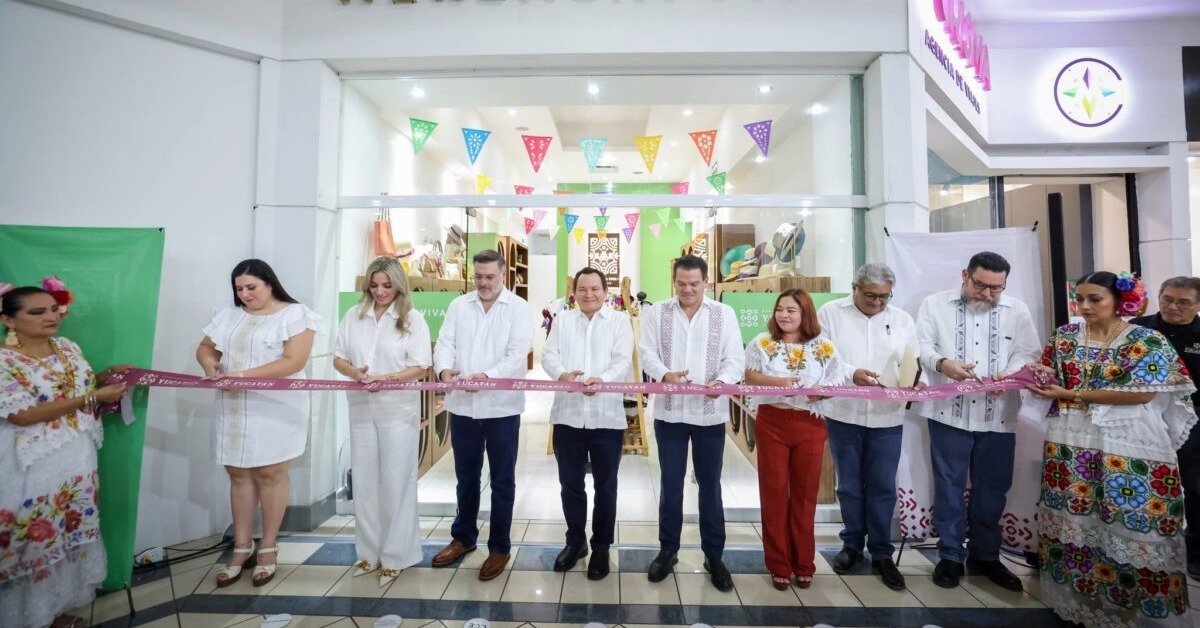
A new Herencia Viva store has opened in northern Mérida, but the real story is bigger than a single ribbon-cutting. The branch at Gran Plaza is part of a wider state effort to move Yucatán’s artisan economy closer to regular shoppers, reduce dependence on intermediaries, and connect handmade goods to stronger retail channels. What looks like a mall opening is also a test of how the state wants to protect local traditions while turning them into a steadier income for the families behind them.
A new storefront for Yucatán makers
State officials opened a new Herencia Viva store at Gran Plaza in northern Mérida on March 15. The project aims to provide artisans and small producers with a more regular place to sell their work. Instead of depending only on seasonal fairs or third-party sellers, makers now have another permanent storefront in a busy shopping center. Officials presented the opening as an effort to help families keep a larger share of each sale and bring handmade Yucatán goods closer to everyday shoppers.
The store brings together products tied to some of Yucatán’s best-known trades. Public descriptions of the opening mention embroidery, weaving, wood carving, and jewelry, along with work from families who rely on those activities for income. That matters because artisan production in Yucatán is not only a cultural expression. For many households, it is part of the local economy. A store in a mall with steady foot traffic can change how often those products are seen, compared, and purchased.
Why direct sales matter
At the center of the official message was a familiar problem: intermediaries. State officials said many artisans see their work resold at far higher prices than what they receive. The new branch is meant to push more sales toward a direct-to-buyer model. That does not solve every pressure facing the sector. Production costs, transport, and scale still matter. But it does address one of the most common complaints in Mexico’s artisan economy, especially among makers with strong products but limited access to retail space.
For readers outside the artisan sector, that may sound like a narrow issue. It is not. In places like Yucatán, handmade production often sits at the intersection of household income, local identity, and tourism. When sellers lose pricing power, the effect extends beyond a single transaction. It can shape whether a craft remains viable, whether younger relatives want to learn it, and whether a technique survives as a living trade instead of becoming a display piece for visitors.
More than a single shop
The opening also helps explain what Herencia Viva is becoming. It is more than a single brand or gift shop. The project sits inside the work of the Instituto Yucateco de Emprendedores, or IYEM, which combines commercialization, training, fairs, and digital sales. Earlier this year, state officials said Herencia Viva was already selling products from 30 municipalities and had an online catalog with more than 800 items. That suggests the new store is part of a wider retail strategy, not a stand-alone launch.
The choice of Gran Plaza is also telling. In February, officials said they were looking for locations that matched current mobility and buying habits. In plain terms, the goal is to place artisan products where people already shop. That shift matters for Mérida, a city where handmade goods can still be treated as items bought mainly in tourist zones, historic centers, or occasional bazaars. Placing them in a mainstream commercial space aims to bring artisan retail into everyday life.
State reports show the program had been growing before this opening. A 2025 performance report said 141 artisans from more than 32 municipalities were selling through Herencia Viva under what officials described as fairer conditions. The same report put accumulated sales at about 3.5 million pesos. Those figures do not answer every question about long-term stability. Still, they show the government is treating artisan sales as part of regional development policy, not only cultural promotion.
The cultural question behind the economics
There is also a cultural policy angle behind the store. The same state administration has been tying artisan support to a broader effort to protect Maya embroidery and strengthen its public recognition. Recent state materials describe work with Sedeculta and UNESCO around the preservation of bordado maya yucateco. That link matters because many artisan debates in Yucatán are not only about income. They are also about authorship, transmission of knowledge, and whether younger generations see these trades as viable work.
That broader context helps explain why this opening matters beyond retail. A permanent store can sell products, but it can also shape how those products are understood. If buyers have more information about who made an item, where it comes from, and what techniques it uses, the purchase stops being purely decorative. It becomes part of a larger effort to connect craft, place, and producer. That is especially relevant in Mérida, where many foreign residents and visitors want to buy local goods but do not always know where those goods come from or how much of the price reaches the maker.
For international readers living in Mérida, the immediate takeaway is practical. Herencia Viva is working to make locally made goods easier to find in familiar retail settings. The bigger question will come later. Can a permanent store in a high-traffic mall deliver steady sales, better prices, and longer business relationships for producers? If so, the new branch will be more than just a ribbon-cutting. It will be a test of whether Yucatán can market its heritage while keeping stronger ties to the people who create it.