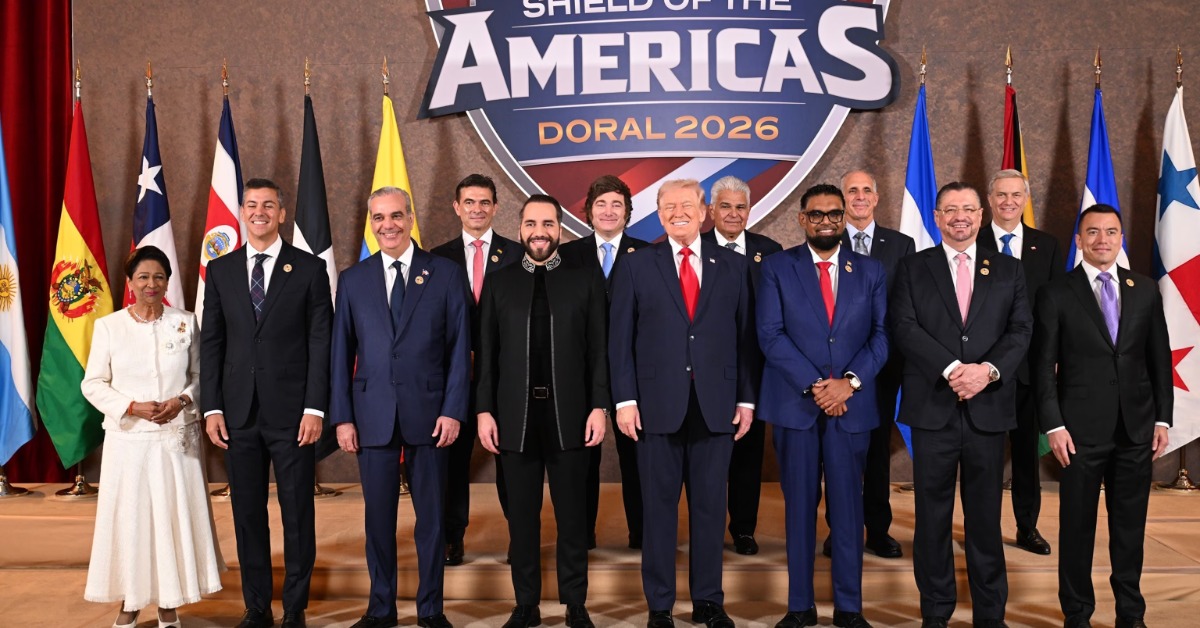
The Shield of the Americas summit was staged without Mexico, but Mexico remains at the center of the story. A new U.S. cartel coalition can raise pressure without crossing the border, using tariffs, treaty talks, migration bargaining, and market nerves instead. That changes the real question. It is no longer only whether Mexico will resist outside intervention. The question is whether Mexico can turn its economic weight into leverage before a security narrative comes to define every part of the bilateral relationship.
The coalition changes the negotiating table
The Shield of the Americas was presented as a security coalition, but Mexico will likely feel it first as a negotiating device. The White House proclamation that followed the March 7 summit did not speak only in the language of policing. It spoke of hard power, partner militaries, and an Americas Counter Cartel Coalition designed to act across the hemisphere. Mexico was not invited, yet it was still placed near the center of the argument. That matters because exclusion can itself become a form of pressure. It lets Washington frame Mexico as the problem while trying to build a regional consensus around a U.S. solution. For Mexico, the first risk is not only symbolic. The bigger risk is that cartel politics become the frame through which trade, migration, investment, and border management are negotiated. Once that shift takes hold, every bilateral dispute can be recast as a security test. That is why this story is less about who stood in the room in Doral and more about who gets to set the terms outside it.
Mexico was excluded, but not bypassed
Mexico may have been left off the guest list, but it cannot be removed from the map. Washington can assemble a coalition of ideologically aligned governments, but the core facts still run through Mexico. The land border, the supply chains, the fentanyl debate, the movement of firearms, the flow of migrants, and the structure of North American manufacturing all make Mexico indispensable. That is why the summit carried two messages at once. One was public and theatrical. The other was practical. The public message said Washington is willing to work around governments that reject a militarized approach. The practical message said Mexico will still be expected to deliver outcomes, whether or not it is treated as a partner in public. That leaves Mexico in a difficult but not powerless position. It cannot ignore the security pressure, but it also does not need to accept the idea that pressure equals obedience. The country’s bargaining power stems from the simple fact that no durable U.S. cartel strategy can succeed if it undermines the broader relationship Washington also needs.
Trade is Mexico’s strongest bargaining chip
That broader relationship is where the second angle of this story becomes more important. Trade leverage is not an abstract concept. It is one of the clearest facts in the bilateral relationship. More than 80 percent of Mexican goods exports go to the United States, but the dependence runs both ways through factories, logistics networks, and cross-border production. The United States and Mexico are already preparing for the USMCA joint review, with negotiators set to begin the next phase of discussions the week of March 16. Those talks are not separate from the cartel debate. They now sit next to it. That changes Mexico’s room to maneuver. Washington can use security language to justify economic pressure, but it also has to consider the cost of disrupting an integrated North American production system. Auto parts, electronics, medical devices, and food supply chains do not move neatly inside political slogans. For Mexico, that means the real counterweight to public humiliation is not rhetoric alone. It is the ability to remind Washington that punishing Mexico too aggressively can also punish U.S. manufacturers, U.S. consumers, and the competitiveness goals Washington says it wants.
Security cooperation already has a price
Recent history shows how quickly security and economics can fuse. When tariff threats escalated in early 2025, Mexico reinforced the border with troops, expanded cooperation, and later transferred major cartel figures to the United States. Those moves were presented as security actions, but they also carried a trade logic. They were part of a broader effort to keep tariff pressure from escalating into economic damage. That matters because it shows the emerging pattern. Mexico is already cooperating, but under visible pressure. Washington, in turn, is learning that cartel rhetoric can produce fast concessions without formally rewriting the rules of the relationship. For Mexican officials, that creates a dangerous precedent. Cooperation that once looked like mutual management can start to look like compelled performance. Mexico has tried to answer that risk by insisting on reciprocity, especially on the flow of weapons from the United States into Mexican territory. That insistence is not secondary. It is a reminder that the security burden does not move in only one direction, even when the political narrative in Washington tries to make it seem that way.
Why sovereignty still matters in a leverage story
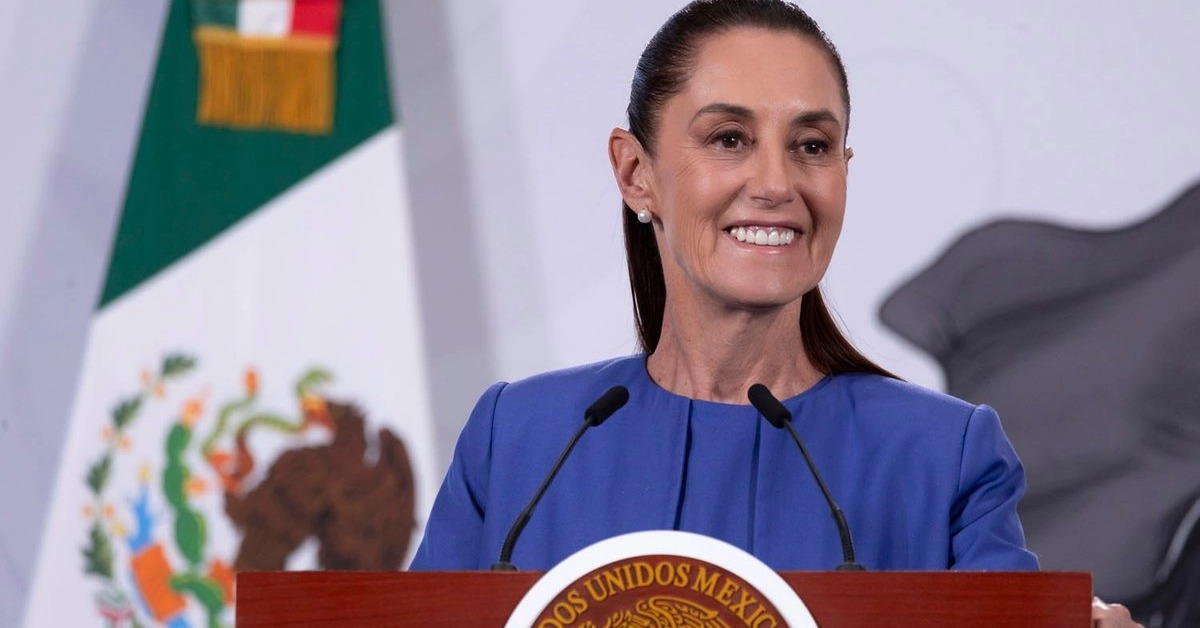
Even in a trade-focused version of the article, sovereignty does not disappear. It simply moves from the headline to the operating principle. Mexico’s response to the U.S. designation of cartels as terrorist organizations made that clear long before the Doral summit. President Claudia Sheinbaum’s government pushed constitutional changes to reinforce limits on foreign intervention and to restate a doctrine of coordination without subordination. That response was not only ideological. It was also tactical. Mexico understood that once cartels are framed in Washington as a hemispheric military problem, the legal and political space for unilateral action can widen quickly. In that sense, sovereignty is part of bargaining power. A state that does not defend its legal authority at home loses room to negotiate abroad. But sovereignty, by itself, is not enough. It can block certain forms of pressure, yet it does not automatically create leverage. Mexico’s stronger position comes when sovereignty is tied to something Washington needs, whether that is market stability, border management, extradition cooperation or a functioning North American trade platform. That is where the current fight will likely be decided.
The market hears the rhetoric before the diplomats do
Markets often register this pressure before negotiators can contain it. That is one reason the peso matters in this story. When tariff threats intensified in early 2025, the Mexican currency reacted quickly, reminding officials that cartel rhetoric can spill into financial sentiment within hours. For readers in Mexico, including many with incomes, savings, or business ties linked to the United States, this is not an elite policy debate. It can affect prices, confidence, travel decisions, and the broader sense of economic stability. The same is true for businesses operating across the border. A summit in Florida may sound distant, but the practical effects can show up in exchange rates, investment timing, and the tone of customs, trade, and migration talks. That is why Mexico’s leverage must be measured in more than diplomatic language. It must also be measured in how successfully the government can prevent security shocks from becoming market shocks. If Washington can keep using cartel politics to unsettle the peso or frighten investors, then pressure will work even without formal sanctions or overt intervention.
Mexico’s best response is to widen the agenda
The most effective Mexican response is not to reject security cooperation. That would only reinforce Washington’s preferred narrative. The stronger response is to widen the agenda and make every demand part of a broader negotiation. Mexico can continue cooperating on cartel leadership targets, intelligence sharing, prison controls, port oversight, and precursor chemicals. But it can do so while insisting that the conversation also include weapons trafficking, customs coordination, due process, supply chain stability, and fair treatment inside the USMCA review. That approach matters because it prevents the relationship from collapsing into a single test defined in Washington. It also forces the United States to deal with Mexico as more than a staging ground for enforcement. In practical terms, Mexico’s best leverage comes from integration. The country should treat security, trade, and migration as linked files, because that is already how they are being used against it. The mistake would be to answer a linked strategy with narrow rebuttals. Mexico needs a linked response of its own.
The real test comes in the next round of talks
That is why the next phase of U.S.-Mexico talks matters more than the summit itself. The real test is whether Washington tries to convert Shield of the Americas from a political spectacle into a durable negotiating framework. If that happens, Mexico will face a choice. It can keep responding to one pressure point at a time, or it can force the relationship back into a wider discussion about shared risk and mutual dependence. The second path is harder, but it offers more room to maneuver. Mexico was not invited to this coalition, yet it remains the country that Washington cannot actually work around. The border is too important. The trade relationship is too large. The regional production system is too integrated. The migration file is too sensitive. That does not make Mexico safe from pressure. It does, however, mean the country has more bargaining power than the summit optics suggest. The question now is whether Mexican officials can turn that interdependence into a strategy before the security narrative hardens into the new normal.