A few blocks from central Tuxtla Gutiérrez, an urban botanical garden is carrying out conservation work that many people overlook. Behind its paths and labeled trees, the Faustino Miranda Botanical Garden holds hundreds of plant species, including dozens recognized under Mexico’s at-risk listing. It also runs a germplasm program that stores seeds and genetic material used for propagation and restoration. For residents, expats, and visitors, it’s a compact stop that doubles as a window into why Chiapas ranks among Mexico’s most plant-diverse states.
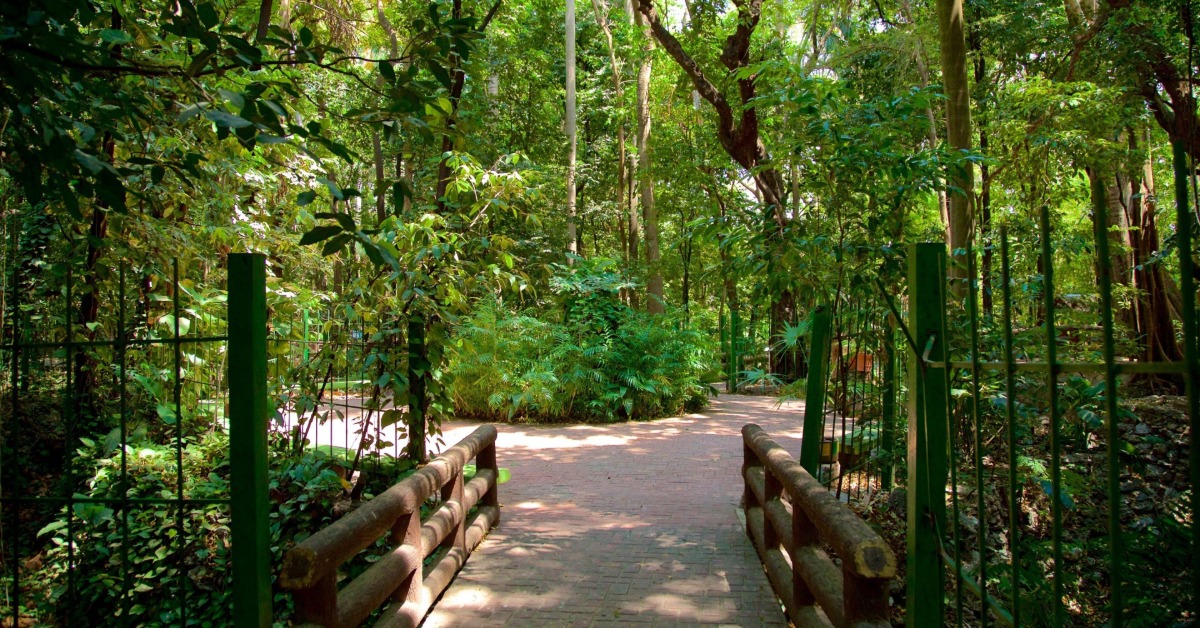
Tuxtla Gutiérrez has a botanical garden that works like a small conservation station. The Faustino Miranda Botanical Garden sits along Calzada de las Personas Ilustres, near major museums and theaters. Inside, more than 700 plant species grow across 4.5 hectares of urban green space. The living collection spans 99 plant families and mixes native plants with a limited number of introductions. Each specimen is tagged with a record that tracks its origin and distribution in Chiapas. The site receives about 30,000 visitors a year, many of whom arrive with school groups. For a city that keeps expanding, the garden also functions as an urban carbon sink. It is crossed by the Sabinal River and includes a spring-fed pond that supports birds and small mammals. The garden is administered by Chiapas’ environment agency, which also runs its museum, herbarium, and seed work. A 10-peso recovery fee and central location keep it accessible to residents and visitors.
A city garden built for conservation
Calling the garden a park misses its core role. Staff and researchers use it as a place to conserve species that are hard to protect elsewhere. About 40 of its plant species are listed under Mexico’s NOM-059 framework for species at risk. Those categories include plants considered threatened, endangered, or under special protection. The garden’s records and reference collections also connect to a broader picture of Chiapas’ flora. Recent research counts more than 9,000 native vascular plant species in Chiapas, one of the highest totals in Mexico. Local inventories place the garden’s collection at roughly 11.55 percent of the plant diversity documented statewide. That share matters because it creates a concentrated, accessible sample of ecosystems from across Chiapas. For residents, it turns abstract biodiversity numbers into something visible. For conservation work, it provides living material that can be studied, propagated, and, when appropriate, used for restoration projects. For expats, it offers a direct introduction to the plants that shape local landscapes and daily life.
Seed banking and propagation work
One reason the garden matters is what happens beyond the display trails. A germplasm program established in the late 1990s stores seeds and other plant material from Chiapas. This kind of banking preserves genetic diversity, even when habitats are fragmented or degraded. It also supports propagation work, so native plants can be produced for education, landscaping, and restoration. The garden’s nursery distributes ornamental, timber, and fruit trees, often asking recipients to plant and care for them properly. That outreach links conservation to daily choices, from shade trees to backyard fruit. International conservation groups describe seed collections and living collections as practical insurance against extinction in the wild. In Tuxtla, the idea is local and concrete: keep plant genetics safe, then use them to rebuild green cover. The work is supported by the herbarium and museum, which help identify plants and document their origins. It also provides a controlled setting for research, training, and student projects.
What visitors see and learn
Visitors experience the conservation work as a walkable route through regional plant communities. The garden sits near Tuxtla’s cultural district and can be reached without leaving the city. It was founded in 1949 and later added a botanical museum that displays Chiapas’ useful woods and medicinal plants. Guided visits and school programs are part of its daily rhythm, which helps explain the steady flow of students. Entrance is typically a small recovery fee, and the museum is commonly open Tuesday through Sunday. Along the paths, labels turn the space into a living textbook, even for non-specialists. You may spot parrots, herons, or squirrels in the canopy, especially near water. For long-term residents, it is a reminder that local ecosystems still exist inside the urban grid. For newcomers, it is a direct way to learn plant names and understand why conservation is a statewide priority. The broader point is simple: protecting biodiversity often starts with protecting places people can visit.