Each March 8, Mexico’s shorthand 8M—and, in English, often M8—signals more than a calendar date. It is an annual stress test of public safety, justice, and rights, played out in the streets, schools, and workplaces. Many newcomers expect a celebration. Many residents expect a march, a strike, or a difficult conversation. Behind those expectations is a longer story: global origins in labor politics, Mexico’s own fights for citizenship, and a modern movement shaped by violence and impunity. Understanding that history changes how the day looks.
Why the day is known as M8 in Mexico
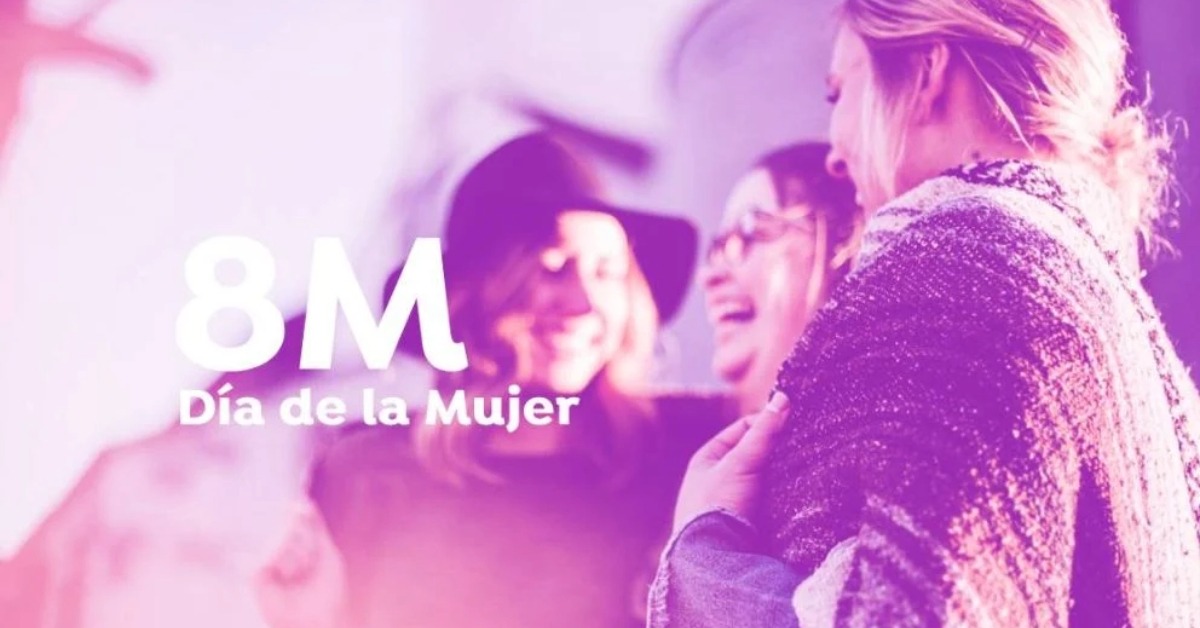
Mexico’s International Women’s Day is widely labeled 8M—a shorthand for 8 de marzo, or March 8 in Spanish. In English, writers sometimes reverse that order as M8 to mirror “March 8.” The labels matter because they travel fast as hashtags and meeting-point shorthand. The numbering is part of a broader habit in Mexican activism, where dates become organizing words. In Mexico, the day is usually framed less as a celebration and more as a public accounting. On March 8, feminist groups, victims’ families, students, and allies take space to demand safety, justice, and equal rights. That emphasis shows in everyday speech. “Going to 8M” often means joining a march or supporting a strike. Some people also avoid the route out of respect. The shorthand appears on posters, banners, and university announcements. Across the country, it also helps people coordinate meeting points, share safety updates, and signal what the day is for.
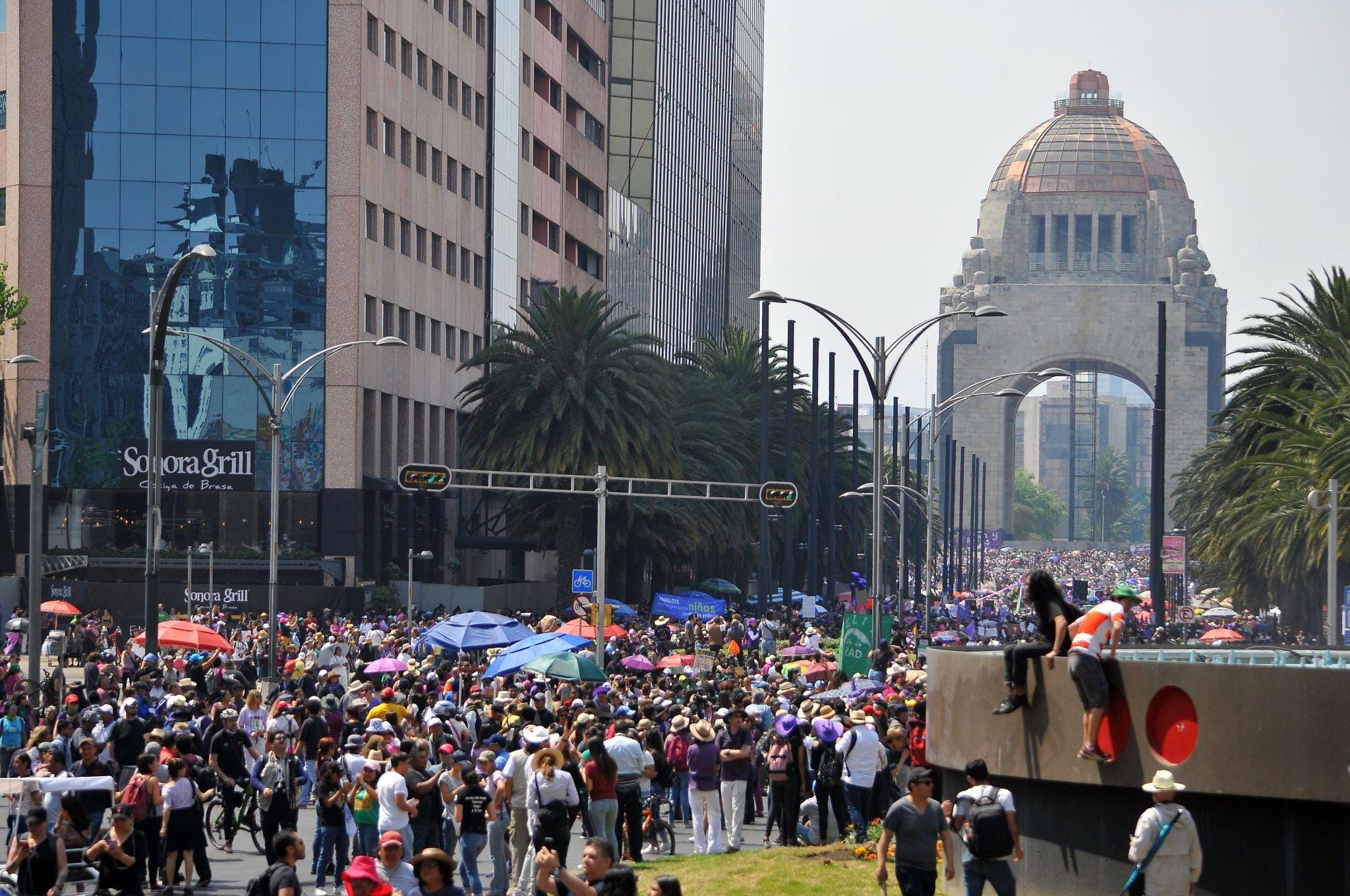
International Women’s Day began as a political project linked to labor and suffrage campaigns. It did not start from one single founding moment. Early observances spread in Europe in 1911. The March 8 date later became tied to a 1917 strike in Petrograd. Women demanded “bread and peace.” The strike helped ignite the Russian Revolution. The United Nations later moved the day into a modern diplomatic calendar. In 1977, the UN General Assembly invited states to proclaim a UN Day for Women’s Rights and International Peace. In many countries, March 8 became the default. Mexico sits inside that international timeline in a specific way. In 1975, during International Women’s Year, Mexico City hosted the first UN World Conference on Women. The meeting produced the Mexico Declaration and a World Plan of Action. That history matters in Mexico because it links a global agenda to local organizing. It also helps explain why Mexico remains a reference point in global women’s rights diplomacy.
How women’s marches became central to M8
Mexico’s modern M8 marches sit on a longer history of women organizing for citizenship and political voice. During and after the Mexican Revolution, women pushed for legal and social reforms, including the vote, while the country debated what “citizenship” meant. Feminist congresses in Yucatán in 1916 helped bring demands about education, work, and rights into public debate. The national suffrage fight then stretched for decades through petitions, press campaigns, and alliances with political actors. Scholars note that the debate was shaped by stereotypes, including claims that women would vote as an extension of family or church influence. These arguments mattered because they set the terms under which women’s political participation was delayed, limited, or granted. That background is why many M8 messages still use the language of citizenship and state obligation. By the time Mexico’s March 8 mobilizations became a national ritual, the country already had a century of experience using public gatherings to contest who counts as a full political subject.
Mexico’s suffrage milestone is anchored to a specific legal change. Before full national suffrage, women were allowed to vote only in municipal elections, starting in 1947. Full political rights arrived with the 1953 constitutional reform. Published in the federal official gazette on October 17, 1953, it amended Article 34 to name women, alongside men, as citizens. It also amended Article 115, which governs municipal government. Those changes paved the way for women to vote and be elected at all levels. The first time women voted in a federal election came soon after, on July 3, 1955, to elect federal deputies. A separate milestone followed in July 1958, when women voted in a presidential election for the first time. These dates may feel far from March 8 street marches, but they are part of the same story. They show why rights are often treated as enforceable obligations rather than symbolic gestures.
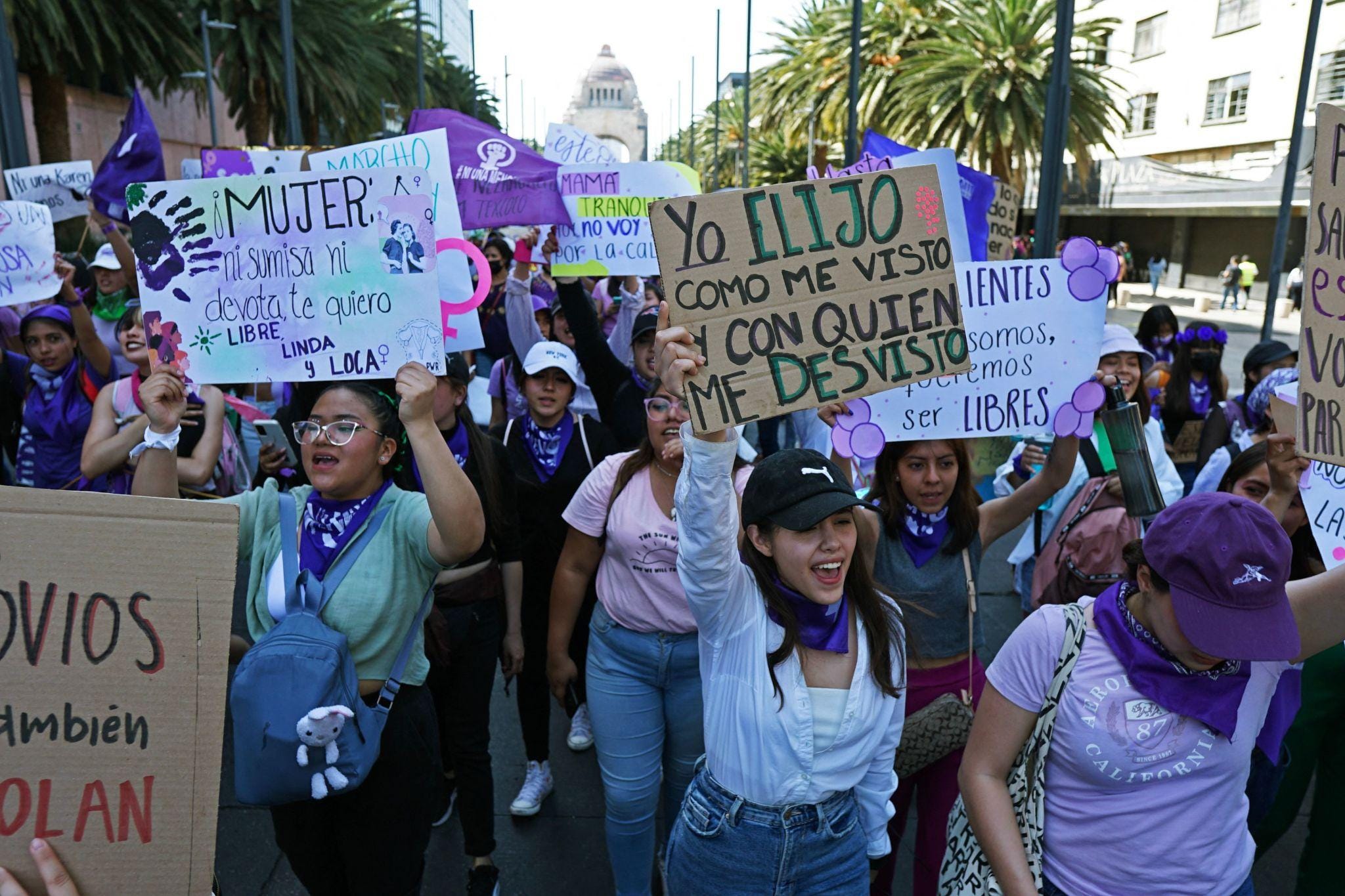
Modern M8 marches in Mexico did not appear overnight. They expanded through a cycle of student and feminist organizing that built momentum in the late 2010s. Research on the contemporary movement traces early mobilizations in 2017–2019 inside the Universidad Nacional Autónoma de México (UNAM), including protests over femicides of students, accusations of harassment, and demands for safer campuses. In 2019, the wave connected to the international #MeToo moment, producing assemblies, shutdowns, and public naming of alleged aggressors. Later that year, activism moved into the streets after reports that police in Mexico City raped a woman. Demonstrators used the slogan #NoMeCuidanMeViolan and staged what became known as the “diamondina” protest, after glitter was thrown at police. These events mattered because they recast March 8 as an organizing deadline. By March 2020, that buildup widened the movement’s reach and made M8 a focal point for coordinated action. M8 became the point at which different feminist currents converged in public space and when demands for institutional responses were made visible to the wider public.
From Ciudad Juárez to nationwide mobilization
To understand why M8 in Mexico is so tied to gender-based violence, many activists point to the long national shadow of killings and disappearances, especially the documented patterns in the north. In the border city of Ciudad Juárez, authorities and researchers documented an increase in murders of women beginning in the early 1990s, in a context shaped by discrimination. The case that came to symbolize this period internationally was the 2009 judgment of the Inter-American Court of Human Rights in the “Cotton Field” case. The court evaluated the disappearances and deaths of three young women whose bodies were found in a cotton field in 2001, and it examined state failures to prevent, protect, and investigate amid a broader pattern of gender-related violence. Even when marches in Mexico City focus on current events, that older record remains part of the movement’s moral and legal vocabulary. It is one reason that M8 slogans often pair grief with demands for due diligence and accountability.
Mexico’s legal response to this pressure has included broad policy frameworks and specific criminal reforms. The 2007 General Law on Women’s Access to a Life Free of Violence created a national framework for prevention, response, and coordination across levels of government. In that law, violencia feminicida is defined as an extreme form of gender violence rooted in rights violations and abuse of power, and the law describes how it can culminate in violent deaths and other severe harms. The same law created the Alerta de Violencia de Género contra las mujeres, an emergency set of coordinated government actions designed to confront and eradicate feminicidal violence in a defined territory, and to address “agravio comparado” when law or policy blocks women’s rights. Criminal law also shifted. In 2012, Mexico incorporated the federal crime of feminicidio, defining circumstances that signal gender-based motives and setting penalties. These legal tools are not the whole story, but they shape what protesters demand on M8: implementation, investigation capacity, and measurable results.
The scale of the problem is one reason M8 remains march-centered. National survey data from INEGI’s ENDIREH 2021 found that 70.1% of women aged 15 and over had experienced at least one incident of psychological, physical, sexual, economic, or patrimonial violence, or discrimination, at some point in their lives. The same report shows that 42.8% experienced at least one such incident in the 12 months before the survey. Administrative crime data and statistical notebooks track feminicidio separately from other forms of homicide, but measurements differ because institutions count different stages of the justice process. Even so, the available figures show persistent lethal violence. An INEGI statistical notebook reports that the national public security system recorded 979 victims of feminicide in 2022. Against that background, M8 marches are not only symbolic. They are also a way to insist that the state’s legal definitions and emergency mechanisms translate into protection, investigation, and punishment in practice.
What to expect in Mexico when M8 arrives
On the ground, M8 in Mexico is usually organized around marches and gatherings rather than formal ceremonies. The largest mobilizations are often concentrated in central civic corridors where visibility is high, and institutions are close. In Mexico City, routes in recent years have commonly run along Paseo de la Reforma toward the Zócalo, with meeting points near major monuments. Organizers and collectives may define who is expected to march in front, and many contingents are explicitly women-only, reflecting a strand of separatism that argues for non-mixed spaces in protest. Participants often carry photos of victims, name missing women, and paste messages on public surfaces to force attention in spaces that usually display national history. For expats, the key is to treat the day as a civic event with its own rules. If you live or work near likely routes, plan for traffic changes and crowded transit. If you plan to attend, follow the guidance of local organizers rather than assumptions imported from protests elsewhere.
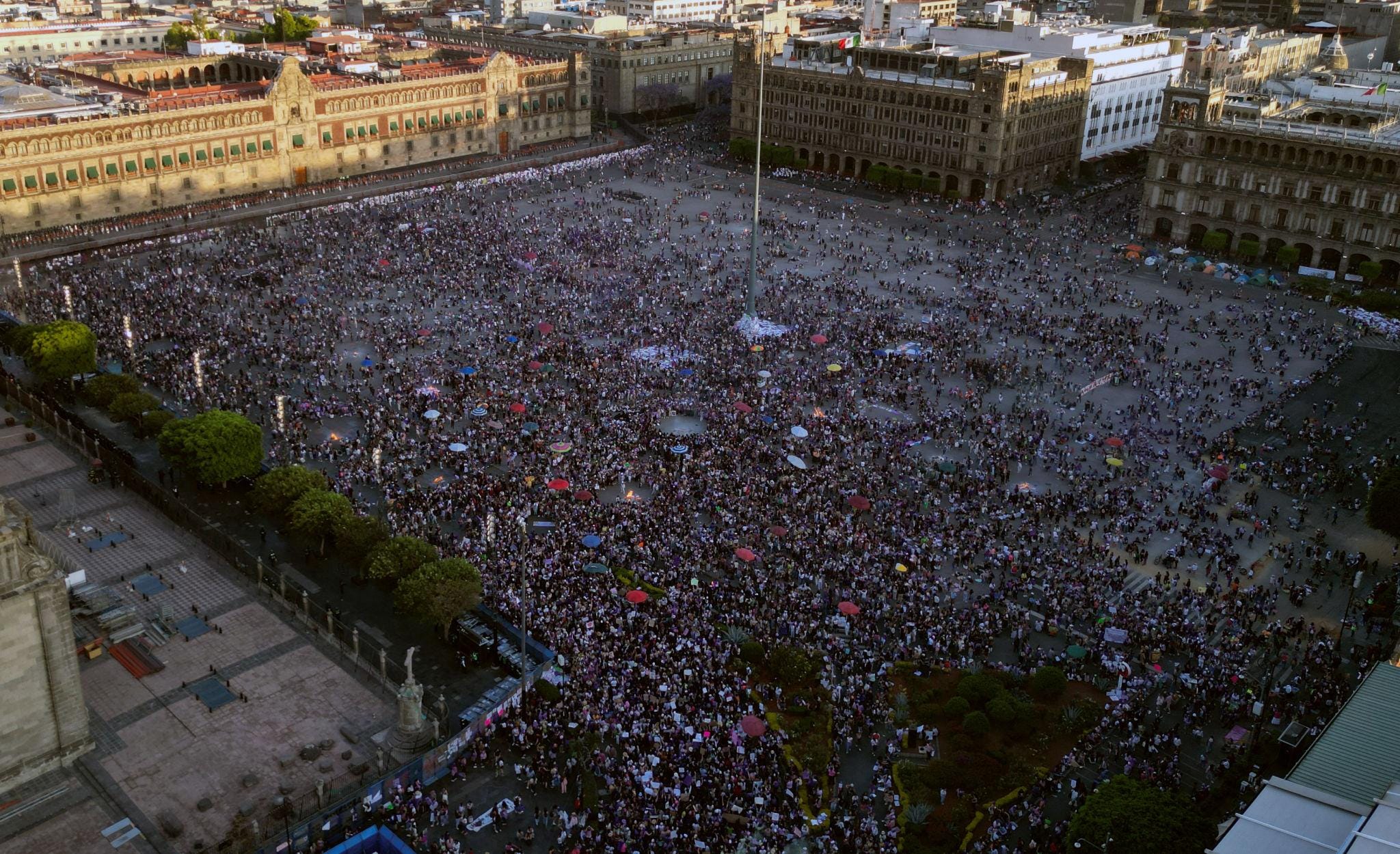
Visual cues help decode M8 in Mexico. Purple is widely used to mark women’s rights claims, and green is often associated with demands for sexual and reproductive autonomy across Latin America. In Mexico’s marches, these colors frequently appear together, sometimes alongside pink or black, signaling that different agendas share the street even when they do not always share strategy. In 2020, that convergence was visible in the crowd itself, with participants wearing purple and green scarves and shirts that pointed to linked but distinct demands. The day also became paired with a second date: 9M, short for March 9, when activists called for a national women’s strike under the slogan Un Día Sin Nosotras. The tactic asked women to remove their labor and presence from public life for a day, to make visible what is usually treated as background. Academic work traces the strike’s online call to the Las Brujas del Mar and to networks in Veracruz, and links it to wider Latin American protest repertoires. Together, 8M and 9M show how Mexico uses dates as organizing tools.
For expats, M8 can be unfamiliar because it blends commemoration with confrontation. The best approach is to read the day as you would any large civic demonstration: anticipate disruption, center consent, and avoid turning it into content. Photographing crowds is not illegal, but close-up images of minors, survivors, or families can raise privacy concerns. If you share images, consider obscuring faces unless you have clear permission. If you are not attending, treat the day as you would a major marathon or political rally. Give yourself extra time, and avoid driving in dense areas. Security and route details change each year, but March 8 is consistently a high-mobility day in central areas. Many participants are there because they have experienced violence directly or are supporting someone who has. That context is why slogans often name feminicidio, impunity, and institutional responsibility, and why some groups reject mixed-gender participation. The core point remains steady: M8 is about rights that should function every day, not just on March 8.