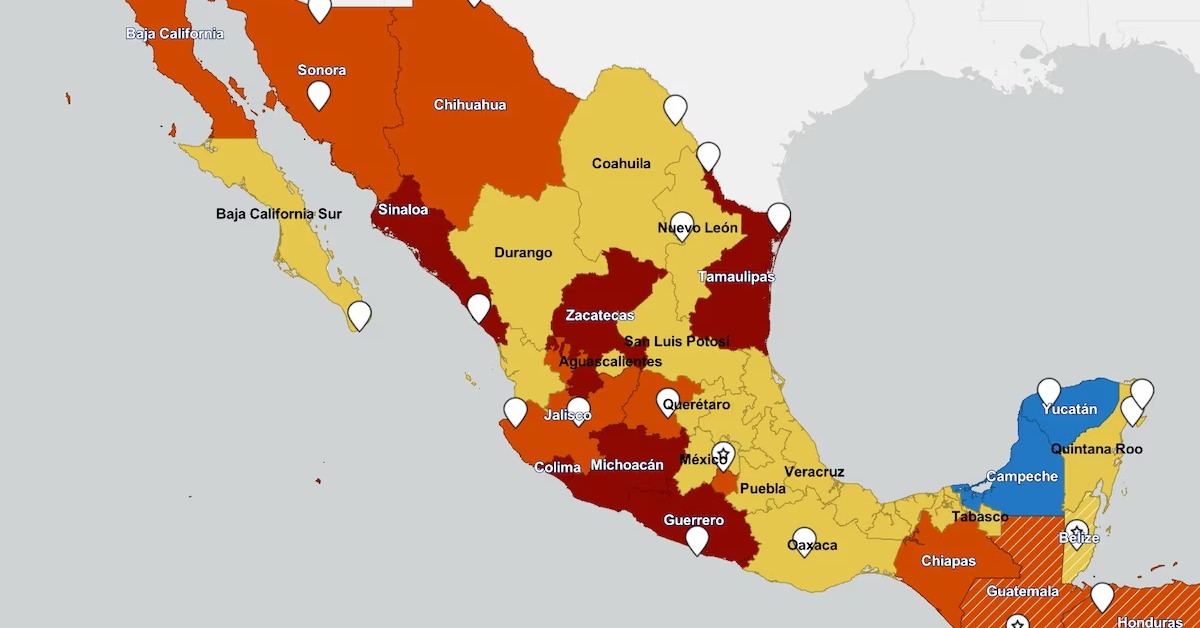
Mexico’s latest security numbers show a decline in recorded intentional homicides. Yet two related indicators keep climbing: disappearances and a catch‑all category called other crimes against life. Analysts say the contrast may reflect more than changes on the street. It may also show how cases are opened, updated, and reclassified inside prosecutors’ offices. A new federal reporting method aims to make those shifts easier to detect. For residents, including expats, the question is which numbers best match what is happening locally.
Mexico’s official count of intentional homicide victims is trending down. Recorded victims fell from 30,062 in 2024 to 23,374 in 2025. Using SESNSP figures, officials also cite a 42% reduction from September 2024 to January 2026. They describe a drop from 86.9 to 50.9 victims per day in that period. At the same time, two related measures are moving in the opposite direction. One is the group of offenses labeled crimes against life and physical integrity. Within it, other crimes against life have expanded over the past decade. The other is the national count of missing and unlocated people, which continues to rise. These patterns do not prove that violence is increasing or decreasing. They do suggest that national trends can be sensitive to classification and reporting practices. For readers trying to understand safety conditions in Mexico, that sensitivity matters. It can shape how a single headline number is interpreted and how progress is measured across administrations. It also affects how people compare Mexico with other countries that use death certificate counts. The next data releases are expected to provide more detail on where cases move within the system.
Why the homicide line can move
Mexico’s homicide totals come from more than one system, and each answers a different question. Monthly figures from SESNSP count victims tied to open prosecutor investigations. Cases are counted by the date the investigation file is opened. State prosecutors send the monthly files to SESNSP for publication. Those records can change as a case develops, including when a death is later judged accidental or intentional. A separate INEGI series based on death certificates tracks presumed homicides as a public health statistic. In 2024, that health-based count was 33,241 deaths, a rate of 25.6 per 100,000 people. That figure was slightly higher than the 2023 rate in the same series. Because the two systems differ, they can move in different directions for the same year. The prosecutor-based series can also undercount when crimes are not reported or recorded. The gap can widen when agencies are overloaded, when evidence arrives late, or when local criteria shift. That is why analysts track both the victim count and the death-certificate series. All of that makes the headline homicide trend real, but not always complete.
The growing catch‑all for crimes against life
One reason the homicide trend is being scrutinized is the rise of other crimes against life and physical integrity. An independent review of official datasets shows that this residual category rose to 17,288 recorded victims in 2025. It stood at 8,064 in 2018 and 3,692 in 2015. An official SESNSP classification manual defines this bucket as conduct affecting life or bodily integrity. It excludes homicide, injuries, femicide, and abortion. It also instructs agencies to use “other” labels sparingly. It notes that cases can be reclassified as investigations advance. It lists examples such as aiding suicide, danger of contagion, and nonconsensual artificial insemination. At the same time, security officials argue that some cases within the bucket reflect attempted killings. If attempts are being reported more consistently, the rise could reflect improved detail. If not, the increase could indicate that deaths and serious attacks are being shifted away from homicide labels. Some states show especially large jumps, which raises questions about local recording rules. Because the label is broad, it can hide very different events within a single total.
Disappearances as a parallel indicator
Disappearance data adds another layer because it can rise even when homicide totals fall. In the RNPDNO registry, the 2025 count was about 12,800. The exact figure depends on the extraction date. That is roughly double the 2018 level and more than triple the 2015 level in the same series. The registry also shows a total of 131,822 missing and unlocated people as of mid-February 2026. Those totals are updated as authorities add records, remove duplicates, and change a person’s status. The registry is a search tool first, not a statistical survey. That shapes what is collected, and how quickly records are corrected. In practice, a disappearance report can later become a homicide case or remain unresolved for years. For that reason, year-by-year counts can shift after publication. Researchers who track lethal violence treat disappearances as part of a broader picture. In some regions, they argue, disappearances can delay or avoid a homicide classification when bodies are not recovered.
What the new reporting method is meant to change
In late February 2026, SESNSP introduced a new Registro Nacional de Incidencia Delictiva framework. It is designed to add detail, including age groups, municipal information, and georeferenced fields. It also adds more federal supervision over data quality. A key change is a new requirement for states. They must report the opening classification and the final statistical category. That creates a built-in cross-check between the initial legal reading and the later statistics. The stated goal is to detect inconsistencies and sudden shifts faster. The approach could also make it harder to treat reclassification as routine bookkeeping. If it works, it may show where cases move out of the homicide category. For expats and other residents, the practical impact is that future datasets may explain today’s mismatch. Until then, the national homicide decline and the rise in related categories can both be true on paper. The main uncertainty is how much of the divergence reflects changes in violence and how much reflects changes in labels.
With information from INEGI Defunciones por Homicidio 2024, Mexico Evalúa De la Violencia a la Pacificación, SESNSP Manual Nuevo Instrumento