Months before Good Friday, the work begins far from the crowds. In Iztapalapa, families from the eight historic neighborhoods are shaping columns, arches, and ornaments for Mexico’s most famous Holy Week reenactment. This year, the labor carries extra weight. The 183rd edition will be the first since UNESCO added the tradition to its representative list of the intangible cultural heritage, giving a local act of faith and neighborhood organization new global attention. More visitors are expected, but the larger question is whether the tradition can grow without losing its sense of community.
A neighborhood tradition prepares for a larger stage
Work is already underway in homes, workshops, and neighborhood streets across Iztapalapa. For months, families from the area’s eight traditional neighborhoods have built columns, arches, lions, and other set pieces. The pieces will frame the 183rd Representation of the Passion, Death, and Resurrection of Christ. Organizers say preparations started about four months ago. In some homes, neighbors have spent weeks shaping decorations from fiberglass, foam, and reused materials before moving them toward staging areas near Jardín Cuitláhuac.
The event is already massive before the first public scene begins. Committee members say last year’s edition drew about 2.3 million people and generated more than 260 million pesos in economic activity. They believe 2026 can go higher. This will be the first Holy Week staging since UNESCO added the tradition to its representative list of the Intangible Cultural Heritage of Humanity in December 2025. Organizers say that recognition has already expanded the event’s visibility into about 60 countries.
What UNESCO recognition changes
For readers outside Mexico, the UNESCO label does not protect a building or a museum object. It recognizes a living tradition. In Iztapalapa, that tradition is carried by residents who act, sew costumes, build scenery, organize routes, decorate streets, and prepare the neighborhoods for Holy Week. UNESCO says local residents play a central role in the event. Preparations begin in December and continue well beyond the days most visitors see.
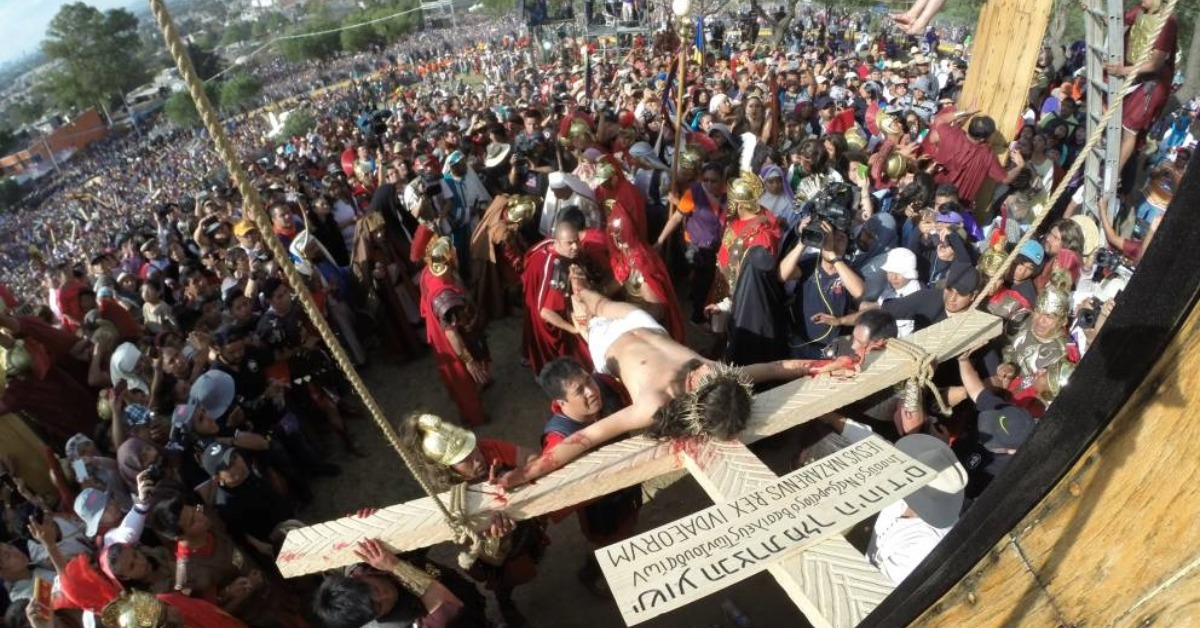
That distinction matters because the Iztapalapa representation is not just a stage play. It moves through public space and daily life. The route links neighborhood streets, open plazas, and Cerro de la Estrella, where the Good Friday crucifixion scene is staged. This year’s main Holy Week events run from March 29 to April 5, with the most-watched scenes on Holy Thursday, April 2, and Good Friday, April 3. A formal UNESCO certificate was delivered in Iztapalapa in February, adding to the sense that 2026 marks a new chapter.
Why this tradition counts 183 years
The history behind the number 183 can confuse first-time readers. The community traces the tradition’s origin to 1833, when residents vowed to honor the Señor de la Cuevita if a cholera epidemic ended. The formal street representation, however, dates to 1843. That is why 2026 is counted as the 183rd edition even though the deeper story begins a decade earlier. Over time, the annual observance grew from a local act of gratitude into Mexico’s best-known Passion reenactment.
Its continuity helps explain why the UNESCO decision carried weight. Before the international listing, the tradition had already been recognized in Mexico City and later added to Mexico’s national inventory of intangible heritage. The international step did not create the tradition. It acknowledged the way the community has protected it across generations. That local control remains central, from casting to scenery to neighborhood logistics.
More visitors mean more than bigger crowds
The new visibility also changes the way outsiders may read the event. For many visitors, the best-known image is the climb toward the crucifixion scene. But the deeper story begins long before that moment. It is in the workshops, the neighborhood committees, the costume fittings, the rehearsals, and the street decorations that turn Iztapalapa into a temporary Jerusalem. Residents are not only preserving a religious tradition. They are also preserving local labor, memory, and a way of organizing public life.
That brings practical consequences for Mexico City as well. The event is not confined to one church or plaza. It affects transport, commerce, public safety, and temporary street use across the zone. Families set up stalls and visitors arrive from elsewhere in Mexico and abroad. For local businesses, the tradition is also a short but important economic season. For city authorities, it requires planning that treats the event as both a cultural heritage and a mass gathering.
That is why this year’s edition matters beyond Holy Week. The UNESCO recognition may bring more tourists, more spending, and more international coverage. It also brings more pressure to manage crowds, protect the route, and keep the event community-led. For Iztapalapa, the 2026 Passion Play is both a celebration and a test. It will show whether a tradition shaped by neighbors can grow larger without losing the local character that made it worthy of protection in the first place.
With information from UNESCO Intangible Cultural Heritage, Instituto Nacional de Antropología e Historia, Gobierno de la Ciudad de México