The first scenes of Iztapalapa’s Holy Week reenactment drew large crowds on Palm Sunday, but the real story goes beyond one procession. What begins as a religious observance also reveals how one of Mexico City’s best-known traditions is organized, why it carries new international weight this year, and what many foreign readers miss when they see it only as a Good Friday spectacle. The opening day mattered, but it was also the start of something much larger.
Palm Sunday opens a defining week in Iztapalapa
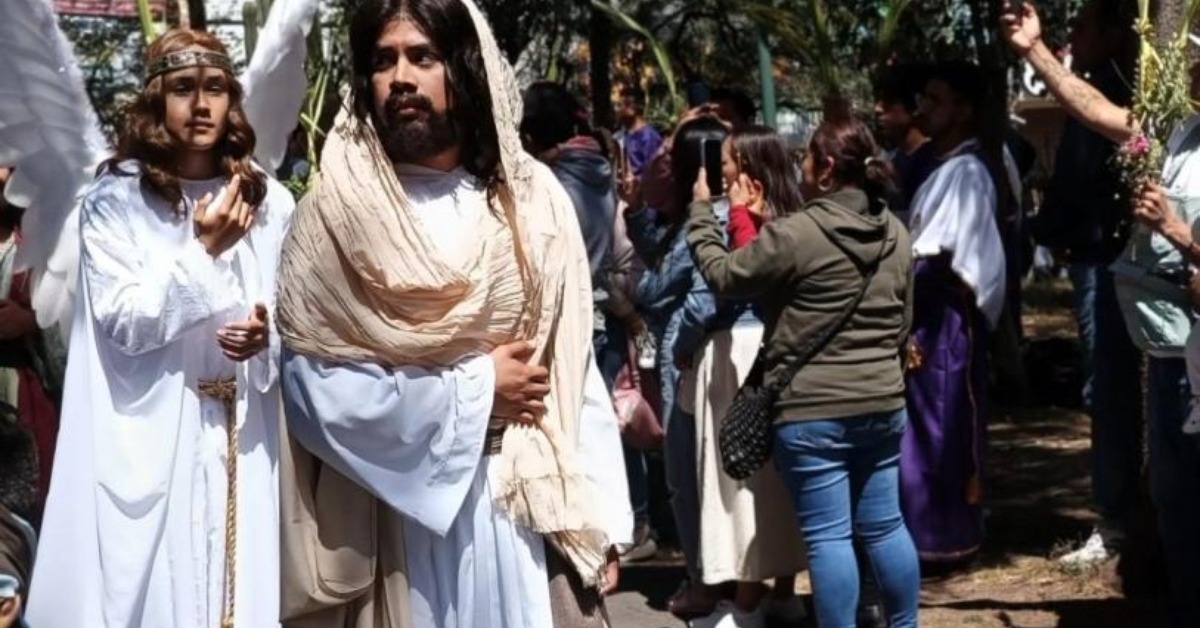
The 183rd Representation of the Passion, Death, and Resurrection of Christ in Iztapalapa began on Palm Sunday, opening the most visible stretch of a tradition that has shaped life in this part of Mexico City for generations. Crowds gathered from early in the day to watch the opening scenes, filling streets in a borough where Holy Week is not treated as a side event or a tourist extra. It is one of the calendar’s central public moments.
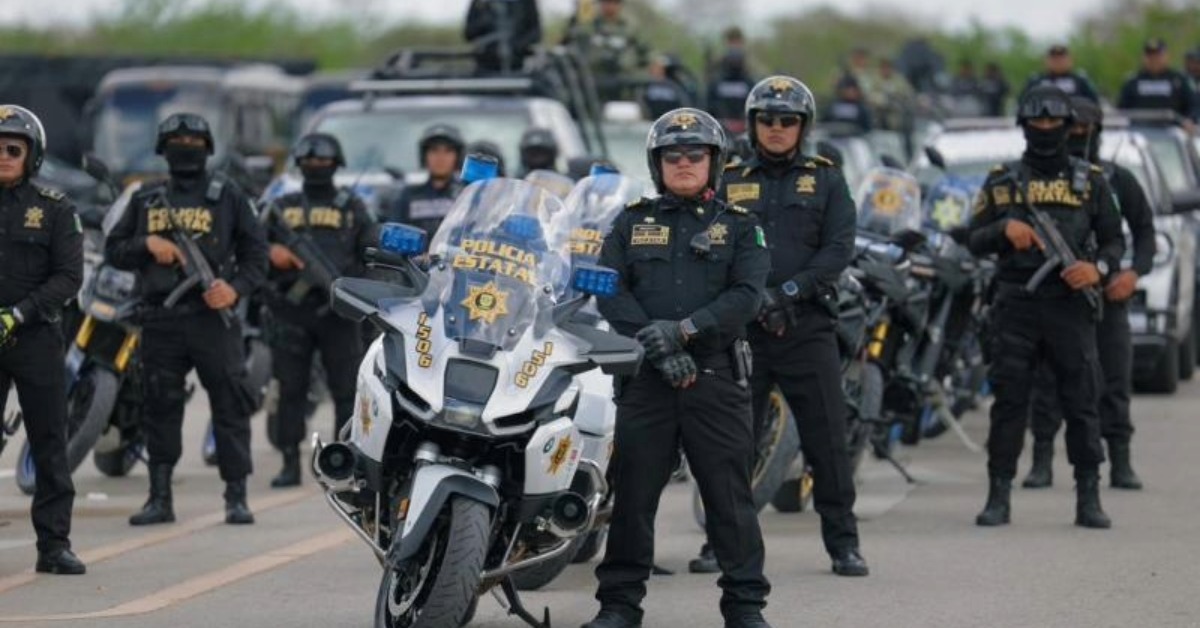
Opening day set the tone for the week ahead. Local authorities later reported a saldo blanco, meaning no major incidents, and said 33,250 people joined the main Palm Sunday procession. That figure matters because it shows the scale of the event even before the biggest days arrive. Palm Sunday is the formal start, but the largest crowds usually come later, especially as the reenactment moves toward Holy Thursday and Good Friday.
For many readers outside Mexico, the word “reenactment” may sound too small for what happens in Iztapalapa. This is not a short play on a fixed stage. It is a community-run public performance that moves through streets, plazas, churches, and the slopes of Cerro de la Estrella, blending religious devotion with neighborhood identity, civic logistics, and family labor. That is why the opening of the week carries weight well beyond the first procession.
Why this tradition matters beyond religion
The Iztapalapa Passion Play is one of Mexico’s most important expressions of popular religious culture, but its meaning is broader than faith alone. UNESCO now recognizes it as Intangible Cultural Heritage of Humanity, a designation that does not protect a building or monument. Instead, it recognizes a living practice carried by people, passed between generations, and kept alive through collective work.
That distinction is important. In Iztapalapa, the tradition is sustained by residents of the eight historic neighborhoods, who take part as actors, organizers, artisans, musicians, and volunteers. The event depends on local households building scenery, preparing costumes, managing routes, and preserving rituals that have remained rooted in the borough even as the city around it has changed. What visitors see during Holy Week is only the public face of months of preparation.
The tradition dates to 1833, when residents made a vow after surviving a cholera epidemic. The formal street representation began in 1843, which explains why this year is counted as the 183rd edition. Over time, the observance became more elaborate and more widely known, but its core structure remained community-led. That continuity is one reason the tradition carries unusual cultural weight in Mexico City.
Why 2026 feels different
This year’s edition arrives with greater visibility, as it is the first Holy Week cycle following the tradition’s UNESCO inscription in December 2025. A formal certificate was later presented in February, reinforcing the sense that 2026 marks a new chapter for Iztapalapa. The recognition does not change the meaning of Palm Sunday itself, but it does change the level of attention around the event.
That matters for practical reasons. Authorities have said they expect more than two million visitors over the broader Holy Week observance. More recognition can mean more tourism, more media coverage, and more pressure on transport, public safety, vendors, cleanup, and crowd control. In that sense, the story is not only about heritage. It is also about whether a community tradition can absorb greater international attention without losing the local character that made it distinctive in the first place.
The Palm Sunday scenes offered an early sign of that balance. The opening remained rooted in neighborhood ritual, yet it also unfolded under a much brighter spotlight than in past years. International readers may see the UNESCO label and assume the event has become institutional or state-controlled. The opposite is closer to the truth. The recognition celebrates the fact that the tradition has remained community-based, even as governments now help support security, logistics, and preservation.
What visitors and expats should understand this week
For foreign residents and travelers in Mexico City, Iztapalapa during Holy Week is worth understanding on its own terms. It is not simply a spectacle to consume, and it is not only a religious event for the devout. It is also a public expression of memory, belonging, and neighborhood organization in one of the capital’s largest and most complex boroughs.
That is why the week’s most famous images can be misleading if taken alone. Many outside observers focus on the crucifixion scenes or on the scale of the Friday crowds. Those moments are real and important, but they sit inside a much larger social structure. Residents do not step into these roles for a single afternoon. They inherit responsibilities, commit time, and organize around a tradition that shapes family and community life long before the crowds arrive.
Palm Sunday matters because it opens that public cycle. It signals that the streets are no longer operating under ordinary rhythms. From this point forward, the borough enters a week in which religious performance, public space, and local identity are tightly linked. For some readers, that may be the most useful way to understand the event. The opening day was not only the beginning of a pageant. It was the start of a week in which Iztapalapa shows the rest of Mexico, and now much of the world, how a living tradition still works when the people who own it refuse to let it become just another show.
Explore more:
Iztapalapa Passion of Christ earns UNESCO world honor
Iztapalapa Passion Play Draws Global Focus in 2026