
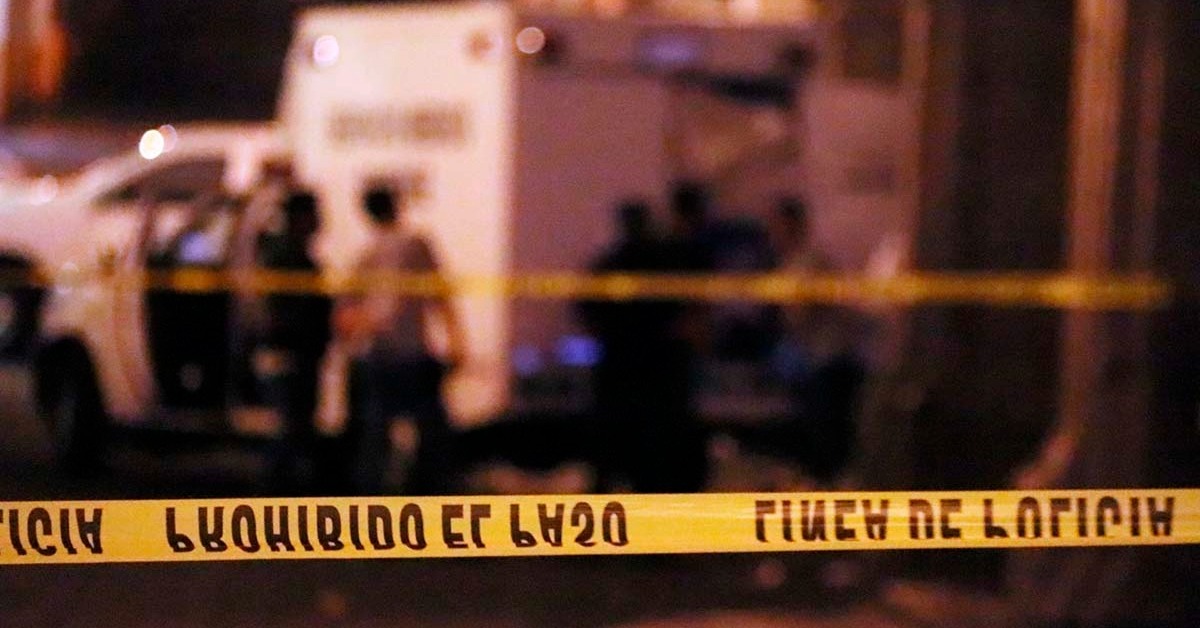
Los Cabos is usually sold as a polished resort destination. Now it is being discussed in a very different way. A March 30 report says federal authorities are examining alleged corruption and criminal links after several violent episodes shook Baja California Sur. The claims are serious, but the public record is still incomplete. What is confirmed, what remains unproven, and why does this matter beyond one tourist city? The answers help explain why this story is drawing attention well outside the peninsula.
Los Cabos is facing a deeper test than a tourism slowdown
A March 30 report placed Los Cabos under rare national and international scrutiny. The report said Mexican federal authorities are examining an alleged corruption network tied to recent violence in the municipality and in nearby parts of Baja California Sur. It also said information shared from the United States helped push the issue higher on the federal agenda. That is a serious claim. It lands at a moment when public confidence in security is already under strain, and when one of Mexico’s best-known resort regions is trying to project calm during a busy visitor season.
The significance goes beyond one headline. Los Cabos is not just a local beach destination. It is one of Mexico’s top tourism brands and a gateway for foreign travelers, investors, second-home owners, and retirees. When a city like this comes under federal scrutiny, the story quickly becomes bigger than local politics. It touches policing, public trust, business confidence, and Mexico’s broader effort to show that major destinations remain stable even when security problems surface nearby or inside local institutions.
What appears to have triggered the new attention
Several recent episodes appear to have sharpened the focus. In late March, families and supporters blocked access to the Los Cabos International Airport while demanding answers in the disappearance of a young man. Reporting on that protest said three young men had disappeared, and two were later found alive. The blockade lasted for hours and disrupted access to one of the region’s most important transport points. Even before that, the killing of former high-impact prosecutor Bernardo Soriano Castro in La Paz had already raised alarm across the state.
Another case was added to that concern. In March, a municipal police officer in San José del Cabo died after a gunshot wound, and the state prosecutor’s office later said a police commander had been formally linked to criminal proceedings in the case. That matters because the issue is no longer limited to street violence or isolated disappearances. It reaches into the institutions meant to enforce the law. When that happens, the question changes. The issue is no longer only whether crime is present. It becomes whether local authority structures can be trusted to confront it.
What has been confirmed and what remains unproven
The public record, at least for now, shows a mix of confirmed violent events and unconfirmed broader allegations. The disappearances, the airport blockade, the Soriano killing, and the police officer’s death are grounded in reporting and, in some cases, official state records. What is not yet publicly clear is the full scope of the larger anti-corruption inquiry described in recent reports. As of March 31, there had been no detailed public federal case presentation laying out specific charges, named defendants, or a formal map of the alleged network described in the March 30 story.
That distinction matters. Readers should resist two easy mistakes. One is to dismiss the story because some details remain incomplete. The other is to treat every allegation as a proven fact. At this stage, the strongest evidence points to a pattern of events that has clearly drawn more attention from authorities and from outside observers. It does not yet provide a full public accounting of who may be responsible, how far any corruption links extend, or whether the alleged network described in recent reporting will hold up under formal investigation.
Why the story has international weight
The mention of outside interest is not coming out of nowhere. After Bernardo Soriano Castro was killed, the U.S. Consulate in Tijuana publicly lamented his death and highlighted his past collaboration in security training. That alone does not prove a joint anti-corruption operation. It does, however, show that at least some parts of the U.S. security and diplomatic apparatus were paying close attention to events in Baja California Sur. The March 30 report goes further by suggesting that intelligence from U.S. agencies helped shape the broader scrutiny now surrounding Los Cabos.
There is also a practical reason the case travels beyond Mexico. Los Cabos depends heavily on international air traffic, foreign tourism, and the image of institutional reliability. State tourism authorities recently projected tens of thousands of student arrivals during Spring Break 2026, with significant economic benefits for the local economy. That creates a sharp contrast. On one side, officials continue to describe the destination as prepared and secure. On the other hand, a string of violent incidents and allegations of corruption are pulling the region into a very different conversation.
Why this matters for readers who live in or follow Mexico
For many international readers, the instinct may be to ask whether this is only a tourism story. It is not. This is also a governance story. If federal authorities are now examining possible links between criminal activity and local structures, the consequences could reach city hall, policing, public works, contracting, and the everyday functioning of local government. That matters to residents as much as it matters to visitors.
It also matters because Los Cabos has long stood as a symbol of how Mexico markets safety inside high-value resort corridors. When a city with that profile becomes associated with disappearances, institutional suspicion, and outside scrutiny, it raises a larger question about how security is measured and communicated. For now, the most responsible reading is this: the warning lights are on, the public facts are still incomplete, and the next steps from investigators will matter more than the initial headlines.
What to watch next
The next phase of this story will depend on whether federal authorities move from quiet scrutiny to public action. If that happens, the first signs will likely be formal statements, targeted arrests, or court filings that define the scope of any case. Another key point will be whether the recent disappearances, the Soriano investigation, and the case involving the municipal police officer remain separate tracks or begin to form part of a larger pattern in official findings.
For now, Los Cabos remains a place under questions, not conclusions. But the questions are serious, and they are no longer staying local.