
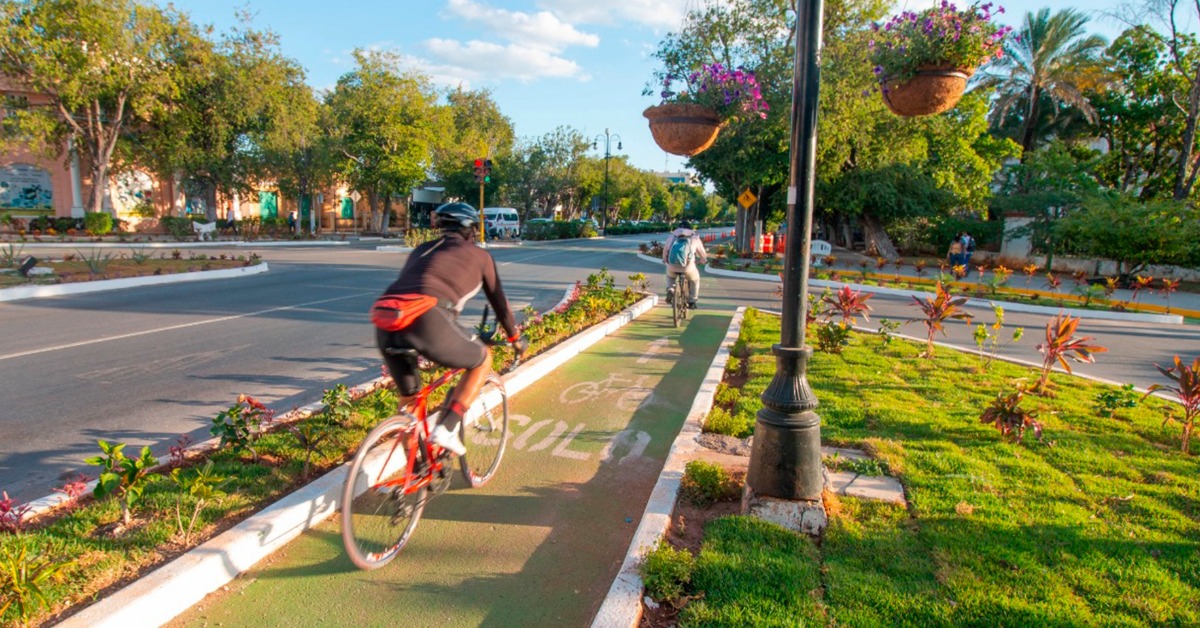
Mérida keeps building bike lanes and is now near the top of a Latin American cycling network ranking. But the share of trips made by bicycle remains small, and many residents still default to cars. A local mobility specialist says the numbers point to a gap between infrastructure on paper and riding that feels safe in real life. So what is holding the city back, and what would make biking a practical choice for errands, work, and school?
A ranking that still leaves bikes on the margins
Mérida recently placed sixth in a regional cycling-network ranking, a result tied to how much bike infrastructure the city reports. The same update shows a different picture in daily travel. Bicycles account for about 3% to 4% of trips, while private cars make up more than 40%. That gap matters because a high score can reflect coverage on a map, not comfort on the street. Local planners have been working on a long-range mobility strategy that aims to reduce reliance on single-occupant vehicles and expand active travel. The city already has over 100 kilometers of ciclovías, and the network keeps growing. For expats, that can look like an invitation to ride. In practice, many newcomers still find it easier to walk short distances or take a car for longer ones. The key question is what would move cycling from a weekend option to a normal way to reach work, schools, shops, and transit stops.
Why safety and connections still shape choices
Safety is one of the clearest barriers. A local mobility expert cites an 8% to 9% rise in cycling crash risk in recent years. Official injury records also show more injured cyclists in the city between 2019 and 2022. Risk is not spread evenly. Dozens of locations are flagged as high-incidence points, including stretches of the Periférico. These are places where speeds run high, and crossings are complex. Design details often decide whether a lane gets used. Some corridors lack protected intersections, clear markings, or smooth pavement. Others do not connect cleanly to destinations, so riders merge into fast traffic at the worst moments. End-of-trip needs matter, too. If there is no secure parking at offices, markets, or apartment buildings, many riders will not risk leaving a bike outside. Culture also plays a role. When drivers, riders, and pedestrians do not share space predictably, the safest choice is the simplest: not riding.
What could raise the bicycle share
Closing the gap between infrastructure and use will likely require targeted changes, not just more paint. Municipal plans call for a mode shift toward public transport and active travel. They also call for clearer, more informative information for travelers. One focus is neighborhood-scale routes that avoid high-speed arterials. These routes can offer safer alternatives for short trips. Another focus is upgrading existing corridors, especially at intersections where conflicts happen. That work includes signage, surface quality, and the design of crossings. The city can also lean on shared mobility. Expanding and stabilizing En Bici would help residents who do not own a bike. It would also help many short-term and newly arrived residents. If stations and routes link to markets, schools, offices, and bus stops, the bike becomes a connector. It stops being a standalone mode. Mérida’s ranking suggests a foundation is in place. The next test is whether everyday riders feel protected enough to use it.
With information from Diario de Yucatán, Monitor Ciclociudades (ITDP México), ITDP México announcement on Monitor Ciclociudades 2025, PIMUS Mérida 2040 (IMPLAN) PDF, INEGI accidents and victims data (ATUS)