Hours after Mérida’s 8M march ended, city crews were already cleaning major monuments on Paseo de Montejo. By Monday morning, the work had reshaped the avenue’s appearance, but the Monumento a la Patria still showed the strongest marks. The fast response turned the aftermath into more than a cleanup story. It also raised questions about heritage, protest, and how the city handles one of its most visible public spaces. For residents, the scene changed overnight.
Cleanup started overnight
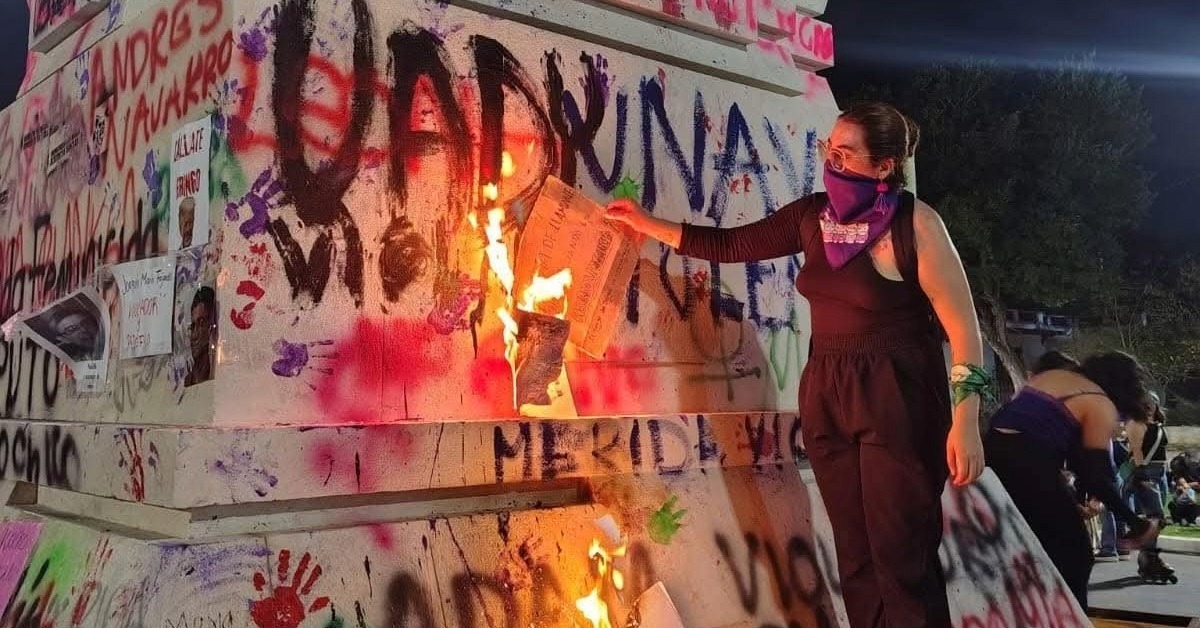
Mérida began cleaning Paseo de Montejo monuments within hours of the city’s 8M march. By Monday morning, crews had made visible progress on the monuments to Los Montejo, Felipe Carrillo Puerto, and Justo Sierra. The Monumento a la Patria remained the most visibly affected site. The march ended there, and activity continued into the night. That made the circle the focal point of the strongest interventions. For many residents and visitors, the avenue is more than a traffic corridor. It is one of Mérida’s best-known public spaces. People use it for walks, photos, tours, and weekend outings. Monday commuters and early tourists could see the cleanup almost in real time, before breakfast crowds arrived. That made the effort highly visible from the first hours of the day. It also turned a maintenance job into a wider civic story about how the city restores shared spaces after a politically charged demonstration.
Montejo carried the visual impact
Mayor Cecilia Patrón said the priority during Sunday’s demonstration was the safety of the women who joined the march. She later confirmed that Servicios Públicos Municipales began cleaning affected areas at 11 p.m. the same night. By early Monday, workers were active along Paseo de Montejo. The strongest visual impact was concentrated there. Local reports described paint, stickers, and signs of minor burning on several monuments. The most visible marks remained at the Monumento a la Patria. Protesters had broken through metal barriers installed ahead of the march. Other parts of central Mérida appeared to come through the night with less visible damage. That point matters because it suggests the interventions stayed focused on the avenue’s monuments instead of spreading across the full historic core. Even so, the images from Montejo carried weight. The roundabout at the Monumento a la Patria is one of the city’s most familiar landmarks. Its condition on Monday quickly became part of the story.
What happens after the washdown
The next phase may be less visible than the first washdown. Quick cleanup can remove surface marks. The harder question is whether any monument will need specialist restoration work. That is especially relevant at the Monumento a la Patria, a heavily carved stone landmark at the end of Paseo de Montejo. It is also one of Mérida’s signature images. State tourism materials present it as a key stop on the avenue. Monday coverage showed crews working directly on and around the structure. The cleanup also unfolded beside a broader debate inside the city government. Municipal officials defended the decision to prioritize safety during the march. The city’s women’s institute said the interventions reflected a deeper demand to confront violence against women. That contrast explains why this story reaches beyond basic cleanup. It sits at the intersection of heritage, protest, and public order. For readers in Mérida, the immediate takeaway is clear. Cleanup started fast, but the debate around what happened on Montejo is not ending with the removal of paint.