Mexico has announced the return of 160 cultural objects from abroad, including pre-Hispanic pieces, colonial-era items, and a rare 1703 book. The shipment is significant on its own, but it also points to a larger question many international readers may have: why do these returns matter so much, and how does Mexico get them back in the first place? The answer touches law, diplomacy, museums, and the country’s long fight over who controls its past.
Mexico’s first return of 2026 carries a larger message
Mexico has formalized the return of 160 heritage objects recovered in the United States, Canada, France, and Argentina. The lot includes 157 archaeological pieces and three historical items, making it the first restitution of 2026. Federal authorities said the transfer raises the total number of recovered objects during President Claudia Sheinbaum’s administration to 3,716.
On the surface, this may sound like a museum story. In Mexico, though, it is also a question of law, identity, and state responsibility. These objects are not treated as decorative curios or ordinary collectibles. They are considered part of the country’s protected cultural heritage, and their return is framed as a recovery of history that had been removed from its original context. For many readers outside Mexico, that is the key point. The issue is not only where an object sits, but whether it remains connected to the people, place, and historical record that gave it meaning.
What came back to Mexico this time
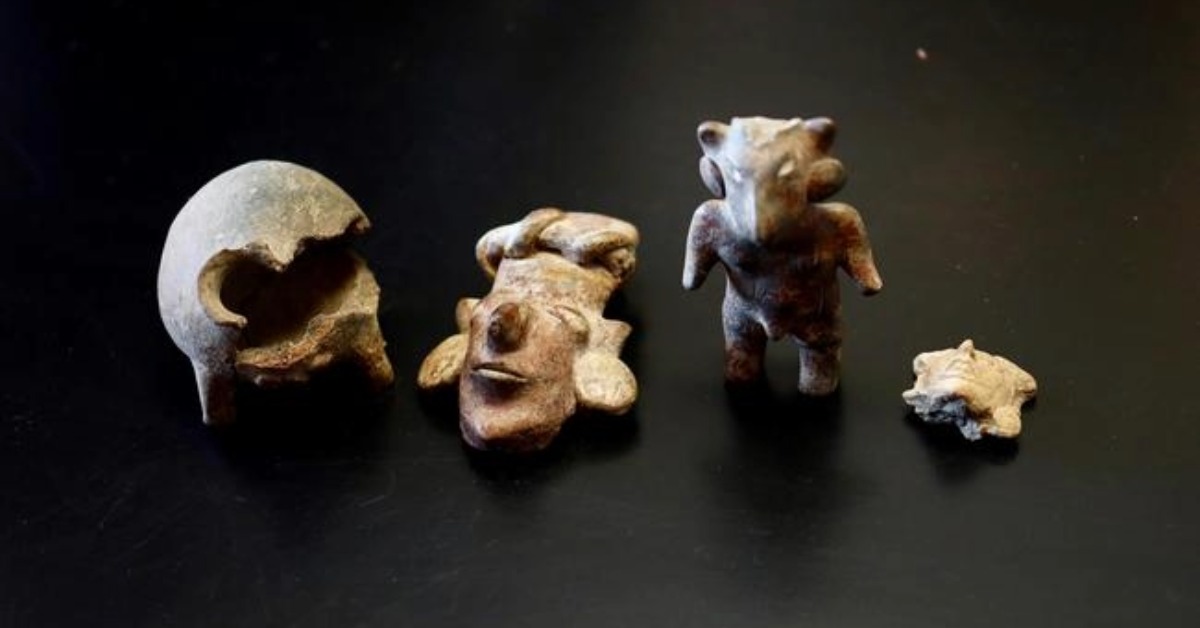
Authorities said the returned objects come from several cultural regions, including the Altiplano Central, the West, the Bajío, and the Maya region. Their age spans a long timeline, from the Mesoamerican Preclassic period to the viceregal era. Most of the archaeological items were made of ceramic, which helps explain why the shipment includes figurines, vessels, and sculptural forms rather than monumental stone pieces.
Some details add texture to the story. Officials said 140 pieces were handed over voluntarily to the Mexican consulate in Seattle. Another 12 pieces were voluntarily returned in Raleigh. One additional object, linked to a 2011 auction catalog, was later recovered after being secured by U.S. customs authorities. France returned two anthropomorphic figurines and a zoomorphic effigy vessel associated with the San Sebastián style, found in the border area between Jalisco and Nayarit. That western Mexico link gives the story a point of local relevance for readers in Puerto Vallarta and the wider Pacific region.
The historical items are also notable. Two 18th-century wooden doors with baroque carving were recovered in Atlanta. Argentina returned a 1703 book printed in New Spain, titled Manual Summa de las Ceremonias de la Provincia del Santo Evangelio de México según el orden del Capítulo General de Roma. Together, the objects show that repatriation is not limited to pre-Hispanic artifacts. It can also involve colonial and documentary heritage.
Why Mexico keeps pushing for returns
This latest recovery matters because it fits into a much larger campaign. Mexico has spent years challenging auctions, pressing foreign governments, working through consulates, and encouraging private holders to voluntarily surrender objects. Reports tied to this case say the country has recovered about 16,500 cultural objects since 2018. That makes the latest shipment important, but also part of an established pattern rather than a one-off event.
The broader legal framework helps explain the intensity of these efforts. Under Mexican law, archaeological monuments are national property, not private souvenirs. Internationally, the 1970 UNESCO Convention treats the illicit import, export, and transfer of cultural property as illegal under the rules adopted by member states. That does not mean every return follows the same route. Some cases involve police seizures or customs actions. Others depend on voluntary handovers by collectors, heirs, or dealers who decide to return an object after learning its status or facing diplomatic pressure.
That distinction matters because repatriation is often slower and less dramatic than the public imagines. It usually depends on paperwork, expert reports, chain-of-custody questions, and negotiations between institutions. In this case, officials said most of the items were returned voluntarily, while others were recovered through cooperation with foreign judicial authorities. That makes the story as much about diplomacy and documentation as it is about archaeology.
What happens after the objects return
The return of an object is not the end of the process. It is the start of a new one. Mexican authorities said the pieces will be entered into the public registry of INAH, the National Institute of Anthropology and History. Experts will determine whether any require conservation or restoration work. After that, they can be assigned gradually to museums within the INAH network according to their type, origin, and cultural affiliation.
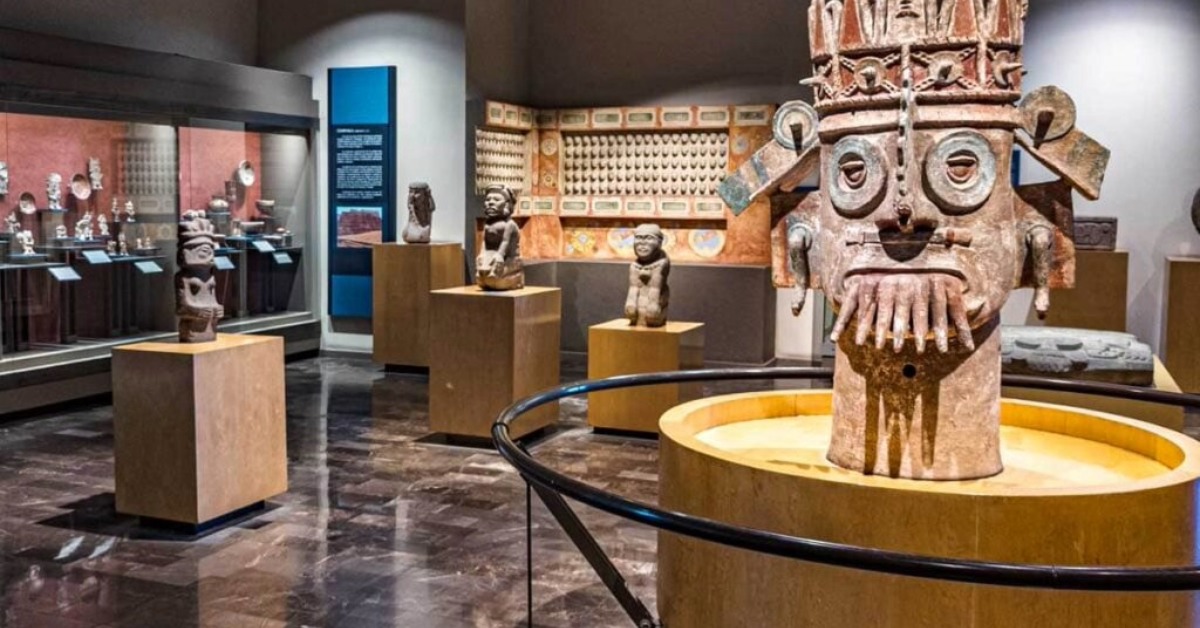
That part of the process is easy to overlook, but it is central to the government’s argument. Repatriation is not only about possession. It is also about study, preservation, and public access. An object in private hands may be admired, but it is often disconnected from scholarship and public interpretation. Once it enters an institutional system, it can be cataloged, conserved, compared with related material, and eventually displayed in a way that restores historical context.
Mexico and UNESCO have also been working on stronger cooperation against illicit trafficking in cultural property. In 2025, officials and specialists met to advance a protocol to improve prevention, recovery, and repatriation. That suggests Mexico sees these returns not as isolated victories, but as part of a longer strategy to make future cases easier to identify and pursue.
Why this story matters beyond the museum world
For foreign readers living in Mexico, stories like this can seem ceremonial at first. In practice, they reveal how seriously the country treats the ownership of its past. They also show that heritage policy is not abstract. It reaches into auction houses, customs inspections, private collections, libraries, and diplomatic relations.
The latest return is modest compared with the thousands of objects Mexico says it has recovered in recent years. Still, it carries symbolic weight. The shipment spans pre-Hispanic, colonial, and printed history. It also links several countries and several recovery methods. That combination turns the story into something larger than a transfer ceremony. It becomes a reminder that heritage is not only about age or beauty. It is about context, legality, and who has the right to tell a nation’s story through the objects that survived it.