Mexico City’s historic center will transform into a sea of color and music this Sunday. While most major carnivals across Mexico conclude before Lent, the capital is hosting a special “Carnaval de Carnavales” to honor its deep-rooted neighborhood traditions. Over 7,000 performers will march through the heart of the city, showcasing dances and costumes that have survived for centuries. This massive event marks a new chapter for these local customs, which recently gained official government protection as a vital piece of the city’s cultural identity.
A Celebration of Heritage and Identity
The upcoming Carnaval de Carnavales serves as a grand showcase for the diverse traditions found within Mexico City’s many boroughs. This Sunday, March 29, the third edition of the event will see approximately 60 dance troupes, or comparsas, take to the streets. These groups represent neighborhoods in Iztapalapa, Gustavo A. Madero, and Iztacalco, where carnival traditions are a cornerstone of community life.
The timing of this event is significant. In February 2024, the government officially declared these carnivals as Intangible Cultural Heritage of Mexico City. This designation aims to preserve the unique music, hand-crafted costumes, and traditional dances that define these local festivities. For residents and expats alike, the parade offers a rare chance to see these varied styles in one central location.
The Parade Route and What to Expect
The festivities are scheduled to begin at 3:00 p.m. starting at the Monumento a la Revolución. From there, the massive contingent will move along Avenida de la República and enter the historic center via Avenida Juárez. The parade will then follow the iconic 5 de Mayo street before reaching its grand finale at the Zócalo, the city’s main square.
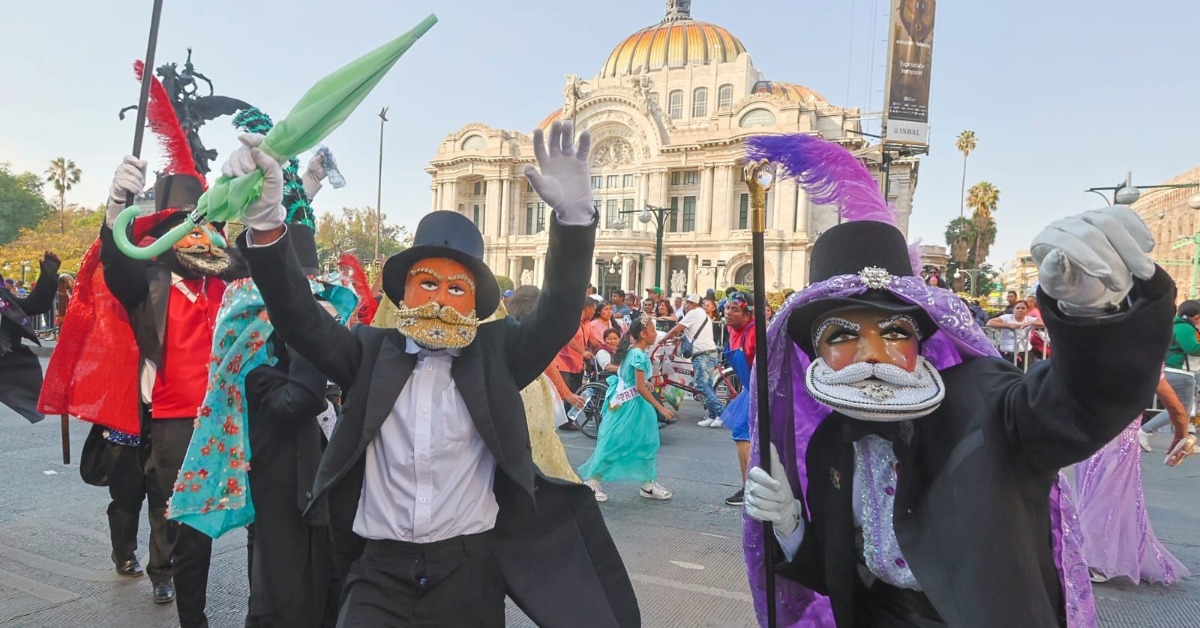
Spectators can expect to see iconic figures like the Chinelos, known for their mesh masks and velvet robes, and the Charros, who wear heavily embroidered suits. These characters often satirize colonial-era figures through rhythmic dancing and elaborate “hopping” steps. The event is free to the public and is designed to be a family-friendly atmosphere that highlights the “mestizaje,” or cultural blending, of indigenous and European influences.
Navigating the City During the Event
Because of the scale of the parade, significant road closures are expected throughout the afternoon. Authorities recommend using Avenida Chapultepec, Circunvalación, or Insurgentes Sur as alternate routes. For those planning to attend, arriving early is advised to secure a spot along the sidewalks of Avenida Juárez or 5 de Mayo, where the vibrant costumes are best viewed up close.
This “Carnaval de Carnavales” is more than just a parade; it is a celebration of the resilience of local culture. By bringing these traditions from the city’s outskirts into the historic center, organizers hope to foster a greater sense of pride and connection among all who call Mexico City home.