Mexico City’s building risk is not limited to earthquakes. A recent estimate says at least 1,300 buildings are structurally vulnerable, but the larger story is how damage accumulates slowly beneath daily life. Subsidence, moisture, nearby excavations, and traffic vibrations can weaken buildings long before residents see obvious warning signs. For readers outside Mexico, this is the part that matters: the danger is often cumulative, localized, and hard to read without expert review or monitoring tools.
A recent estimate puts at least 1,300 buildings in Mexico City in the category of structural vulnerability. That figure is better read as a warning sign than as a final census. Even so, it points to a problem with broad consequences in one of the world’s largest cities. In Mexico City, a building can be weakened by far more than an earthquake. Subsidence, humidity, aging materials, nearby excavation, and the daily vibration of heavy traffic can all chip away at safety over time.
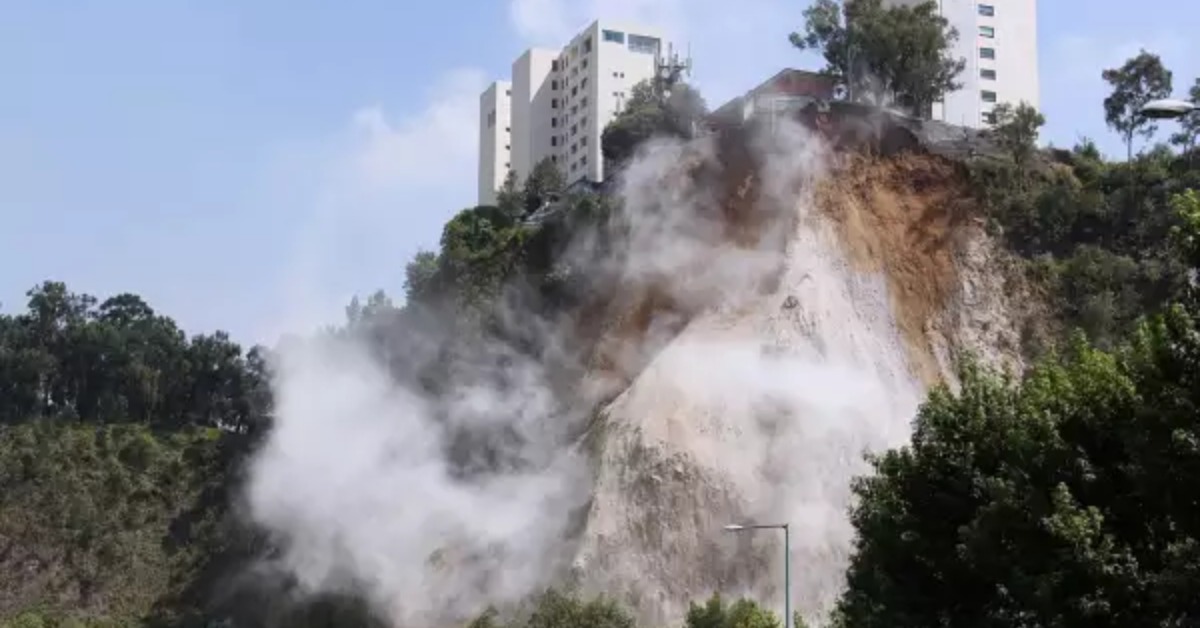
The issue also feels more urgent after the recent collapse of a building under demolition in San Antonio Abad, which killed three workers. That case involved a property already considered dangerous, not an occupied apartment block. But it showed how quickly structural risk can turn fatal. It also reminded residents that in Mexico City, danger often develops long before a wall falls or a façade gives way.
A city shaped by more than earthquakes
Large parts of the capital sit on soft former lakebed soils. For decades, researchers have warned that groundwater extraction, gradual sinking, fractures in the subsoil and dense urban pressure make those conditions worse. In simple terms, the ground does not behave the same way across the city. Some zones move more, settle more or amplify seismic effects differently. That helps explain why the same rain, vibration or nearby construction can have very different effects from one block to the next.
That history matters because Mexico City’s building risk is also tied to age. After the 1985 earthquake, construction rules became stricter. Yet many older buildings remained in service, and many were altered over time. University experts have noted that most buildings that collapsed in the 2017 earthquake had been built before 1985. That does not mean every older building is unsafe. It does mean age, maintenance, design, and location still matter, especially in neighborhoods with soft soils, past quake damage, or heavy construction activity.
Why the risk can stay hidden
One of the hardest parts of this story is that damage is often cumulative. A building may survive one earthquake, one rainy season, or one nearby excavation and still become weaker. Water infiltration can degrade materials slowly. Construction on the next lot can disturb soil and foundations. Constant vibration from buses and trucks can add stress, especially in older or heritage structures. Unauthorized modifications within a building can also alter its behavior under pressure.
The warning signs are not always dramatic. Engineers and architects point to tilting, diagonal cracks, uneven floors, deformed structural elements, and the loss of separation between neighboring buildings as reasons for closer review. Sometimes the signs look minor at first. A crack may seem cosmetic. A door may stop closing smoothly. A floor may feel slightly off level. The problem is that residents often cannot tell, with the naked eye, whether those changes are superficial or part of a deeper structural shift. That is why constant monitoring and specialist diagnosis matter.
What this means for people living in the city
For many foreign residents, the practical takeaway is not panic. It is due diligence. When choosing where to rent or buy, building condition deserves as much attention as price, neighborhood, or amenities. In a city with this kind of soil and this history of seismic damage, a few questions are reasonable. Ask when the building was constructed. Ask whether it has had a recent structural review. Ask whether post-quake reinforcement was completed. Ask whether recurring moisture or settlement issues have been addressed. Those questions are not alarmist. They are basic urban common sense.
Residents also have at least one public tool that can help frame those questions. The city’s Atlas de Riesgos includes geological, fracture, and seismic information, and it can analyze hazards around a chosen point. It will not replace a professional inspection. But it can help renters, owners, and neighborhood groups understand whether a property sits near known risk layers that deserve a closer look. In a market where many people move quickly, even a basic review can be useful before signing a lease or making a purchase.
City officials have also been trying to move the conversation from reaction to prevention. In September 2025, the capital launched a program focused on high-risk buildings. It covers structures affected by the 1985 and 2017 earthquakes, as well as properties that may require reinforcement, demolition, rehabilitation, or reconstruction. That is a sign that the government sees the problem as ongoing rather than historical. The challenge is scale. A city this large cannot wait for every warning sign to become visible from the street before acting.
The larger lesson is simple. Mexico City’s building risk is not only about the next major quake. It is also about the quieter pressures that work every day beneath foundations, inside walls, and across an uneven urban landscape. The estimate of 1,300 vulnerable buildings matters because it gives shape to that hidden strain. For residents, the real value of that number is not fear. It is clarity. Structural safety in Mexico City is not a one-time question. It is a condition that has to be checked, monitored, and taken seriously over time.