
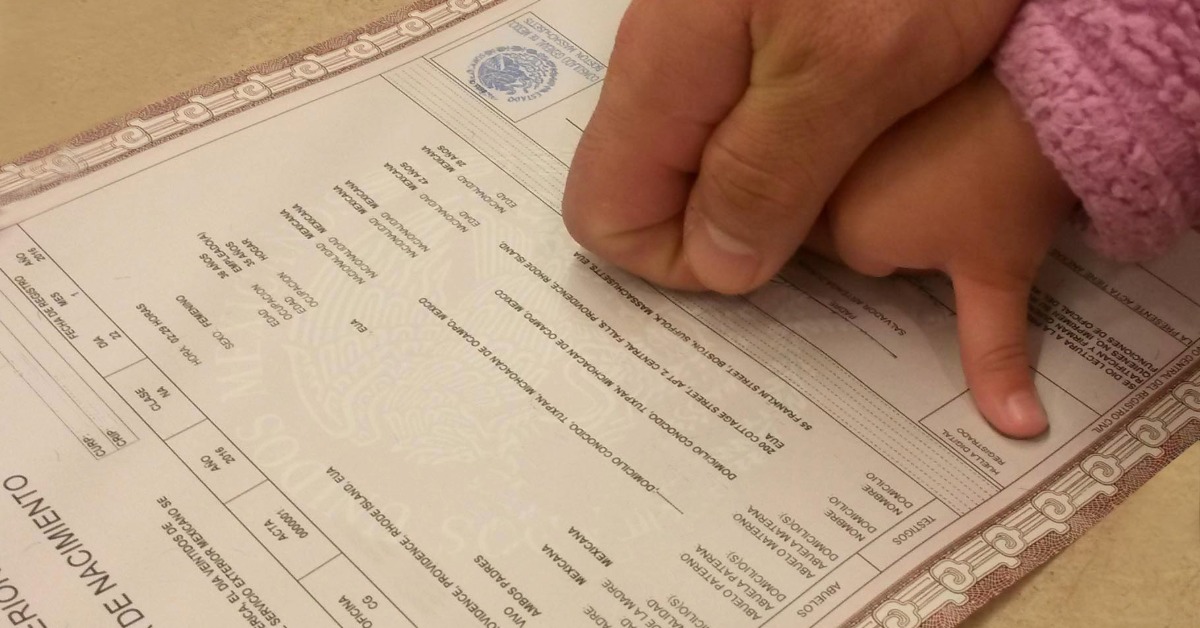
Mexico’s Supreme Court has struck down Guerrero’s rule that forced people to wait until 18 to seek a gender-marker change on a birth certificate. On its face, the ruling is about one state law and one paperwork process. In practice, it reaches much further. The decision explains how Mexican judges are treating identity rights, why minors cannot be shut out by a blanket age ban, and what Guerrero’s Congress must now build over the next 12 months.
What the court decided
Mexico’s Supreme Court invalidated two parts of Guerrero’s Law 239. One said only adults could request an administrative registry correction. The other required applicants to be 18. The challenge came in Action of Unconstitutionality 73/2025, filed by the National Human Rights Commission after the state published the law in June 2025. In its March 9 session, the court said trans and intersex minors cannot be blocked from this process only because they are under 18.
The ruling matters because the dispute was about documents, not medical treatment. Guerrero’s law already said officials could not demand surgery, hormones, or psychological treatment for this type of birth-certificate change. The question before the court was narrower. Could the state still close the process to minors as a class? The court’s answer was no.
Why the age barrier failed
The justices said the age cutoff violated equality, non-discrimination, free development of personality, and rights tied to personal and gender identity. They accepted that protecting children is a legitimate state goal. But they said a flat ban was too broad. In constitutional terms, the rule failed strict scrutiny because less restrictive alternatives were available.
The court also leaned on social context, not just legal theory. In the case materials, it cited Mexican survey data showing that many trans people identify their gender in childhood or adolescence. That mattered because it undercut the idea that gender identity only becomes real, stable, or knowable at 18.
In plain terms, the court said the state cannot assume every minor lacks the ability to know or express a gender identity. The decision leaned on the idea of progressive autonomy, meaning children gain decision-making capacity as they grow. It also drew on standards from the Inter-American Court of Human Rights, which has said gender-identity document changes should be handled through accessible administrative procedures.
What an administrative change means
For readers outside Mexico, an administrative rectification is a civil-registry process. It is not a criminal case. It is not a family-court trial. It is a paperwork route through registry authorities, so official records match a person’s lived identity.
That difference matters. A birth certificate is one of the core civil records behind later official paperwork. When the information on that document does not match the person using it, the mismatch can follow them into other records and everyday transactions. The court treated that problem as more than a clerical error. It treated it as a rights issue.
What Guerrero must do next
The ruling does not create a full minor-specific procedure on its own. Instead, it removes the legal basis for excluding minors and sends Guerrero’s Congress back to the drafting table. During the March 9 discussion, the minister presenting the case accepted a 12-month period for lawmakers to write rules that meet constitutional standards.
That new process will have to answer practical questions. Who can file the request? What role do parents or guardians play? What happens when family support is missing? The court signaled that less restrictive models exist, including procedures that involve legal representatives instead of a total ban. The pressure now shifts from judges to lawmakers and civil registry officials.
Why the case reaches beyond one state
The immediate legal effect is in Guerrero, because the judgment struck language in that state’s law. But the reasoning is broader than a single state code. During the hearing, ministers described the case as part of a broader line of court doctrine on gender identity and minors. The case also shows that the dispute was about one state law, not a single nationwide federal rule.
This also means the case is easy to misread. The court did not order medical treatment. It did not erase all procedural safeguards. It did not say every state now has the same rule overnight. What it did say was clear. A government cannot impose a blanket age barrier and call that protection.
The ruling also did not appear out of nowhere. The court had already moved in this direction in a recent case from Campeche. The Guerrero decision strengthens that pattern. It tells local legislatures that identity rights for minors cannot be treated as optional or deferred until adulthood.
For many international readers, this may look like a technical fight over paperwork. It is more than that. The legal conflict started with an age requirement in a registry law. But underneath it was a larger question. When a child or teenager asks the state to recognize who they are on paper, can the state refuse even to hear them? Mexico’s Supreme Court said it cannot.
With information from Suprema Corte de Justicia de la Nación