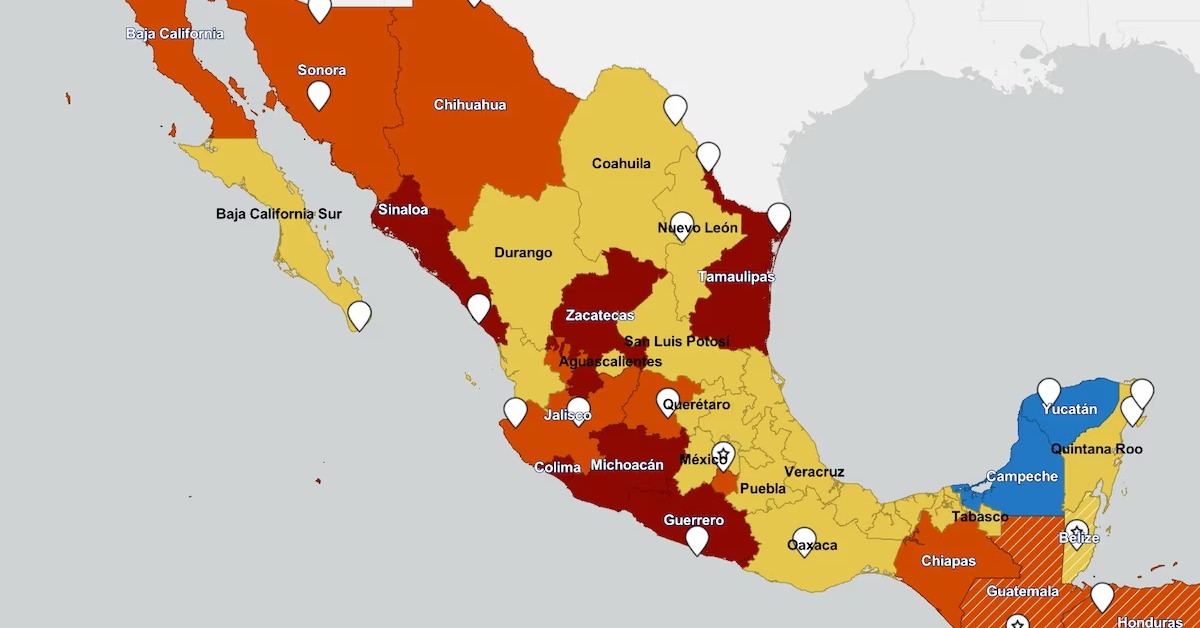

Mexico’s government says the country is seeing its sharpest decline in homicides in years, with February posting the lowest daily average in more than a decade. That is a major claim in a nation where violence shapes daily life, politics, and investment decisions. But the headline does not settle the argument. The method changed, the numbers still come from state prosecutors, and the bloodshed remains heavily concentrated in a handful of states.
The headline number is significant
Mexico’s latest homicide update deserves attention because the drop is large and the comparison window is politically important. Federal security officials said the average daily number of intentional homicides fell from 86.9 in September 2024 to 48.8 in February 2026, a 44% decline. They also said February 2026 posted the lowest daily average in at least 11 years. Officials argue the fall reflects stronger intelligence work, investigation, and coordination. That claim matters beyond politics. Homicide figures shape how people judge safety, how businesses read risk, and how outsiders understand Mexico. For readers living here, the number is real news. But it is still only one measure. It comes from monthly records compiled by state prosecutor offices and reflects a national average. It also remains preliminary, as subsequent mortality data may refine the picture. So the trend is important, but it is not yet the full story.
Violence is still concentrated
Even with the decline, violence is not spread evenly across the country. Officials said eight states accounted for 54.2% of all homicides in February. Guanajuato led the list, followed by Sinaloa, Chihuahua, Baja California, Morelos, Veracruz, the State of Mexico, and Oaxaca. That matters because national progress can coexist with sharp local danger. A lower countrywide average does not mean the crisis has ended in the places carrying the heaviest burden. The same report said February’s daily average was about 35% lower than February 2025. It also said 26 states posted lower daily averages in the first two months of 2026 than in the same period of 2025. Even so, concentration is the most useful part of the story. Anyone trying to understand security in Mexico needs to look past the national line and ask where killings continue to cluster. That is where the country’s security challenge remains most visible.
The count itself is under scrutiny
The other reason for caution is that Mexico is also counting crimes differently. In 2026, authorities began using the new Registro Nacional de Incidencia Delictiva, or RNID. The change expanded the number of recorded crime types and adjusted how some cases are classified. Reporting on the new method says it moved the system from 53 to 71 offense types. It also began recording attempted homicide and attempted femicide as separate subcategories. That does not automatically mean the decline is false. It does mean simple before-and-after comparisons are less clean than the headline suggests. Analysts have also warned that the government’s preferred comparison uses monthly daily averages and highlights selected points in time. That can help show direction. It can also flatten spikes and make a national decline look more even than the reality on the ground. Read that way, the 44% drop is still important. It is just not a final verdict on Mexico’s security situation.
Critics point to what is happening outside the homicide line. Reviews of official data have found unusual growth in categories such as other crimes against life and bodily integrity, along with continued concern over disappearances. Mexico Evalúa argues that homicide alone no longer captures the full picture of lethal violence. Its researchers say suspicious movements in nearby categories can reflect misclassification, undercounting, or inconsistent local records. The same review notes that the official figures depend on cases registered by prosecutors’ offices in all 32 states. Those offices are responsible for the accuracy and updating of the numbers. That does not prove the decline is manufactured. It does mean the decline should be tested against a broader set of indicators before anyone declares a lasting turnaround. In practical terms, a country can report fewer homicides while families still face disappearances, unresolved violent deaths, or killings filed under a different label. That is why the measurement debate matters almost as much as the headline.
What the data do and do not show
The fair reading sits between celebration and dismissal. The government can legitimately point to a substantial reduction in its own monthly homicide measure. That is not a minor development in a country shaped by long-running criminal violence. At the same time, the data do not prove that Mexico’s broader violence crisis has been solved. They do not erase disappearances, extortion, mass graves, or local cartel wars. They also do not remove the need for transparent, comparable, state-level reporting that can be checked over time. For expats, retirees, and long-term residents, the practical takeaway is straightforward. National homicide numbers help explain the direction of the country, but local patterns still explain daily risk. Mexico may indeed be seeing fewer killings in the government’s headline measure. The harder question, and the one that still needs closer scrutiny, is whether the wider universe of lethal violence is falling at the same pace. And that answer will likely emerge only with cleaner, more comparable reporting over time.
With information from Presidencia de México, Milenio, El Economista