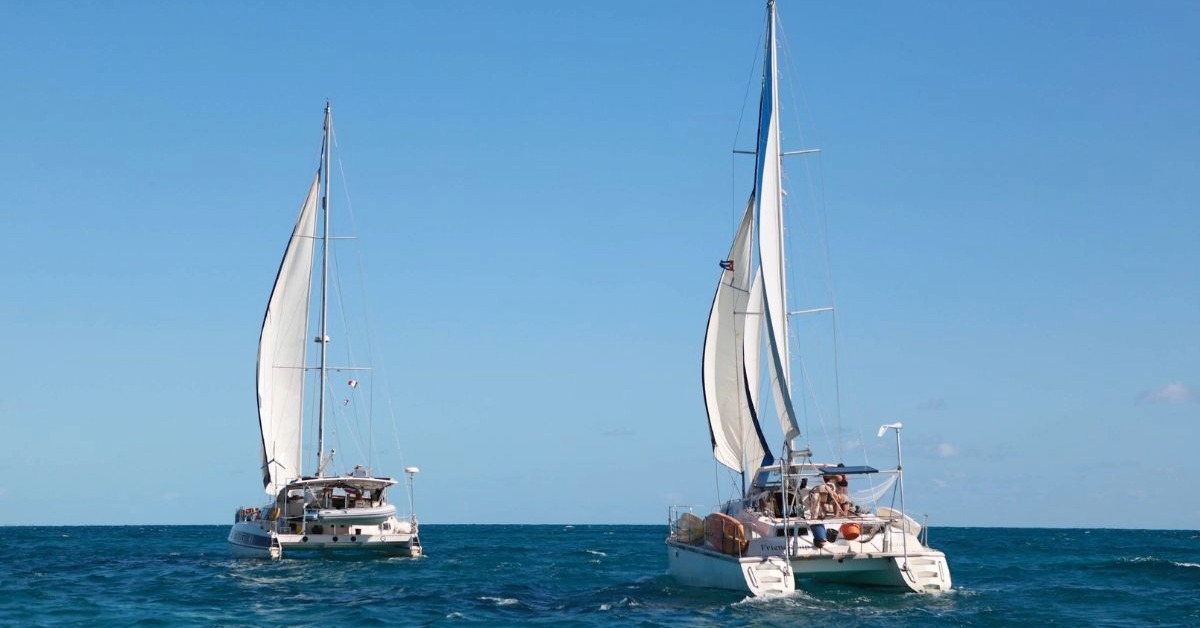
What began as a humanitarian mission from the Mexican Caribbean has turned into a search at sea. Two sailboats carrying aid to Cuba failed to arrive in Havana, prompting rescue protocols and raising urgent questions about what happened between Isla Mujeres and the island. The case matters beyond the missing vessels. It touches on maritime safety, Mexico’s regional role, and the growing pressure on Cuba’s fuel and power supplies amid basic supply shortages.
Mexico’s Caribbean rescue effort moves to the center
The disappearance of two aid sailboats bound for Cuba has turned into a test of search and rescue coordination in the Mexican Caribbean. The vessels left Isla Mujeres on March 20 as part of the Nuestra América convoy. They were expected in Havana several days later. By Friday, they had still not arrived.
That shifted attention away from the convoy’s symbolic message and toward a more urgent question. Where are the boats, and what happened along the route? Mexican authorities activated rescue protocols through the Navy, which also handles coast guard functions. Cuban officials said they were working with Mexico and doing everything possible to help locate the vessels.
The boats were part of a civilian aid mission carrying supplies to Cuba. Organizers said the missing vessels had nine crew members on board and were equipped with navigation and safety systems. Those details offer some reassurance, but not much comfort. In maritime cases, equipment helps, but time still matters.
A short route on the map can still be dangerous
The route from Quintana Roo to Cuba may look straightforward on a map. In practice, it is anything but simple. Small vessels in the Caribbean depend heavily on weather windows, radio contact, navigation accuracy, and mechanical reliability. A missed communication or an arrival delay can quickly become a rescue case.
That is why this story resonates in Mexico beyond the immediate humanitarian mission. It is a reminder that the Caribbean Sea is not a routine crossing, even for experienced crews. Search operations can spread quickly, especially when authorities do not know whether the problem is due to weather, equipment failure, or a loss of communications.
For coastal communities in the Mexican Caribbean, that risk is familiar. Boats move through these waters for tourism, fishing, transport, and private travel. Most voyages end without incident. But when a vessel disappears, the sea creates large search areas very quickly.
The mission was about aid, but also about politics
The missing boats were part of a convoy meant to deliver humanitarian supplies to Cuba. Organizers said the mission included food, medicine, baby formula, hygiene products, and basic energy materials. Another vessel in the convoy reached Havana, indicating that at least part of the effort succeeded.
Still, this was never just a cargo delivery. The convoy also carried political meaning. Supporters wanted to show solidarity with Cuba at a time of severe shortages. The mission drew backing from activists and organizations in many countries. In that sense, the boats represented both practical aid and a broader statement.
Now the disappearance has changed the story. The focus is no longer on what the convoy meant. It is unclear whether the missing crews can be found. That gives the incident a human weight that cuts through the political framing on all sides.
Why Mexico is central to the story
This is not only a Cuba story. It is also a Mexico story because the mission departed from Mexican territory and because Mexican authorities are central to the search. That matters in regional terms. Mexico has remained one of Cuba’s most visible partners in the region, especially during periods of fuel shortages and wider economic pressure on the island.
The missing boats place Mexico at the center of a sensitive situation. There is the immediate rescue effort, which is the priority. But there is also the larger question of how Mexico’s territory and institutions intersect with humanitarian missions that carry diplomatic overtones. When such a mission goes wrong, the humanitarian and political dimensions become impossible to separate.
For readers in Mexico, this is part of why the case deserves attention. It involves Mexican waters, Mexican departure points, and Mexican emergency response capacity. It also highlights how events in the Caribbean can quickly spill into broader regional concerns.
Cuba’s crisis gives the voyage broader meaning
The convoy took place against the backdrop of a deep crisis in Cuba. The island has been struggling with blackouts, fuel shortages, and disruptions in transport and daily life. That context explains why a small aid convoy drew international attention in the first place.
No sailboat convoy can solve Cuba’s structural problems. It cannot stabilize a failing power grid or restore steady fuel supplies. But it can deliver scarce goods and underscore how serious the situation has become. That is one reason the disappearance has attracted interest far beyond the activists involved in the mission.
It also explains why Cuban authorities responded publicly and quickly. The boats were tied to a broader moment of hardship. Their disappearance is not only a maritime incident. It also interrupts a mission that was meant to show support for Cuba during one of its most difficult periods in recent years.
What is known and what remains unclear
As of Friday, the known facts were limited but serious. Two sailboats left Isla Mujeres for Havana. They missed their expected arrival window. Rescue protocols were activated. Cuban and Mexican authorities said they were searching. Organizers continued to call for information about the vessels and their crews.
What remains unclear is the most important part. There has been no public confirmation of a wreck, collision, piracy event, or other specific cause. There has also been no verified public contact from the missing crews. Until the boats are located or communication is restored, the case remains open and unresolved.
That uncertainty is what makes this more than a routine transport story. A humanitarian voyage that departed from Mexico has become a live maritime emergency. The outcome now depends on the speed and reach of the search, and on whether the missing vessels can still be found in a difficult stretch of sea.