Mexico’s tourism figures still look strong. January brought millions of international visitors, more foreign exchange, and another reminder that travel remains a major part of the economy. But the details behind the headline are shifting. Spending is not rising as fast as arrivals, and more of the growth is coming from same-day and border traffic than from longer stays. That does not point to a downturn. It points to a new phase, one that could matter for destinations that depend on hotels, restaurants, and higher-spending travelers.
A strong January with a different mix
Mexico began 2026 with a strong tourism headline. INEGI reported 8.84 million international visitors in January, up 10 percent from a year earlier. Official tourism authorities described it as the highest monthly total on record. On its face, that suggests the sector still has momentum. But the number needs context. In Mexico’s tourism data, international visitors include both overnight tourists and same-day excursionists. Those groups do not leave the same economic footprint.
Of the January total, 4.29 million were overnight tourists, up 8.6 percent. Another 4.55 million were same-day excursionists, up 11.3 percent. The faster growth came from visitors who did not spend the night. Among non-border tourists, vacations remained the main reason for travel, at 74.1 percent. U.S. residents were the largest source market, accounting for 59.1 percent of those arrivals. Canada also remained one of Mexico’s main non-border source countries. The takeaway is simple. Demand stayed healthy, especially from nearby markets, but the mix of travelers mattered.
Why analysts see moderation
The clearest sign of moderation is not that fewer people are coming. It is that tourism spending is rising more slowly than arrivals. International visitors spent $3.48 billion in January, up 3.9 percent from a year earlier. Average spending per visitor fell 5.5 percent to $393.40. Put plainly, Mexico welcomed more people, but each visitor generated less spending on average than a year earlier. That is one reason the early 2026 story looks solid, but less explosive.
That does not mean tourism is turning down. It suggests the sector may be moving out of the sharp post-pandemic rebound and into a steadier phase. During the rebound years, arrivals and spending often rose together at a faster pace. Now the comparison base is higher. Growth can still be positive, while looking less dramatic. When analysts talk about moderation, they are describing that shift in pace. They are not describing a collapse in demand.
Another official indicator was already pointing in that direction. INEGI’s tourism activity report showed tourism GDP rose 0.4 percent in the third quarter of 2025, on a seasonally adjusted basis. But receptive tourism consumption, which tracks spending by foreign visitors in Mexico, fell 6.8 percent from the previous quarter. That combination fits the current picture. The sector was still expanding, but foreign visitor demand was no longer accelerating at the same pace.
A big sector entering a steadier phase
That matters because tourism remains central to the Mexican economy. Official sector data show Mexico closed 2025 with 47.8 million international tourists, up 6.1 percent, and about $35 billion in foreign exchange income from international visitors, up 6.2 percent. A separate official year-end summary put the total number of international visitors at 98.2 million. Employment data underline the sector’s scale. At the end of 2025, tourism accounted for 4.99 million jobs, or 9.2 percent of national employment.
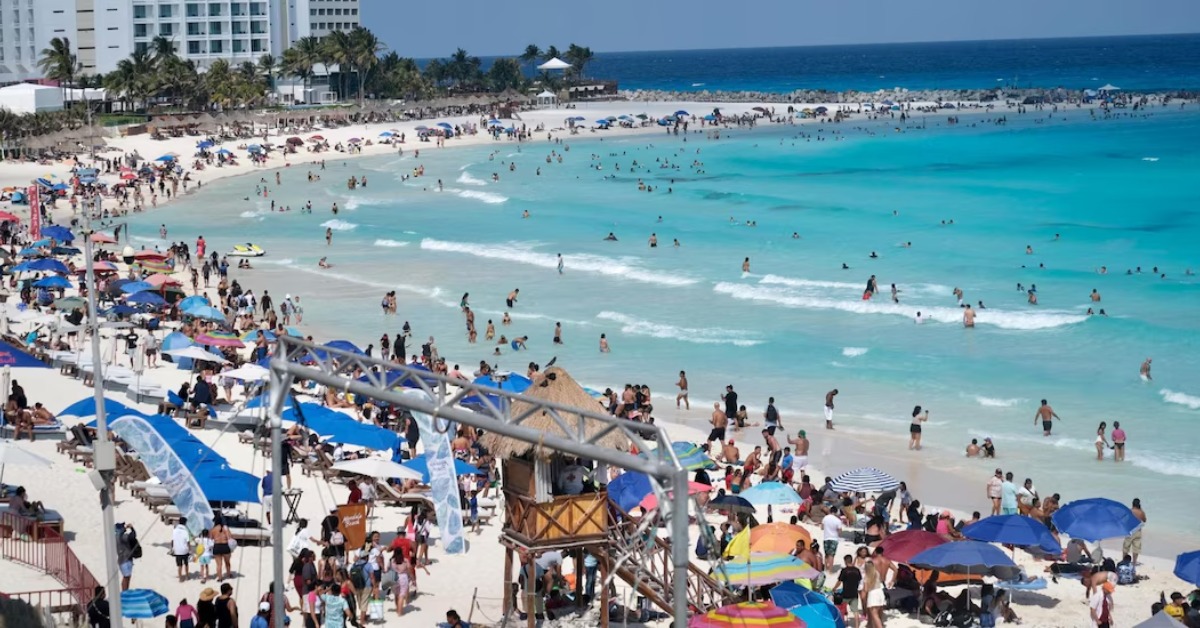
A steadier phase is not necessarily bad news. It can mean the market is normalizing after an unusually strong recovery period. But it does change expectations. Hotels, airlines, restaurants, and tour operators benefited from several years of sharp gains. A destination can still feel busy while showing lower average spending growth, shorter stays, or a larger share of border traffic. For local economies, that distinction matters.
What to watch through 2026
For readers trying to judge the next few months, arrival totals will only tell part of the story. The more useful measures are overnight stays, average spending, and the share of travelers arriving by air rather than making short crossings. If those indicators strengthen, the sector could regain some speed later in 2026. If visitor counts keep climbing while spending stays soft, the year may still end positively. It would just deliver less economic lift per traveler.
Mexico is also moving within a broader global tourism cycle. UNWTO expects international arrivals worldwide to grow by 3 to 4 percent in 2026. That is a calmer pace than the immediate recovery years. In that context, Mexico’s January report looks less like a warning sign and more like a story of normalization. The country is still attracting large numbers of visitors. The bigger question now is whether those visitors stay longer, spend more, and keep the sector growing in ways that are easier to feel on the ground.
With information from INEGI — Encuesta de Viajeros Internacionales