A new health credential is intended to allow patients to move between Mexico’s major public health systems. Officials say registration starts April 2, but the practical questions come after the launch. Can clinics actually pull up a shared record, or will paper files still drive decisions? Will the registration rules work for foreign residents with a CURP and a Mexican address? And in states not yet under the IMSS Bienestar transition, what will “universal” mean in practice? The rollout plan promises answers, but most of them depend on calendars, module locations, and data systems that are still being finalized.
What the government says begins in April
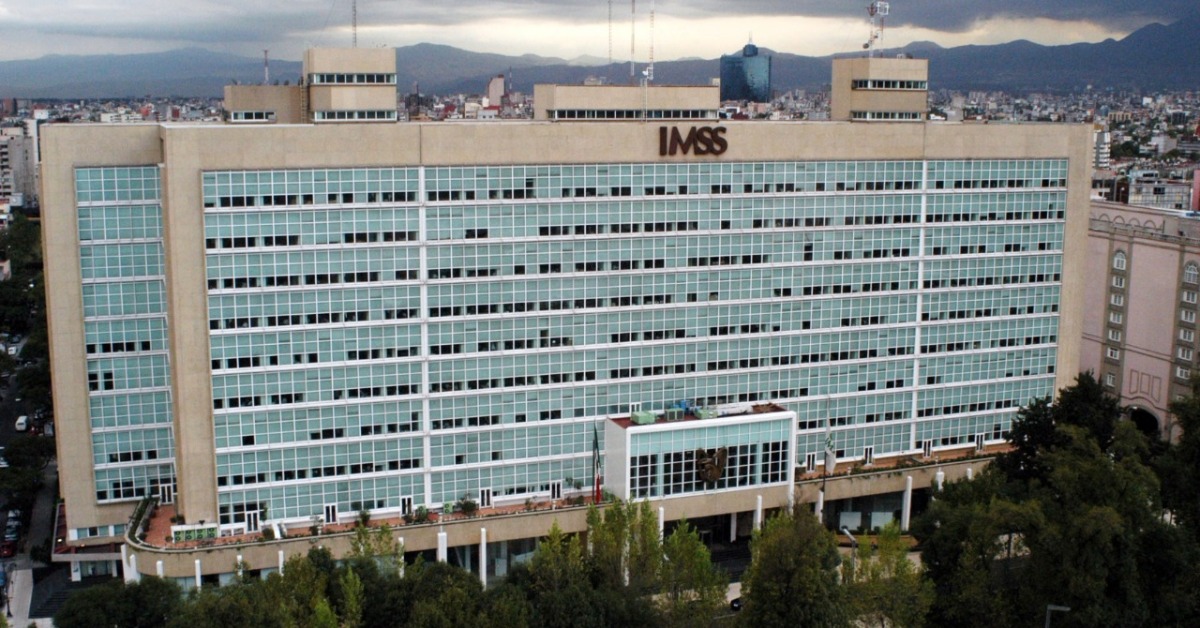
The federal government of Mexico says it will begin a phased rollout of a universal health credential on April 2. President Claudia Sheinbaum and welfare secretary Ariadna Montiel outlined the plan in a national briefing. The credential is intended to let patients access public care across multiple systems. Officials say it will work across the Servicio Universal de Salud and the main providers: IMSS, ISSSTE, and IMSS Bienestar. The card is only one piece of the plan. Another piece is a shared digital medical record that clinics and hospitals can consult. The goal is to provide clinicians with a patient history without redoing the intake and files. A third piece is a compensation mechanism between institutions. Under that model, the patient’s “home” system would reimburse the system that delivers care. The government frames this as a step toward using the nearest facility when needed. Officials say the Secretaría de Bienestar and Secretaría de Salud will coordinate registration modules. They have also said a calendar by surname and age will be released later.
Officials describe a registration model that resembles other national programs. Briefings mention roughly 3,000 registration modules nationwide, with up to 10 capture stations each. One set of figures puts the total at 2,898 modules, or about one per municipality. Another briefing uses a slightly higher count. Staffing totals also vary, but officials have cited 9,791 operators plus supervisors and support staff. Registration is expected to capture a photo and fingerprints. The government has described both a physical card and a digital credential. Several briefings say the physical card would be delivered about six weeks after registration. The documentation list centers on identity and residence. It includes an official photo ID or other form of identification, a certified CURP, and proof of address within the past 6 months. Some guidance also lists passports and immigration documents as acceptable identity proof. Officials say the scope will differ by state, depending on whether local services have transitioned into the IMSS Bienestar model.
How the design is supposed to work
The credential is only the visible layer of the project. The program also depends on a shared digital medical record that works at the clinic desk. Officials say legacy files must be digitized so clinicians can see a patient’s history. Mexico already has a national standard for electronic health information exchange. The NOM‑024‑SSA3‑2012 standard treats information exchange as essential for continuity of care. It sets mechanisms for providers to register, exchange, and consolidate electronic health information. It also makes compliance mandatory for health facilities that adopt electronic record systems. Interoperability still requires common identifiers, shared data definitions, and secure authentication. Officials have mentioned automation, including artificial intelligence, to help organize digitized records. Design choices here affect clinical safety, privacy, and staff workload. Officials present this record layer as a foundation for portability across public systems. The rollout implies registration can start before full interoperability is in place. Record sharing would then expand as systems are connected.
The proposed cross‑system reimbursement model targets a basic budget problem. No institution wants to absorb costs for patients it did not insure or budget for. Officials describe a simple rule. If a patient is affiliated with one system but treated in another, the “home” system pays. The approach echoes earlier policy discussions about reducing fragmentation. The OECD has described Mexico’s public health system as a cluster of separate subsystems. It notes that affiliation often follows employment rather than medical need. It also warns that patients must re‑engage with multiple systems, which disrupts continuity of care. The OECD points to service‑exchange agreements as a practical, near‑term tool. It also urges better alignment of prices and information systems across subsystems. The government’s plan uses similar concepts, but details remain limited. Pricing rules, dispute handling, and payment speed will shape providers’ incentives. Those rules will also affect whether patients experience delays when seeking care outside their usual network. Officials have not yet published a reimbursement formula or an oversight model.
What expats should watch for
For expats who use public care, the impact depends on documentation and on your state. Most registration checklists put CURP at the center. They also ask for proof of address and a valid photo ID. For many foreign residents, that means the process depends on having a CURP first. Some briefings list passports and immigration documents among acceptable identity proofs. That may apply in cases where standard documents are missing, but module practice may vary. It is also important to separate identity from entitlement. Officials describe the credential as a means of identifying coverage status and assigning a primary clinic. They also describe it as a way to make a medical record portable across institutions. They have not framed it as creating new eligibility beyond each system’s rules. For travel inside Mexico, messaging focuses on care at the nearest participating facility. Costs would be settled between institutions through the reimbursement mechanism. IMSS Bienestar already runs its own registration and module locator in many states. Early on, residents may see overlapping registration options and mixed guidance.
Several factors will determine whether the credential changes the patient experience. Timing is one. In recent weeks, some public materials pointed to a March start. The latest briefings place the start of registration in early April. Capacity is another factor. Briefings cite thousands of modules and staff, but totals vary between 2,898 and 2,989 modules. Governance also matters. Officials say registration data will be held by RENAPO. They describe the social‑welfare ministry as the operational arm for enrollment. The database would likely combine identity details, biometrics, and health‑linked information. Mexico’s federal personal‑data law for public bodies sets rules for such processing. Geography is the final constraint. Officials describe full three‑system portability only where services have moved into the IMSS Bienestar federalization model. In other states, officials describe the credential as initially linking fewer systems. For expats, the immediate unknowns are the calendar, module locations, and how clinics will handle patients during the transition.