Pedro Friedeberg spent decades building an artistic universe that looked unlike anything else in Mexico. Now, after his death at 90, that universe feels newly visible. The artist behind the iconic Mano-Silla leaves more than a famous image. He leaves a body of work shaped by irony, ornament, architecture, and a refusal to follow fashion. As Mexico’s cultural community mourns, his life also offers a way to understand his place in the country’s visual memory. It shows how one artist turned wit and excess into something lasting.
A singular voice in Mexican art
Mexico’s cultural community is mourning Pedro Friedeberg. The artist, designer, and architect gave the country one of its most recognizable visual languages. His family announced that he died on March 5 at age 90 at his home in San Miguel de Allende. They said he was surrounded by relatives and at peace. No cause was disclosed. Soon after, museums, galleries, and federal cultural institutions shared messages of mourning. They described him as a fundamental figure in contemporary Mexican art. That response reflected the place he held across generations. Friedeberg was never an artist who blended into the background. His work invited attention, then held it. It mixed geometry, ornament, irony, and references that felt ancient and playful at once. For many readers, his images are a reminder that Mexican art does not fit a single school or mood. It can be severe, funny, decorative, intellectual, and rebellious all at once. Few artists defended that freedom with as much consistency, or with as much wit, as Friedeberg did.
How he built his own visual world
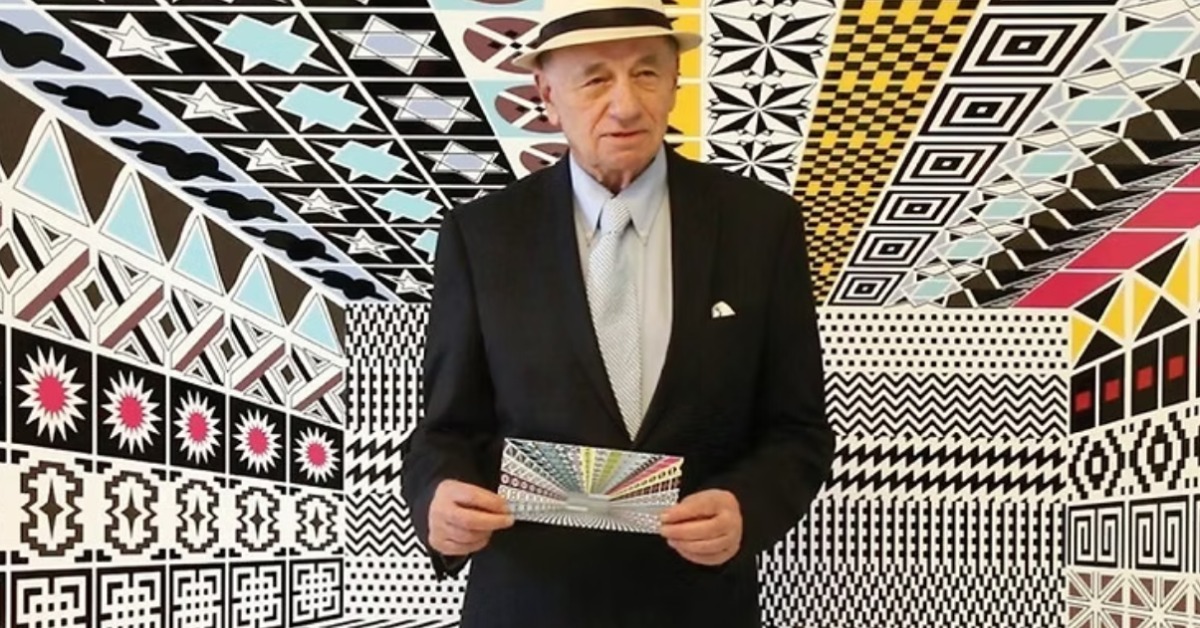
Born in Florence in 1936, Friedeberg arrived in Mexico as a child after his family fled wartime Europe. He studied architecture at the Universidad Iberoamericana, but the pull of art soon proved stronger. Early encouragement from Mathias Goeritz and Remedios Varo helped shape a career that began publicly in 1959 and quickly moved beyond convention. Friedeberg joined Los Hartos, a loose group that pushed back against solemnity, functionalism, and the self-importance of modern art. That stance never left him. Even when critics placed him near surrealism, he kept a skeptical distance from labels and preferred contradiction over doctrine. His paintings, objects, and designs drew from architectural plans, esoteric symbols, religious motifs, labyrinths, and decorative excess. Yet they were never academic exercises. They carried a dry smile. Friedeberg understood that visual pleasure could also be a form of critique. He made art that looked meticulous and unruly at the same time. That balance became his signature, and it helps explain why his work remained immediately recognizable even as fashions shifted around him.
The work everyone knew, and the work beyond it
His most famous creation, the Mano-Silla, became one of the most recognizable objects in modern Mexican design. First shown in the early 1960s, the hand-shaped chair carried his imagination into homes, galleries, and the wider public memory. It was both sculpture and furniture, elegant and absurd. That duality made it unforgettable. Yet Friedeberg’s legacy is larger than a single object. Across paintings, prints, murals, and conceptual designs, he built dense worlds of repeating forms, optical games, and symbolic detail. His work could suggest tarot, alchemy, altarpieces, pre-Hispanic echoes, and dream architecture. Then it could turn sharply toward humor before settling into a clear interpretation. That refusal to be pinned down kept his art alive. It asked viewers to look longer and accept ambiguity. In recent decades, retrospectives and renewed interest have brought him to younger audiences. Many had not lived through his first great period. They found an artist who felt both historical and current, deeply Mexican, yet impossible to confine to a single movement.
A farewell felt beyond the gallery
Friedeberg’s death closes a chapter, but it does not diminish his presence in Mexico’s cultural life. His work remains in museums, collections, and the visual memory of cities where art and design still shape daily experience. For readers living in Mexico, that legacy is not abstract. It appears in exhibitions, in books, and in conversations about Mexican modernism. It also appears in the strange pleasure of encountering an image that feels instantly familiar but never fully explained. The public reaction to his death showed that his place in the culture was secure. Institutions offered condolences. Fellow artists and galleries spoke of his singular mind, his discipline, and his irony. The family’s message was simple, but it captured the scale of the loss. A creative spirit had gone, while a large body of work remained behind. That may be the clearest way to understand Friedeberg’s place in Mexican art. He did not leave a neat school or an easy formula. He left a world, and Mexico will keep returning to it.
With information from Pedro Friedeberg, IMER Noticias