
A reform bill in Mexico is being sold as austerity and cleaner politics. Its fine print is about something else: who gets represented, who gets funded, and what happens when criminal groups treat campaigns like territory. The proposal reshapes proportional seats, trims the Senate, and rewires party financing. It also adds new tools to track money flows and curb digital manipulation. The fight is less about one institution than about whether the rules rebuild trust—or move leverage to new places.
What the reform proposes and where the fight is now
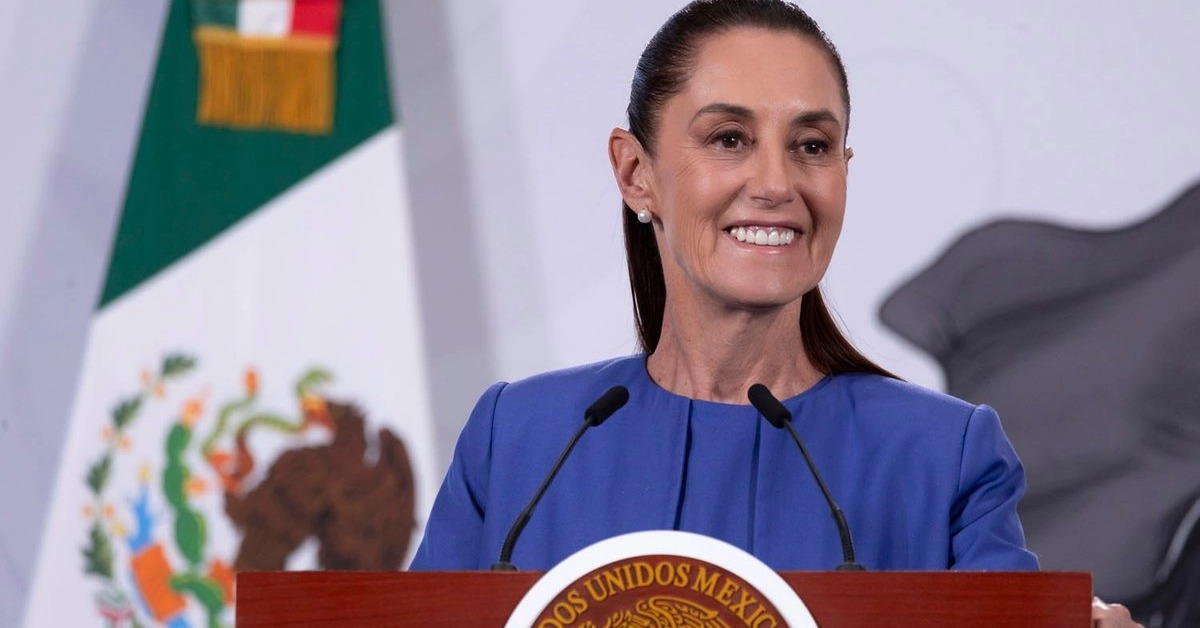
Mexico’s latest electoral reform push is framed as a governance problem, not only an electoral one. A constitutional initiative sent to the lower house, the Cámara de Diputados, proposes changes that affect representation design, party funding, and enforcement tools. The text proposes, among other changes, a smaller Senado de la República, a new way to select the lower house’s proportional representation members, and new rules meant to tighten financial oversight and reduce illicit funding. It also includes measures on information integrity, such as labeling requirements for electoral content altered by artificial intelligence and changes to official broadcast times during campaigns.
Politically, the fight is less about whether reform happens than about whose interests it disrupts. The initiative needs a supermajority in both chambers, so coalition management matters as much as policy details. Reporting on the proposal describes resistance from the Partido Verde Ecologista de México and the Partido del Trabajo, two parties that have often been legislative allies of MORENA. That matters because constitutional changes require votes that a single bloc may not hold on its own.
Representation and seat allocation under current and proposed rules
Under the current Constitution, the lower house has 500 members: 300 elected in single-member districts and 200 elected by proportional representation via regional lists in five multi-state circumscriptions. The Constitution also sets a core guardrail against extreme overrepresentation in the lower house: no party may hold more than 300 seats total, and no party’s seat share may exceed its national vote share by more than eight percentage points. Those rules have become central to recent arguments about how coalition and party votes translate into seats, and about what constraints the electoral authority can impose without legislative change.
The upper house is currently 128 seats: in each state and in Mexico City, two seats go to the plurality winner, and one to the first minority, and 32 additional seats are assigned by national-list proportional representation. The reform initiative would reduce the Senate to 96 seats by removing those 32 national-list seats, leaving only the state-based seats. That is a structural shift away from national proportionality and toward a more majoritarian chamber, even before considering future party vote patterns.
For the lower house’s 200 proportional seats, the proposal changes “who gets the seat” more than “how many seats a party gets.” Instead of closed party lists determining which individuals enter Congress, the initiative proposes that 100 proportional seats go to candidates who ran in single-member districts and lost but posted the strongest district-level vote shares within their party, and that the other 100 seats be filled through direct voting in the five regional circumscriptions, including dedicated representation for Mexican citizens voting from abroad. The text also specifies an alternating assignment method across the two streams.
A simple way to see what could change is to separate party seat totals from candidate pathways. In 2024, the proportional seats in the lower house were assigned as follows: Morena 75, PAN 40, PRI 26, Movimiento Ciudadano 26, PVEM 20, and PT 13. In the Senate, the 32 proportional seats were assigned as follows: Morena 14, PAN 6, PRI 4, PVEM 3, Movimiento Ciudadano 3, and PT 2. Removing the Senate’s proportional tier eliminates a seat pathway that, in 2024, materially benefited every listed party, not only the largest.
Campaign finance and anti-illicit-money measures
The campaign-finance centerpiece is a mechanical change with a clear arithmetic. The Constitution currently ties annual public financing for parties’ ordinary activities to the size of the voter registry multiplied by 65% of the daily value of the UMA (Unidad de Medida y Actualización). The initiative changes that factor to 48.75% of the daily UMA. That is a 25% reduction by design, not by discretionary budgeting. The proposal keeps the basic distribution split between parties—30% divided equally and 70% distributed proportionally based on the prior lower-house election—so the “cut” changes the size of the financing pool, not the internal formula for dividing it.
The initiative also treats illicit finance as an integrity problem that the electoral system must anticipate rather than punish after the fact. The text proposes a set of constraints and reporting channels: it bans campaign funding tied to illicit activities, limits private donations to Mexican individuals, bars cash donations, and requires donations to move through the formal financial system. It also provides for expanded reporting and data-sharing: financial-system entities and other regulated actors would report relevant operations connected to parties and candidates for oversight purposes, with a constitutional note that this information is confidential and reserved for legal oversight procedures. Separate language calls for coordination mechanisms among security, justice, and financial intelligence authorities to provide information relevant to safeguarding electoral integrity at the candidate-registration stage.
Timing matters for implementation. The initiative’s transitory provisions set deadlines for changes to secondary legislation and to operational rules. It calls for legal adjustments by mid-May 2026 and directs the electoral authority, Instituto Nacional Electoral, to issue the necessary implementing instruments on that same timeline. Another transitory provision schedules the start of routine reporting workflows through the financial system beginning in late 2026 and assigns responsibility for adapting general rules to the finance ministry, Secretaría de Hacienda y Crédito Público, by a set date. These are governance details that determine whether an anti-illicit-money promise becomes an enforceable workflow before the next federal cycle.
Narco-politics, election violence, and why money rules are not enough
The term narcopolitics is contested, but the practical concern is concrete: criminal groups can shape who runs, who survives campaigning, and what officials can do once in office. Risk research on Mexico’s 2024 cycle outlines a set of mechanisms that go beyond vote buying. One framework identifies five pathways: direct violence against officials and candidates, campaign financing, candidate imposition inside parties, voter mobilization or suppression using threats and material inducements, and direct interference at polling places. That framework matters because each pathway exploits a different weak point in electoral design: personal security, party gatekeeping, financial opacity, territorial control, and election-day administration.
The scale of political-criminal violence underscores the urgency of these design debates. One risk report cites monitoring that shows a sharp rise in victims of political-electoral violence from 2018 to 2023, and it documents multiple killings of aspirants early in the 2024 cycle. Separately, a conflict-event dataset covering the 2024 campaign period reports over 330 incidents of violence targeting political figures between early March and election day in early June, with at least 95 incidents resulting in reported deaths. A joint post-election overview also reports attacks and killings across the broader 2023–2024 process, including threat-driven candidate withdrawals and incidents that continued after the vote. The common finding is that violence concentrates at the local level, where municipal office controls police coordination, permits, and public works contracts.
This is where the reform’s enforcement provisions meet a reality check. Tighter financial traceability and stricter donation channels can reduce some forms of influence, particularly those that depend on cash, intermediaries, and opaque “in-kind” spending. Yet territorial coercion—threats, forced withdrawals, and violence against campaign teams—does not require large-scale transfers to be effective. Put differently, the reform’s money controls target one lever of criminal influence, but not the entire toolkit described in violence-risk analyses. The initiative’s coordination language, which links electoral authorities with public security, justice, and financial intelligence functions, suggests an attempt to connect election administration to broader state capacity. Whether that coordination increases deterrence depends on how often it produces actionable cases and credible protection for local candidates, not only on how it reads in constitutional text.
Trust mechanics and likely tradeoffs for representation and cartel leverage
The reform’s durable frame is a trust crisis with three moving parts: representation, money, and security. The representation piece is not only about fairness. It is about whether voters believe they can identify a responsible official and later sanction that official. The proposal argues that closed-list making creates distance between voters and legislators, and seeks to move proportional seats toward candidates who can point to direct vote totals. That shift can strengthen accountability signals, but it can also change campaign incentives. In political science terms, systems that increase incentives for a “personal vote” tend to push candidates to build individual reputations and networks, sometimes weakening party-centered discipline. That is a design choice, not a guaranteed improvement, and it changes what candidates need to compete.
The money piece is where the proposal most clearly targets cartel leverage. Cutting public financing changes party budgets, but the more important change is the attempted shift from informal channels to auditable ones: fewer cash transactions, stricter donor rules, and clearer financial reporting pathways. Those moves align with the basic logic of anti–money laundering: reduce anonymity, preserve records, and create reporting obligations that can trigger investigations. At the same time, the reform would need operational clarity to avoid unintended effects. For example, the initiative includes limits on funding from persons who reside outside the national territory while also building a voting path for citizens abroad into proportional-seat selection. That combination can be read as a firewall against disguised foreign money, but it also requires careful implementation to expand political participation from abroad without creating a shadow market for contributions.
The security piece is the toughest because it is largely outside the scope of election-law engineering. Mexico’s recent data shows violence linked to elections, and research on the incentives created by electoral rules suggests that small design changes can alter behavior at the margins but cannot substitute for territorial control. For expats living in Mexico, this is the part that tends to show up first in daily life: whether municipalities can deliver basic services without criminal vetoes, and whether local campaigns become less coercive. A broad trust survey finding is that perceived political voice is associated with large differences in institutional trust. Electoral reforms that are perceived as reducing voice can erode that trust even if they improve some technical controls, while reforms perceived as widening voice can still fail if violence and impunity continue. The reform’s central question is therefore empirical: does it reduce coercion and opaque funding in the places where elections are most vulnerable?