
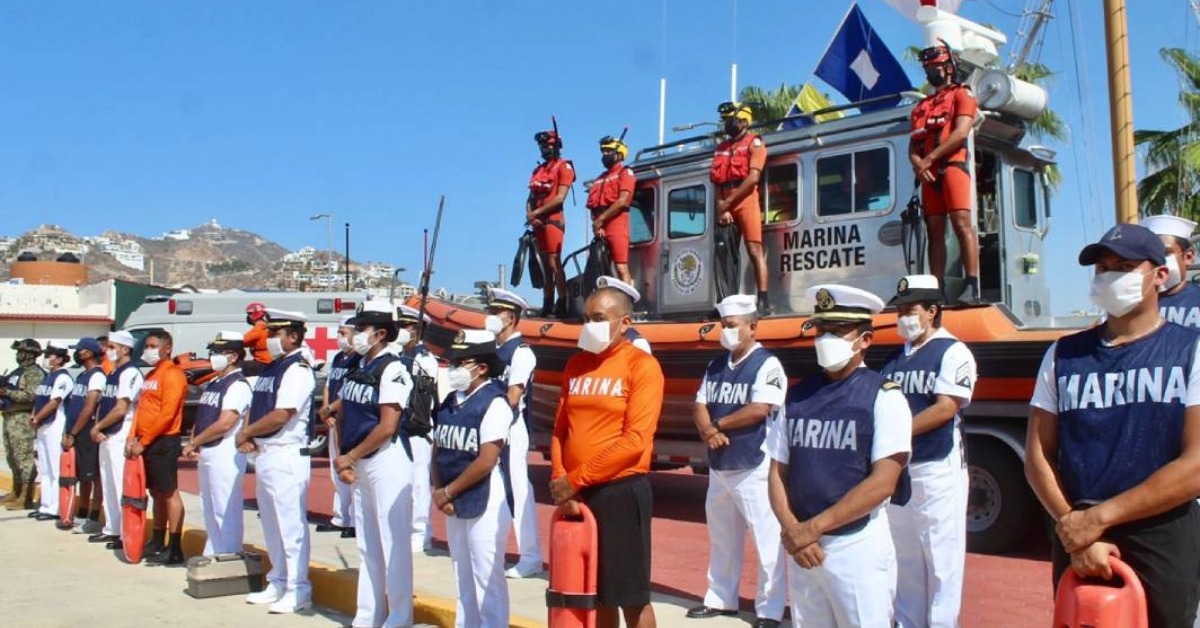
A diving trip in Cabo San Lucas turned urgent when Mexican Navy personnel were called to evacuate a foreign woman showing signs of decompression sickness. The rescue moved quickly from open water to shore, but the incident points to a larger issue in one of Mexico’s busiest dive destinations. What makes this kind of emergency so time-sensitive? What treatment may be needed, and what should visitors know before they dive or book a flight out of Los Cabos?
Navy responds to a dive emergency off Cabo
The Mexican Navy carried out a maritime medical evacuation in Cabo San Lucas after a 49-year-old foreign woman showed signs consistent with decompression sickness while diving near Playa Pelícanos on Thursday.
Authorities said the response was handled by ENSAR Los Cabos, the Navy unit assigned to maritime search, rescue, and surveillance in the area. A Defender boat left with rescue personnel and naval medical staff on board. When they reached the diver, she was reportedly semiconscious. Navy personnel gave first aid at sea, stabilized her, and transferred her to the naval dock. Paramedics then took her to a local hospital for continued care.
Officials described the patient only as a foreign national and did not release more details in the initial report. Even so, the response showed how quickly a routine outing can become a medical emergency in a destination where scuba trips are part of daily tourism.
Why decompression sickness gets urgent attention
Decompression sickness happens when dissolved gas, usually nitrogen, forms bubbles in the body after pressure drops during or after a dive. Many divers know it by the nickname the bends, but the condition can involve far more than joint pain. Symptoms can include numbness, dizziness, weakness, breathing trouble, confusion, or collapse.
That helps explain why responders move fast even when a diver is still conscious. Dive-medicine guidance says early oxygen and rapid medical evaluation can make a major difference. Definitive treatment often involves recompression with hyperbaric oxygen, especially when symptoms are neurological or severe.
Another reason for urgency is that symptoms do not always arrive in dramatic fashion. Some cases begin with fatigue, tingling, or mild discomfort and then worsen over time. Others appear within minutes of surfacing. That is why diving injuries are treated as time-sensitive, even when the first signs look subtle.
Why this matters in Los Cabos
This incident matters beyond one rescue because Los Cabos is one of Mexico’s best-known diving destinations. The region draws visitors to reef and wreck sites and to marine life experiences across the southern tip of the peninsula. For many international readers, this is not just a local public safety story. It is also a reminder tied to a vacation activity that often feels controlled until it is not.
It also matters because dive emergencies do not end when a diver reaches shore. Medical guidance warns that pressure changes from altitude can worsen a suspected diving injury. For divers without symptoms, travel-health guidance generally recommends waiting before flying after a dive. For anyone with possible decompression illness, the advice is more direct: get evaluated before boarding a plane or heading to a higher elevation.
In practical terms, that is important in a place like Cabo, where many visitors are on short itineraries and may have return flights scheduled soon after a dive day. A rescue like this one is a reminder that post-dive planning is part of dive safety, not an afterthought.
A reminder for divers, residents, and visitors
The public report does not specify which dive profile came before this emergency, so there is no evidence pointing to a single cause. In general, though, dive-medicine sources say the risk rises with depth, time, repetitive dives, dehydration, strenuous conditions, and exposure to altitude too soon after surfacing. Safe ascent rates, rest, hydration, and staying within training limits remain basic protections.
This case also shows why local maritime rescue systems matter in coastal resort cities. In Cabo, the response involved a specialized sea unit, medical attention at sea, a dockside transfer, and hospital follow-up. For expats, seasonal residents, and travelers who spend time offshore, that chain of response can make a big difference.
Authorities also used the case to remind the public that maritime emergency lines remain available around the clock. That detail may seem routine, but in a place built around boating, fishing, and diving, fast contact with responders is part of the safety infrastructure that people often do not notice until something goes wrong.
With information from BCS Noticias, CDC Yellow Book, Divers Alert Network