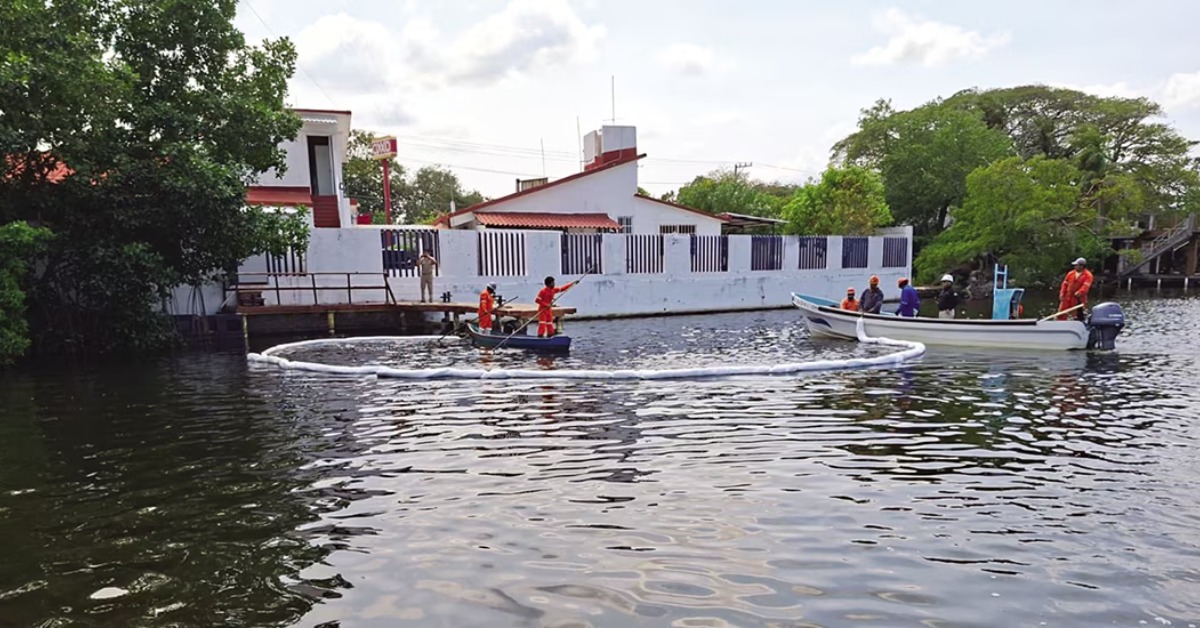
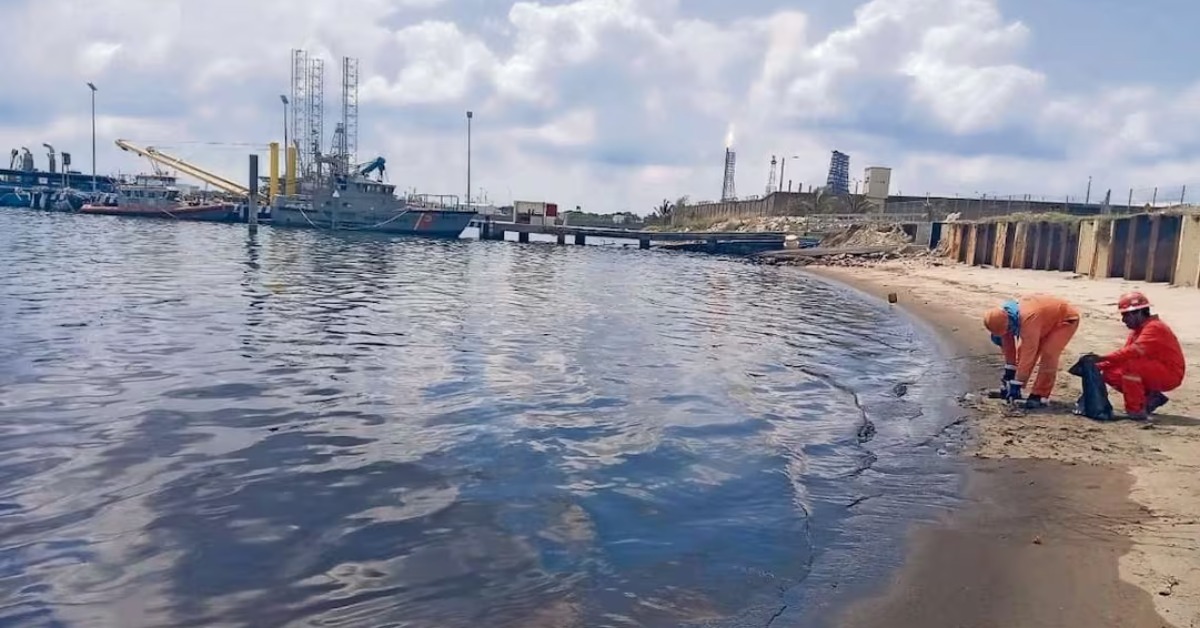
Pemex says it closed out just 67 of 240 identified environmental risks by the end of 2025. On paper, many of the rest are being managed or planned. In practice, the pace looks slow for a company already under pressure from debt, aging infrastructure, and new contamination events on the Gulf coast. The number matters beyond cleanup. It also raises a deeper question about whether Mexico’s state oil company can meet its environmental obligations.
What Pemex reported
Pemex, short for Petróleos Mexicanos, says it had resolved 67 of 240 identified environmental risks by the end of 2025. That equals about 28% of the total. The company said 173 risks remained in different stages of management. Those stages include work already underway, contracting processes, and programs scheduled for later years. The figure has drawn fresh attention because it surfaced as Mexico deals with new spills and contamination concerns along the Gulf coast.
The number needs context. These risks are not the same, and they are not all active spills. Pemex describes them as cases tied to impacts on soil, water, and air, with different levels of urgency and different remediation paths. The company also said 21 Priority 1 cases had been resolved by year-end 2025. It estimates that the full inventory would require about 15.5 billion pesos to address. Roughly 14.2 billion pesos of that amount is linked to risks that were still pending at the end of 2025.
The pace is the real story
The bigger issue is speed. Pemex entered 2025 with 55 resolved cases. It reported 61 by the first quarter and 65 by midyear. By September, the total was 67. Its year-end report still showed 67 resolved cases. That does not mean nothing happened in the second half. Some cases were moving through remediation or procurement. But it does mean the number of fully resolved cases barely changed over the year.
That distinction matters because “unresolved” does not always mean “ignored”. Pemex says many of the remaining cases are already under management. Some are in contracting. Others have work programs assigned for later years. Still, unresolved cases can remain a risk to nearby communities, water systems, farmland, wetlands, and local livelihoods while they wait for final remediation. For readers outside Mexico, that makes this more than a technical disclosure buried in an investor report.
Why this matters beyond Pemex
Pemex is not just another oil company. It is Mexico’s state-owned energy giant, a major fuel supplier, and a recurring source of fiscal pressure. That means its environmental backlog is not only a corporate problem. It can also become a public problem, especially when cleanup costs, lost fishing income, tourism damage, and health concerns spread beyond company gates. The financial backdrop adds to the pressure. IMCO, using official company data, said Pemex received 396.2 billion pesos in federal capital support in 2025. It still ended the year with heavy debt.
The company has also told investors that part of its sustainability strategy depends on better targeting of maintenance, rehabilitation, and environmental spending. That helps explain why analysts focus so much on capacity. A backlog can grow even when a company has a plan on paper. The question is whether it has the money, contractors, technical teams, and internal follow-through to turn that plan into completed cleanups. That is where the recent disclosures raise doubts.
Recent spills sharpen the scrutiny
The timing makes the disclosure harder to ignore. The 67-of-240 figure reflects Pemex’s environmental risk inventory through the end of 2025. It does not capture the full effect of the major contamination events reported in March 2026. Authorities were still investigating one large Gulf spill affecting Veracruz and Tabasco. A separate incident at the Olmeca refinery in Dos Bocas led to deaths and fuel recovery work. It also raised concerns that contamination could reach nearby fishing waters.
These events do not prove that every unresolved risk turned into damage. They do show why slow remediation can quickly become a national issue. In Mexico, oil infrastructure often sits near fishing zones, farming land, rivers, mangroves, and coastal tourism economies. When a risk stays open, the cost of delay can spread far beyond the facility where the problem began.
What to watch now
What comes next is less about a headline percentage and more about execution. If Pemex converts planned actions into completed remediations, the backlog can shrink. If not, the same cases can remain open while new ones are added. The next company disclosures will matter because they should show whether the count of resolved cases rises, whether high-priority cases fall faster, and whether spending turns into visible cleanup results. For communities near Pemex facilities, that is a more useful test than any single quarterly percentage.