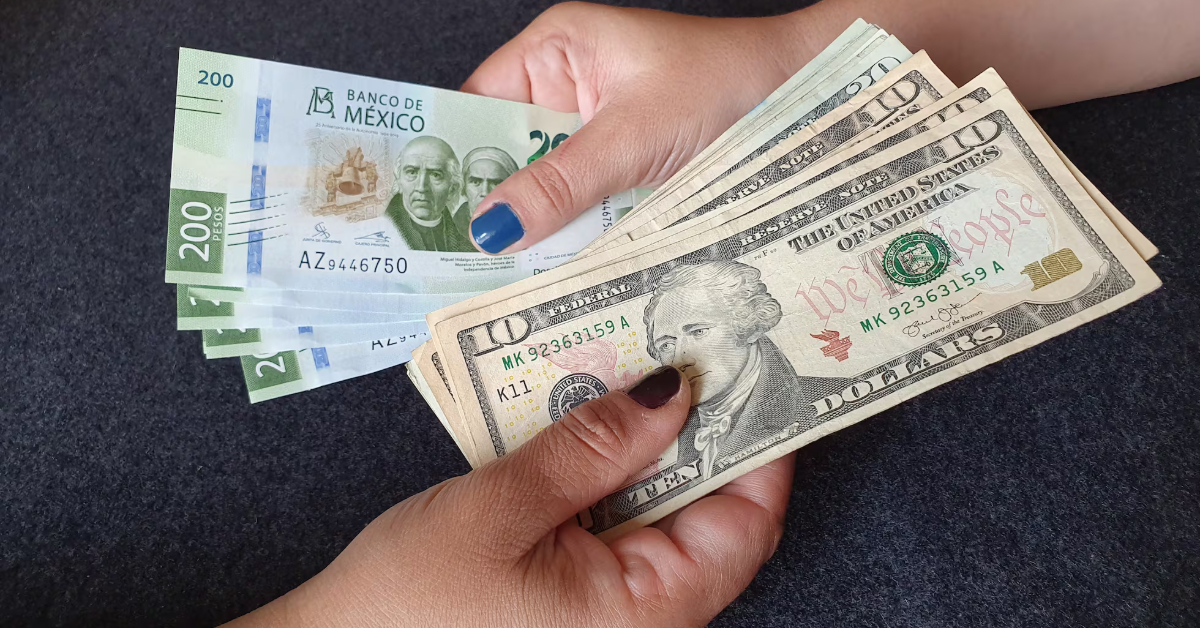
On February 27, 2026, the peso closed at 17.2318 pesos per U.S. dollar, using the interbank close in daily market summaries. That left the currency 0.21% weaker than the prior close of 17.1950. Trading stayed in a narrow band, with a high of 17.2533 and a low of 17.1662. Even so, February finished with a net gain for the peso. The end‑January reference level was 17.4201 pesos per dollar, so the month closed about 1.08% stronger for the Mexican currency. The move came as markets absorbed a producer‑price report that printed above expectations. At the same time, the broad dollar index was slightly lower. That points to an MXN‑specific response, not only a broad “dollar up” move. The dollar index tracked by Intercontinental Exchange was near 97.6 late in the session.
Several exchange‑rate references circulated the same day, and they differ by design. The interbank close reflects wholesale market transactions. Banxico’s FIX is calculated from wholesale quotes and published for official use. For February 27, the FIX published for that day was 17.2563 pesos per dollar. A separate Banxico rate for settling dollar‑denominated obligations was 17.1700. Retail quotes can sit farther away because banks apply a buy–sell spread. They also update the spread during the day. For budgeting, many “close” headlines track the interbank benchmark rather than a cash window rate.
What the U.S. Bureau of Labor Statistics report said
The data point behind the volatility was the United States Producer Price Index for final demand for January, released on the morning of February 27. The BLS reported a 0.5% monthly increase in January. That followed a 0.4% rise in December. On a twelve‑month basis, producer prices were up 2.9% through January. Under the surface, prices for final demand services rose 0.8% in January. Final demand goods prices fell 0.3% in the month. A core measure that excludes foods, energy, and trade services rose 0.3% in January. Taken together, the release pointed to price pressure centered in services and margins rather than energy.
Forecasters had expected a smaller increase, around 0.3% for the headline index. That gap matters because producer prices can feed into measures watched by the Fed, including PCE inflation. Market coverage also highlighted that some PPI components used in the PCE calculation, such as healthcare and airfares, rose in January. In that framing, a hotter PPI print supported a “rates on hold” bias in U.S. markets. The BLS further noted that earlier federal shutdown disruptions affected the survey process and shifted the next publication date. The February PPI release was rescheduled for March 18, 2026. For peso traders, the key transmission channel was expectations, since “higher for longer” U.S. rates can pressure higher‑beta currencies during a session.
Rate expectations from the Federal Reserve and Banco de México
The inflation backdrop sits against a defined policy baseline in the United States. At its January meeting, the Fed kept its target range unchanged. The range remained 3.50% to 3.75%. The statement said activity was expanding at a solid pace. It also said inflation remained somewhat elevated. For MXN, the dollar side of the trade is anchored to that range. That anchor shapes rate expectations after data surprises.
In Mexico, the policy anchor is Banxico’s overnight interbank funding rate target. On February 5, its Governing Board kept that target at 7.00%. The statement described the decision as a pause in the rate‑cutting cycle. It cited upward revisions to inflation forecasts and a need to assess recent fiscal adjustments. Banxico also wrote that headline inflation had eased from 3.80% in November to 3.77% in early January. Core inflation, by contrast, moved up from 4.43% to 4.47%. In the same forecast update, Banxico said convergence to the 3% inflation target was expected in the second quarter of 2027.
The gap between Mexico’s 7.00% policy rate and the U.S. target range still matters for flows. Research often links interest‑rate differentials to cross‑currency positioning, including carry trades. The Bank for International Settlements describes a carry trade as borrowing in a low‑rate currency and investing in a higher‑yielding one. This helps explain why MXN can stay supported during calm periods, then slip on risk shocks. A Fed research note on emerging‑market currencies also describes how U.S. interest rates can coincide with episodes of large depreciation. International Monetary Fund analysis similarly flags global rate volatility as a stress channel for emerging markets. In practice, the final February session blended those elements: a rate‑tilting U.S. inflation signal and month‑end positioning.
Why the peso still finished the month stronger
Month‑end math shows that most of February’s appreciation happened before the final session dip. From the late‑January reference of 17.4201 to the February close of 17.2318, the dollar bought fewer pesos. That pattern is consistent with a market that still prices Mexico as offering a yield advantage, even with cuts. Banxico’s February statement noted that the Mexican peso had appreciated since the prior decision. It also said domestic government rates had decreased across maturities in that interval. Those signals can support a currency when investors are comfortable holding peso exposure. They do not prevent daily setbacks after U.S. data. They can still shape the month’s net outcome.
Local analysts framed the February close as a mix of supportive trend and weakening momentum. Banco Base said indicators still left room for further appreciation. It also suggested that downside pressures were weakening. In that view, USD/MXN could enter an upward correction phase. Separately, Banamex described Banxico’s recent messaging as dovish and expected three 25‑basis‑point cuts starting in March. The note pointed to a 6.25% terminal rate in that scenario. Those projections matter because the peso’s carry appeal depends on the expected path of local rates, not only the current level.
Short‑horizon strategy notes suggest the same theme: MXN can react to global rates and domestic politics. In a February 25 currency report, Monex described an overnight USD/MXN range near 17.15 to 17.20. It also said the peso lost ground early in the U.S. session as investors weighed a proposed electoral‑law reform. The report linked the broader dollar tone to the DXY index and to U.S. yield moves. This helps explain why a single data release can dominate one session, while a monthly balance reflects more inputs.
What the move means for expats in Mexico
For expats living in Mexico, the month’s 1.08% peso gain can affect everyday conversions. If income is in dollars and expenses are in pesos, each dollar buys fewer pesos. If income is in pesos but a payment is dollar‑linked, the peso cost can fall. The scale is not huge, but it can show up on large items. Examples include rent, school fees, and cross‑border transfers. The February close also highlights timing risk. A month can end while the last session is still running.
It also helps to track the right benchmark for the task at hand. Daily “close” stories in Mexico often refer to the interbank level reported from bank trades. Banxico’s FIX is a separate reference used for official purposes and is published on business days. On February 27, that FIX reference was 17.2563. Banxico also published 17.1700 as the rate for settling dollar obligations. Retail quotes can differ because they include spreads and fees. On the same day, published bank tables showed buy levels in the mid‑16s and sell levels in the high‑17s. For remittances and card spending, the applied rate depends on the provider’s rules and timing.