The peso lost ground Thursday as traders reacted to a fresh spike in oil prices and a broader mood of caution across global markets. At first glance, that may seem odd for an oil-producing country. But Mexico’s currency often moves less on simple export math and more on how investors price risk, inflation, and interest rates. The result matters beyond trading desks. It can shape fuel costs, consumer prices, and the buying power of anyone converting dollars into pesos.
Why the peso turned lower
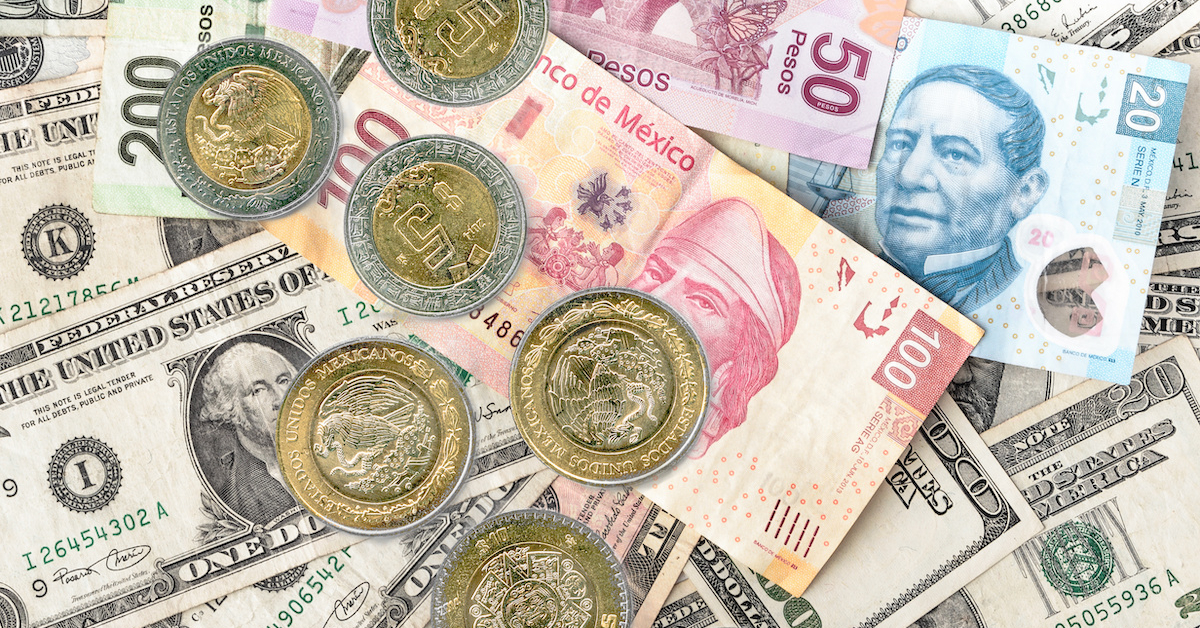
The peso weakened Thursday as a new jump in oil prices and wider market anxiety pushed investors away from risk-sensitive assets. Early trading showed the currency near 17.85 per dollar, compared with an official close of 17.8265 a day earlier. It moved inside a 17.7783 to 17.9600 range during the session. The move stood out because the broad dollar index was lower. That suggests the peso was being hit more by risk aversion than by a simple dollar rally.
The trigger was the same one shaking stocks and energy markets worldwide. Brent crude briefly climbed above $119 a barrel before pulling back, while U.S. crude traded near $96 to $98. The surge followed new attacks on energy infrastructure in the Gulf, which deepened fears about supply and inflation. Markets were also digesting the Federal Reserve’s decision to leave rates unchanged. The Fed said the economic effects of the Middle East conflict remain uncertain.
Why a distant war hits Mexico’s currency
For many readers, this is the part that needs context. The peso is not just Mexico’s currency. It is also one of the world’s most actively traded currencies and one of the most liquid in the emerging-market universe. Banco de México’s latest survey data placed it 14th globally by trading volume and third among developing-country currencies. Because it trades around the clock, mostly outside Mexico, investors often use it as a quick way to adjust exposure when global nerves are on edge.
That helps explain why the peso can weaken even when the broad dollar is not surging. In calmer periods, Mexico benefits from a favorable rate gap with the United States. Banxico’s policy rate remains at 7.0%, while the Fed’s target range is 3.5% to 3.75%. That spread can attract yield-seeking money. But when war risk spikes, investors often care less about carry and more about safety. Mexico’s flexible exchange rate also means the currency tends to absorb shocks quickly.
Why high oil is not a simple win for Mexico
Mexico’s oil story is not as simple as higher crude equals an easy gain. Pemex reported the Mexican export blend at $95.82 a barrel for March 18, showing how strongly local oil prices have climbed. Higher crude can support export revenue and public finances. That part is real. But it is only one side of the equation.
Mexico still depends on imported refined fuels, especially gasoline and diesel. U.S. government data show Mexico remained the largest export market for U.S. petroleum products in 2024, with shipments averaging 1.2 million barrels a day. That means higher crude prices can still feed through to transport, freight, and consumer costs. So an oil shock can produce mixed results for Mexico, even before the currency reaction is taken into account.
What this can mean for prices and daily life
This matters because inflation was already running hotter before Thursday’s market move. INEGI reported annual inflation at 4.02% in February, above Banxico’s target range. If energy prices stay elevated, the next inflation readings could become harder to tame. That can keep rate-cut expectations in check, both in Mexico and abroad.
For many expats and other residents paid in dollars, a softer peso can briefly improve the exchange rate on everyday spending. But that relief can be partial. If fuel, airfare, delivery costs, or food prices rise in the coming weeks, some of that gain can disappear. The practical question is not just where the peso trades today. It is whether the oil shock fades or starts feeding more deeply into prices across the economy.
The broader signal from Thursday’s move
The bigger takeaway is that Mexico’s currency remains a shock absorber for global events. Its depth and liquidity make it attractive when markets are calm. The same traits make it quick to sell when markets turn defensive. Thursday’s move does not, by itself, signal a domestic crisis. It shows how quickly external conflicts can spill over into Mexico through energy, inflation, and the exchange rate.