Playa del Carmen is planning for a sargassum season that could be far heavier than last year. Officials are betting that longer offshore barriers, tighter coordination, and earlier monitoring will keep key beaches usable. But the plan also depends on where crews steer the seaweed, and how fast they can move it once it lands. Some zones will be protected first, while others may see more equipment and restricted access on short notice. Here is what the city expects, and what to watch as March approaches.
Forecast for the 2026 sargassum season
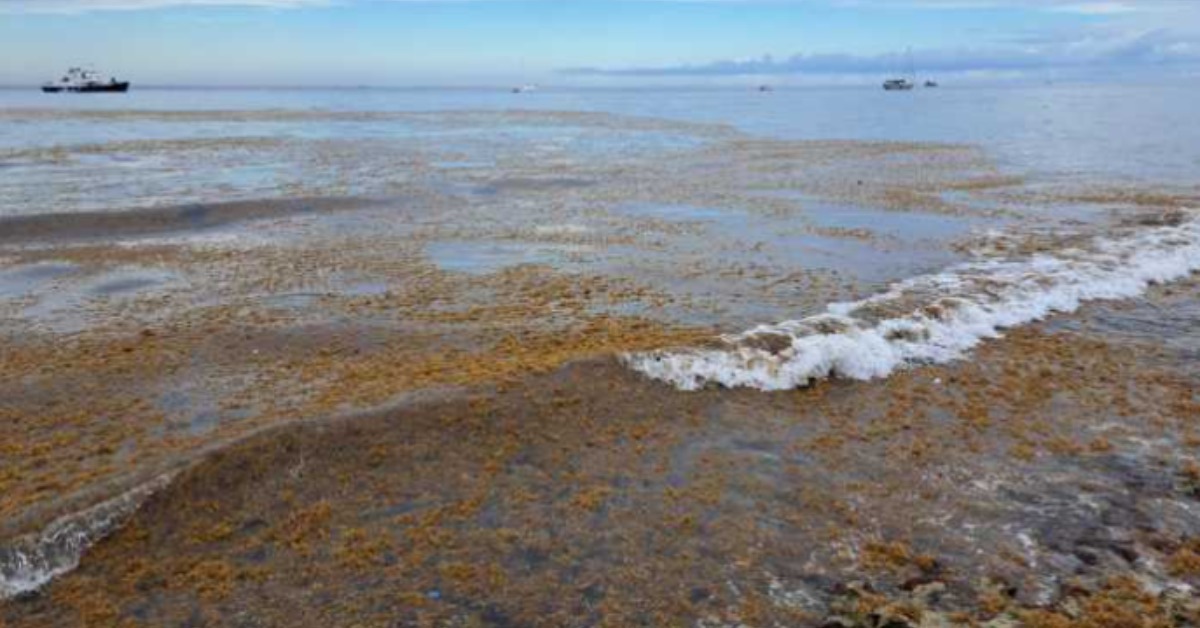
Playa del Carmen officials are preparing for a larger sargassum season in 2026. They estimate 50,000 to 60,000 tons could reach local beaches this year. That would be about double last year’s volume, based on municipal estimates. The timing matters because heavy arrivals can start before the usual peak. In the Mexican Caribbean, the main season often runs from March into October. Sargassum is a drifting macroalgae that forms mats offshore. Winds and currents can push those mats toward the coast in hours. Once it reaches the surf zone, it can pile up overnight. That can affect beach access, swimming entry points, and daily cleaning schedules. City planners say the goal is faster interception offshore and faster removal onshore. They also want more consistent handling after collection, so piles do not linger. Planning now covers staffing, machinery hours, and disposal routes. Officials say early action is meant to reduce disruptions during spring travel.
A longer offshore barrier and a collection point plan
The center of the response is a longer line of offshore barriers. The municipality says it is deploying about five kilometers of marine barriers along the central and northern shoreline. Officials describe it as the city’s longest barrier setup to date. The project is being coordinated with the Mexican Navy and the hotel sector. The barrier line is meant to slow incoming seaweed and keep it in a defined band. Crews can then tow, corral, or collect it before it reaches the sand. Officials are also evaluating a shorter extension toward Playacar. The segment would run roughly 400 to 500 meters from the Fundadores Pier area. It is designed as a “sacrifice point” for concentrating sargassum. That concentration can shorten cleanup time on nearby public beaches. The plan also includes daily monitoring, including satellite-based tracking. When forecasts spike, equipment can be staged before the first wave. Maintenance will be ongoing.
Which stretches of beach are prioritized first
Initial protection focuses on the waterfront near Playa Fundadores and the downtown corridor. Those beaches carry heavy daily use and have limited room for stockpiles. Officials say the first barrier phase should be finished before March 15. After that, crews plan to extend the protected line north in a second stage. Current plans describe that next section as running from Golondrinas toward Punta Esmeralda. The idea is to keep the most active public stretches in service for longer periods. Onshore work is expected to stay flexible and weather-driven. Cleanup teams can shift as tides and wind change the landing zone. Officials also want to reduce repeated scraping of the same sand. That is one reason to keep more seaweed offshore, when possible. Residents should expect early-morning machinery, plus more clearly marked cleaning areas. Access routes may be temporarily narrowed during heavy removal days. Crews also plan around lifeguard zones and pier access.
What this means for residents and visitors
For expats and long-stay visitors, the biggest issue is predictability. Sargassum can make one beach usable and another difficult on the same day. The municipality says it will publish more frequent beach-condition updates. Officials also describe a simple color-style status system for beach segments. That can help people plan swimming, dog walks, or morning runs. It also helps visitors avoid arriving during active hauling operations. Even with barriers, some seaweed will still get through. The speed of removal then becomes the key variable. Transport and temporary storage also matter when volumes rise. Trucks need clear routes that do not block neighborhood traffic. Handling sites need capacity so piles do not sit for days. Decomposing seaweed can produce odors, so prompt removal is important. Officials say coordination with state and federal partners is part of the plan. They also emphasize coordination with hotels, since cleaning often overlaps shared shoreline zones. Cleanup schedules may shift day to day.
What to watch next
The next few weeks will test whether early interception reduces shoreline piles. Barrier placement matters as much as barrier length. A small gap can redirect floating mats toward an unprotected stretch. Residents should expect adjustments as sea conditions change. Strong onshore winds can create sudden surges after quiet periods. Travelers planning spring visits should watch day-to-day reports, not seasonal averages. A higher-volume year can still produce clear-water windows. The key is short-term weather and current direction. Officials will also need to show how collected sargassum is moved and stored. Those steps can create secondary impacts if schedules fall behind. Beach-by-beach status updates will be the quickest signal of change. If the forecast holds, Playa del Carmen’s approach will likely influence nearby Riviera Maya towns. Many face the same offshore belt and the same peak travel calendar. Results here may shape where barriers are expanded next. Holiday weeks will be a key stress test.