Playa del Carmen is moving into the hottest part of the year with a new wildfire readiness plan and a wider emergency network behind it. The announcement may sound routine, but it follows a season that left a large burn scar, hundreds of local fire-related responses, and fresh reminders that the Riviera Maya’s risk is not limited to hurricanes or flooding. The next few months will show whether earlier detection and tighter coordination can prevent a repeat.
Playa del Carmen moves early on fire season
Playa del Carmen has rolled out its 2026 wildfire readiness plan as local and state officials try to get ahead of the dry months, when fires in rural and forested areas can spread quickly. The municipality says the goal is simple: detect problems sooner, respond faster, and keep small incidents from turning into larger emergencies.
That matters because this is not only a story about a remote land. Playa del Carmen is a fast-growing municipality where urban expansion, rural communities, and protected natural areas sit close together. When fires break out near settlements, roads, or production areas, the risk is not only environmental. It can also affect nearby families, visibility, public safety, and crews’ ability to contain a blaze before it spreads.
What the 2026 plan includes
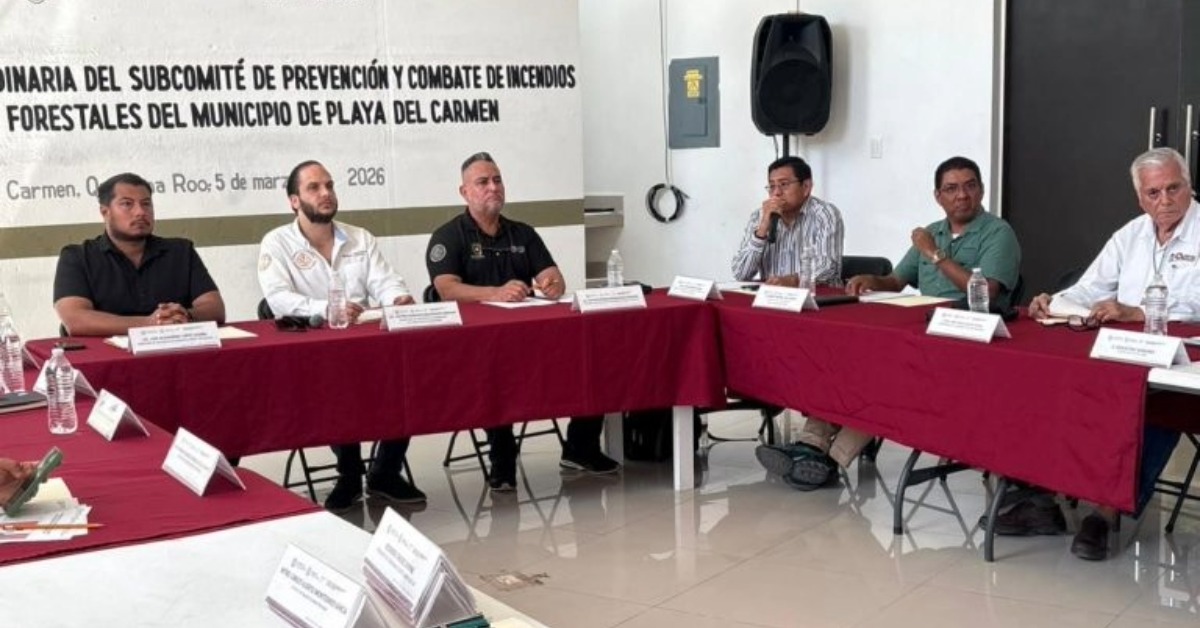
The local strategy centers on interagency coordination. Municipal authorities have been working with state and federal agencies through subcommittees and a specialized operational committee for the 2026 season. That structure is meant to reduce delays when a fire is reported and to clarify who handles detection, field response, logistics, and escalation.
Officials say the plan includes aerial monitoring, stronger field surveillance, faster activation of response protocols, and more prevention work before the season intensifies. It also includes firebreaks, which are cleared strips meant to slow a blaze, along with community brigades, training in rural areas, and tighter control of planned burns. In practical terms, the municipality is trying to do more work before smoke appears, not after.
Municipal Civil Protection officials also tied the plan to lessons from last year. They recalled a fire that burned more than 500 hectares and said local authorities handled 293 services related to fires and burns during the previous season. Those figures help explain why the municipality is emphasizing prevention, not just suppression.
Why this season matters in Quintana Roo
For readers outside Mexico, the timing is important. In Quintana Roo, the most critical wildfire period usually runs from March through June, when temperatures rise and rainfall drops. That combination dries vegetation and makes accidental or poorly controlled fire much harder to stop.
State and federal authorities have also been preparing at the regional level. Quintana Roo installed its 2026 state fire management committee earlier this month, and Conafor officials in the state say 11 brigades are positioned across the municipalities for the season. The message from the state has been that local response is the first line of defense, but larger support can be activated if a fire exceeds municipal capacity.
The background helps explain why Playa del Carmen’s announcement is more than a seasonal formality. At the state level, authorities reported 29 forest fires in Quintana Roo during 2025, with 6,717.84 hectares affected. The highest number of incidents came in April and May, which shows why March planning matters. Once the driest stretch arrives, reaction time becomes more important, and mistakes become costlier.
What officials want residents to understand
One of the clearest themes in the 2026 plan is that many fires start with human activity. Local officials have repeated the public warning to avoid burns, uncontrolled campfires, and other risky practices in or near vegetation. State officials have also urged people not to throw cigarette butts from vehicles and to report any wildfire quickly through 911.
That public message matters in Playa del Carmen because the issue is not limited to people who live deep in rural zones. Fires can begin near roads, settlements, vacant land, or agricultural activity and then move outward. In a municipality that depends on both its natural surroundings and constant mobility, prevention is not only an environmental issue. It is also a question of daily functioning.
The bigger test starts now
The broader significance of this rollout is that Playa del Carmen is trying to build a more preventive wildfire model. Instead of treating each fire as an isolated event, the municipality is linking monitoring, training, rapid response, and public warnings into one seasonal plan. That is a more realistic approach for a place where growth, heat, and land-use pressure often meet at the same edge.
Whether the plan works will become clearer over the next several months. The most visible sign of success may not be dramatic emergency operations. It may be the opposite: fewer large fires, smaller burned areas, and quicker containment before most residents ever notice a serious threat.
With information from 24 Horas Quintana Roo, H. Ayuntamiento de Playa del Carmen, Periódico Quequi, Coordinación General de Comunicación de Quintana Roo