Playa del Carmen wants diving to be more than a side activity for visitors. City officials have opened talks with the local divers’ union. They want more tourism spending to move beyond large resort complexes. For a destination known mainly for beaches and all-inclusives, folding the dive sector into formal planning could shape jobs, promotion, regulation, and conservation. The move sounds technical, but it could help decide who benefits from tourism growth and how closely that growth is tied to marine protection.
Diving enters the city’s tourism strategy
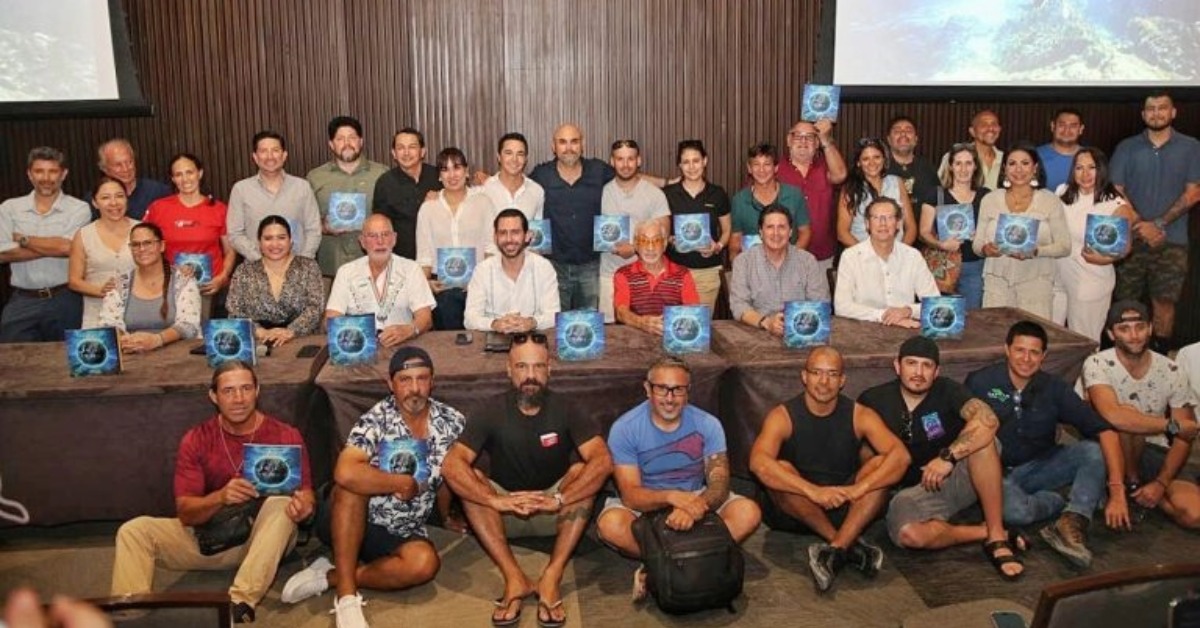
Playa del Carmen officials met this week with members of the local divers’ union. They said diving should become a more integrated part of the city’s tourism economy. The meeting was led by Estefanía Hernández, secretary of Economic Development and Investment Attraction, on behalf of Mayor Estefanía Mercado. The public message was not about a new marina or a tax break. It was about giving a long-established activity more planning, more visibility, and a stronger local economic role.
During the meeting, officials said they will update the registry of more than 2,000 permit holders tied to the sector. They described that as part of a wider effort to improve order, regulation, and professional standards. In practice, that means the city is treating diving less like a niche excursion. It is starting to treat it as a sector that deserves formal policy attention. The public outline is still limited. But it shows dive operators are being brought into official economic talks instead of staying at the edge of them.
Why diving matters in Playa del Carmen
For many international readers, Playa del Carmen is still defined by beaches, nightlife, and resort stays. But diving has long been one of the destination’s main draws. Officials said more than 500,000 tourists visit the wider region each year to practice diving. That activity supports jobs and spending in coastal communities. The wider Mexican Caribbean offers reef sites, cenotes, underwater caves, and seasonal marine encounters. That mix attracts both recreational visitors and more specialized travelers.
Dive tourists also spend differently from many resort guests. They often book repeated outings, stay longer, and spend money across a wider local business chain. State tourism officials have made that argument more openly this year. In February, Quintana Roo launched a Mexican Caribbean Diving Guide and called diving a strategic segment for tourism diversification. The state said the segment includes seven internationally known destinations, including Playa del Carmen. It also said dive visitors stay an average of 7.7 days and travel in groups averaging 3.3 people.
The market, state officials said, is almost evenly split between domestic and international travelers. That matters because it shows diving is not only a foreign niche. It is also a product with appeal in Mexico. For Playa del Carmen, that gives city officials another reason to see the sector as part of mainstream tourism planning. A visitor who comes to dive may still book a hotel room, take transport, eat in local restaurants, and spend on guide services. But that spending can differ from the spending pattern of a visitor who stays in a resort package.
From all inclusive to todos incluidos
The local push also fits a broader message that city officials have repeated for months. Playa del Carmen says it wants to move from an “all-inclusive” model to “todos incluidos.” In plain terms, the goal is to keep more tourism money circulating outside resort walls. Officials have used that language when talking about artisans, producers, community tourism, and nature tourism. Now they are applying it to diving.
That shift matters in a city with a large hotel base and a tourism economy that can concentrate spending. Municipal officials said in late 2024 that Playa del Carmen had more than 290 hotels and about 45,600 rooms. They said that equals roughly 35 percent of Quintana Roo’s hotel supply. The new dive-sector talks suggest the city wants more visitors using independent guides, boats, instructors, transport, and other local services. For small operators, that could matter more than a slogan. It could affect who benefits when occupancy rises.
For readers outside Quintana Roo, this is the wider point. Playa del Carmen is not trying to replace its resort model. It is trying to widen the number of people and businesses that benefit from it. Diving fits that effort because it already exists, already draws travelers, and already supports a network of smaller operators. The city is not building the sector from scratch. It is trying to bring an existing activity into a formal strategy and give it more weight in the tourism economy.
Why operators have been asking for this
The city’s new emphasis did not come out of nowhere. Earlier this year, local dive operators were already calling for more international promotion through specialized fairs in the United States, Canada, and Europe. They argued that broader exposure could help restore business after a weak stretch in 2025. One instructor said activity had dropped sharply during much of last year, then improved later in the year. That does not prove the whole sector has rebounded. But it helps explain why formal inclusion in tourism planning matters now.
For operators, inclusion can mean several things. It can mean being counted in the city’s official registry. It can mean appearing in promotional campaigns. It can mean dealing with clearer rules instead of uneven enforcement. It can also mean being recognized as part of Playa del Carmen’s economic identity. In a destination shaped by large hotel packages, that distinction matters. A sector that is visible in planning usually has a better chance of being visible in marketing, regulation, and public decisions.
The environmental question behind the business case
There is a strong business case for making diving a central tourism product. There is also an obvious limit. Diving depends on the health of the sea. The city can market reefs, cenotes, and shark encounters. But the long-term value of the sector depends on conservation, carrying capacity, enforcement, and water quality. That is not a side issue. It is the sector’s foundation.
Municipal officials have already tied diving to conservation in other public events. In July 2025, the city said responsible bull shark diving generated direct economic benefits for around 1,600 people and indirect jobs for more than 30,000 residents. Federal conservation authorities also note that the Caribe Mexicano Biosphere Reserve protects the Mexican portion of the Mesoamerican Barrier Reef System. That reserve includes waters off major tourism centers such as Playa del Carmen. For the city, that means growth in the dive economy and marine protection cannot be separated.
That tension will likely determine whether this policy shift succeeds. If Playa del Carmen wants diving to play a bigger role in its tourism future, it also has to protect the ecosystems that make the product viable. A stronger registry and better sector coordination may help. But the success of the strategy will also depend on what happens in the water, not just what is said in meeting rooms.
What comes next
For now, the meeting with the divers’ union looks more like a policy signal than a finished program. No major infrastructure project was announced. No new incentive package was outlined in the public summary. The clearest steps so far are registry updates, stronger sectoral ordering, and closer integration into tourism planning. Even so, that is not a small shift. In many destinations, sectors like diving remain important in practice but secondary in planning.
If Playa del Carmen follows through, the dive sector could become a test of whether “todos incluidos” has real substance. That would mean more than adding underwater imagery to tourism campaigns. It would mean steering more visitor spending toward local operators. It would also mean protecting the natural assets that make the business possible. For a city still trying to move beyond the classic resort formula, diving may be one of the clearest places to watch.