
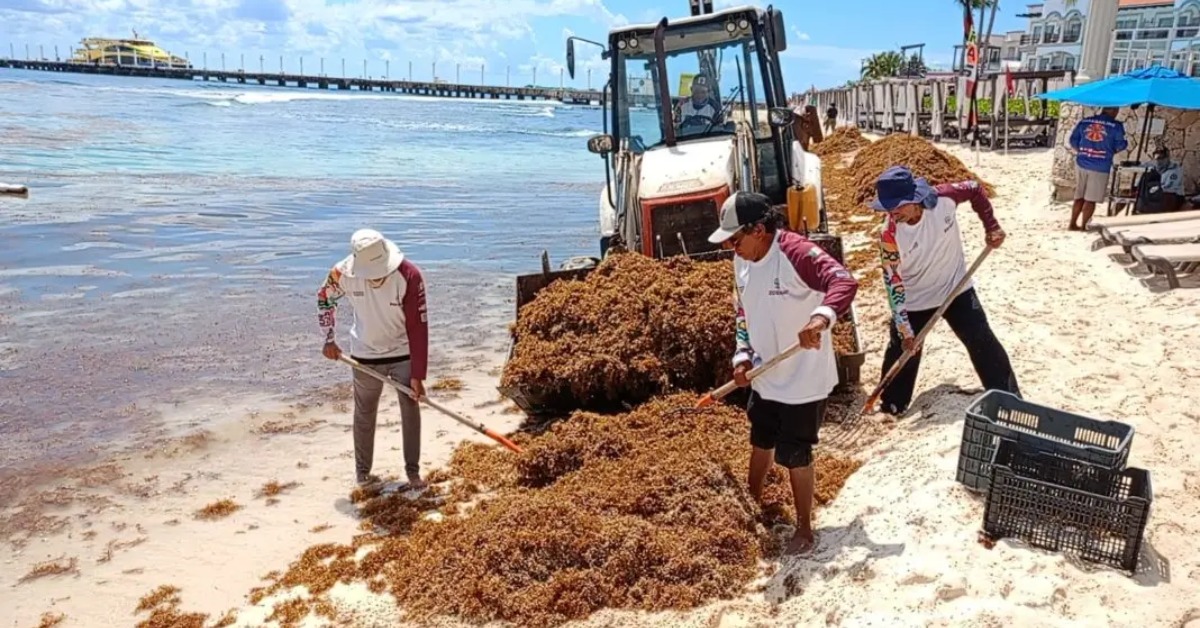
The cleanup north of Avenida Constituyentes is only part of the picture in Playa del Carmen. An early sargassum season is already putting pressure on crews, hotels, and officials to move faster than usual. Beach conditions are not the same everywhere, and that matters for residents, visitors, and businesses. The bigger question is whether new barriers, daily monitoring, and quicker response teams can keep localized arrivals from becoming a wider problem. That is what this latest operation begins to test.
Cleanup becomes more visible
Navy personnel and municipal coastal-zone crews intensified sargassum removal this weekend on beaches north of Avenida Constituyentes in Playa del Carmen. The work centered on one of the town’s most visible beachfront corridors. That matters because the first strong images of the season often come from this area. Those images can make the whole coastline look worse than it is.
The latest operation is part of Operación Sargazo 2026. That effort brings together the Navy, municipal crews, the state government, and private businesses. Local officials had already warned that the season was starting early. On Feb. 11, the city said it had removed 1,288 tons before March even began. City officials also said that 2025 brought more than 30,000 tons, prompting them to act earlier this year. By March 11, the local coastal-zone director said the municipal total had climbed to 2,100 to 2,200 tons.
Why this beach stretch matters
Officials say the current buildup is concentrated, not uniform. Earlier this week, municipal authorities said the heaviest accumulation was near the Constituyentes pier. They also said Mamitas, the downtown beach, Punta Esmeralda, and Playa 88 were still mostly clear at that point. For international readers, that is an important detail. One viral video does not always reflect all of Playa del Carmen.
The same official said about 150 tons had been removed from the Constituyentes area since the previous Saturday. He also said containment barriers and anchor points were still being installed or adjusted. That meant part of the offshore defense system was not yet fully in place. When that happens, one beach can take a direct hit while another remains usable. That is one reason the sargassum season feels unpredictable on the ground.
What the 2026 plan is trying to do
The municipal strategy goes beyond daily beach cleanup. In February, city officials said barrier coverage would expand from 2.5 kilometers to 5 kilometers. The protected stretch runs from Playa Cisne to Punta Esmeralda. Officials also said the city would use daily satellite monitoring and a beach-by-beach sargassum alert system. That could help residents and visitors make better decisions before heading to the shore.
The city also said the Navy would place barriers and operate three sargassum vessels and two smaller support boats offshore. On land, local officials said Zofemat crews were active at 15 collection points with machinery and technical staff. The state has also moved into a more intensive phase. On Feb. 27, Quintana Roo said it had already collected 4,558 tons this year. It also said 6,600 meters of barriers were installed at strategic coastal points.
Why this is more than a beach appearance issue
For many people, sargassum first feels like a tourism problem. Beaches can look darker. Entering the water can get harder. The smell can change an ordinary walk along the shore. But officials in Quintana Roo say the issue is broader than appearance. As the seaweed piles up and breaks down, it can create environmental and health concerns, including foul gases and irritation for some people.
There is also a clear offshore signal behind the cleanup. A Semar bulletin dated March 11 identified sargassum groups with possible landfall from Puerto Aventuras to Playa del Carmen and from Playa del Carmen to Puerto Morelos. The same bulletin estimated 21,239 tons in the Mexican Caribbean that day. It also warned that currents and wind affect how much actually reaches the beach. That means the offshore numbers are a guide, not a guarantee.
What to watch next
The next question is whether this remains a localized problem. If barriers are completed and cleanup stays fast, officials may keep the worst arrivals from spreading. If offshore conditions worsen, the problem could move quickly along the shore. That is why daily monitoring matters so much in March and April.
For now, the main point is simple. Playa del Carmen is trying to get ahead of the season instead of chasing it. The cleanup north of Constituyentes is the visible part of that effort. The bigger test will come over the next several weeks. That is when barriers, daily beach reports, and rapid removal will show whether the city can keep an early sargassum season from defining the start of spring.