A venue closure in Playa Paraíso is drawing attention far beyond one beachfront property. City officials say Villa La Joya was operating amid complaints about large events, noise, and possible environmental noncompliance in an area used by nesting sea turtles. The case also raises a harder question for coastal Mexico: how do authorities balance weddings, tourism, and high-end development with wildlife protection and the daily lives of nearby residents? What happens next could shape how similar coastal venues are policed across the Riviera Maya.
Why the city stepped in
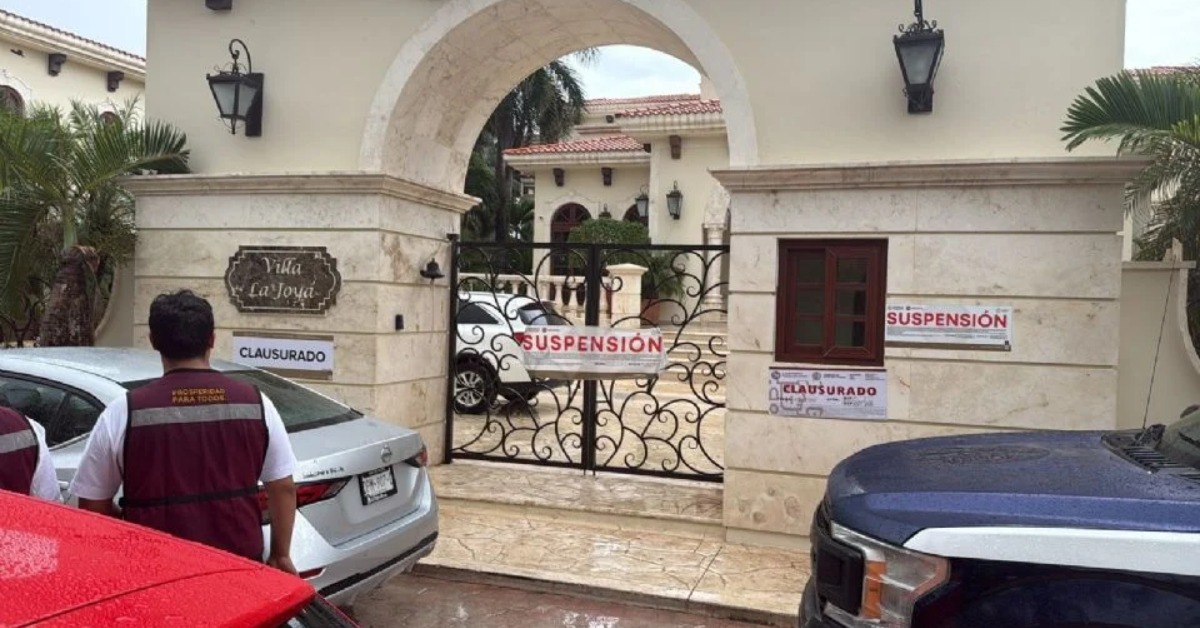
On Tuesday, Playa del Carmen authorities closed Villa La Joya, a beachfront event property in Playa Paraíso. Officials said the move followed a review triggered by citizen complaints. Inspectors from Civil Protection, Urban Development, and Ecology suspended the venue while permits, licenses, and compliance issues are reviewed. The complaints focused on recurring large events, late-night noise, heavy logistics, and alleged pyrotechnics. City officials framed the move as both an environmental measure and a response to residents who said the area’s character was being disrupted.
The closure is administrative, not a final ruling on the venue’s future. Local authorities said the case will remain under review while they determine whether the property was operating in compliance with the law. That distinction matters. In Mexico, a clausura often works as an immediate stop measure while agencies sort out permits and regulatory questions. For visitors and foreign property owners, the practical meaning is simple. Activity is halted first. The legal file is sorted out afterward.
Why Playa Paraíso is sensitive
What makes this closure more than a neighborhood dispute is the location. Playa Paraíso is part of a coastal corridor where sea turtles come ashore to nest. Local authorities treat that stretch as environmentally sensitive. The municipality has said the 2026 sea turtle season officially begins on May 1. Monitoring and preparations start earlier across roughly 23 kilometers of coastline. In these zones, lighting, beach furniture, barriers, intense nighttime activity, and noise can all become problems. They can disrupt nesting females and hatchlings.
That context helps explain why officials reacted before the formal peak season. Turtle protection on the Riviera Maya is not limited to nights when animals are visible on the sand. It also means preparing the coast, training personnel, and reducing conditions that could affect nesting once the season begins. Local environmental officials have described 2025 as one of Playa del Carmen’s strongest recent turtle seasons. That helps explain why authorities are sensitive to complaints in a known nesting zone.
A case with mixed signals
This story is more layered than a simple crackdown on an event venue. Villa La Joya and its affiliated conservation project publicly present themselves as active participants in turtle protection. On its own conservation site, the project says it has worked with neighbors and authorities for years. It says it joined the municipal turtle program in 2017. It also says it protected 109 nests and released 12,426 hatchlings during the 2025 season.
That does not cancel the city’s concerns. A venue can participate in conservation and still face questions about how some activities are managed. But it does show why this case may draw attention from international readers, wedding planners, and nearby residents. In places like Playa Paraíso, conservation is not happening far away from tourism. It is happening in the same physical space. The same roads, lights, and nighttime activity shape both worlds.
The bigger fight over coastal growth
The dispute also fits a broader pattern in Playa Paraíso. Residents and environmental advocates have spent the past two years pushing back against projects they believe threaten turtle habitat. One of the most visible fights involved the proposed Playa 35 development. Neighbors opposed it. Federal environmental authorities later denied the project’s impact approval after scrutiny over risks to a turtle nesting zone. That earlier dispute matters because it shows this is not an isolated clash. It is part of a continuing argument over how much development this part of the coast can absorb.
For Playa del Carmen, there is also a political message. The city depends on tourism, events, and real estate. But local officials face growing pressure to show that growth will not override environmental rules or residential quality of life. That balance is especially important in destinations that market both luxury and nature. The beaches are not only backdrops for weddings and private celebrations. They are also working ecosystems, public-facing symbols, and, in some cases, wildlife habitats under stress.
What comes next
For now, the immediate question is narrow. Municipal authorities will review Villa La Joya’s permits and compliance. The closure remains in place while that process continues. The bigger question is wider. If officials continue to tighten oversight in Playa Paraíso, other event operators, developers, and hospitality businesses may need to demonstrate more clearly how they manage noise, lighting, beach access, and environmental safeguards.
For readers outside Mexico, the case offers a useful window into how local governance works in coastal tourist areas. A dispute that starts with a party venue can quickly become a story about environmental enforcement, neighborhood pressure, land use, and the limits of resort growth. In Playa del Carmen, that debate is no longer abstract. It is playing out at a real beachfront venue.