A stolen truck report led to a much larger discovery in Veracruz. When workers at an impound yard heard voices from a trailer, authorities opened the cargo area. Inside were 229 migrants, including minors. The rescue ended one emergency but opened a broader story. It also raised questions about the route and the network behind it. For international readers, the case helps explain how smuggling operates in Mexico and why these journeys can become dangerous long before migrants reach the border.
A stolen truck led to the rescue
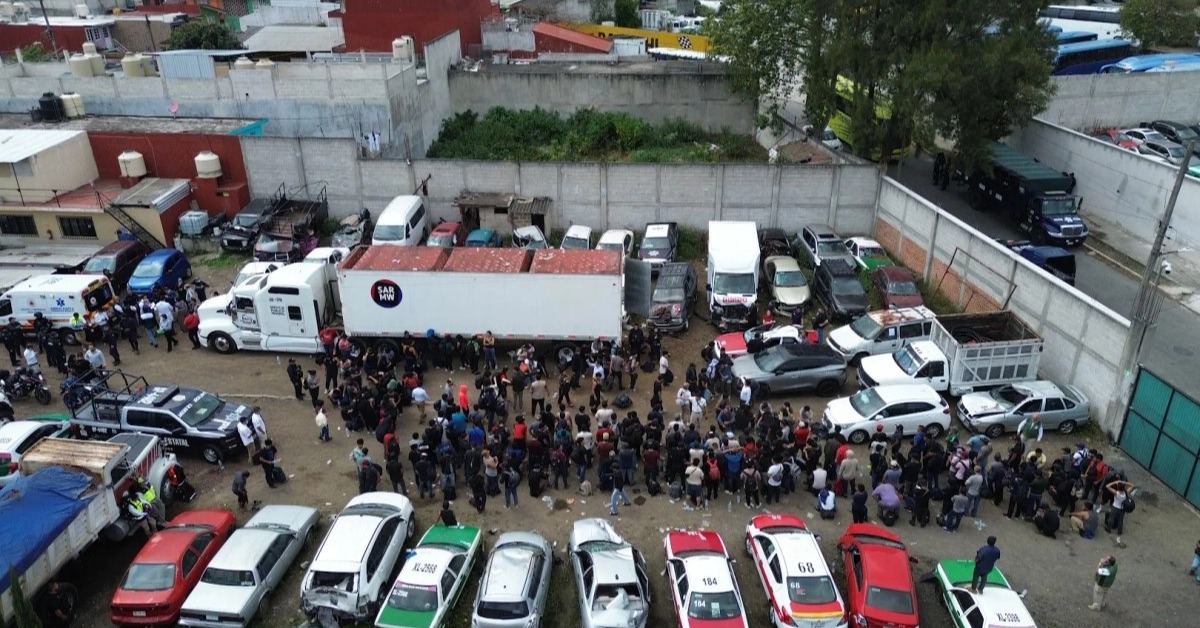
Authorities in Veracruz rescued 229 migrants from a trailer after a routine enforcement action turned into a larger emergency. State police said the truck was stopped in Puente Nacional because it had been reported stolen. It was then taken to an impound lot in Xalapa. There, workers heard voices and banging from inside the cargo area. That is when the scale of the case became clear.
Emergency crews, state police, and immigration authorities responded to the lot. Officials said some of the people inside showed signs of dehydration and disorientation. State authorities said the group included minors and that most were from Central America. The driver was detained. The case was also referred to federal authorities, including the National Migration Institute and the Attorney General’s Office, for the next steps in the legal process.
Why the discovery matters
The most striking detail is not only the number of people found. It is where they were found. This was not a rescue at a highway checkpoint or a border crossing. The trailer had already been towed to an impound yard. That suggests the people inside were hidden well enough to remain undiscovered until someone heard them.
Cargo transport gives smugglers a simple form of cover. Freight trucks move across Mexico every day. A trailer can blend into normal commercial traffic. One vehicle can also carry a large group at once. But that same setup creates extreme dependence on the people controlling the trip. Those inside cannot step out, ask for water, or call for help unless the doors open or someone outside notices them.
That matters because migrant smuggling by cargo truck is dangerous even when no crash occurs. A closed trailer can turn into a medical emergency within hours. Heat builds quickly. Air can be limited. Water may be scarce. Panic also becomes a risk, especially when children are inside and no one knows how long the vehicle will remain shut. In this case, the rescue came before a fatal outcome. That alone makes the incident significant.
Veracruz is a key corridor
For many international readers, stories about migration in Mexico can seem tied only to the northern border. This case is a reminder that the most dangerous part of the journey often happens far from that line. Veracruz has long been one of the country’s main transit corridors for people moving north from the southeast. Its highways connect the Gulf coast to central and northern Mexico. That geography makes it useful for legal freight movement and for smuggling networks trying to blend into ordinary traffic.
The case also comes after a period of lower overall migration pressure at the U.S.-Mexico border. Border Patrol encounters fell sharply in fiscal 2025. But a lower total does not erase the risks inside Mexico. It may also encourage smugglers to rely on more concealed methods. The use of cargo trailers has appeared in major cases before. In 2021, more than 50 migrants were killed when a truck carrying them crashed in Chiapas. That tragedy showed how quickly hidden transport can become deadly.
What usually happens after a rescue
After a rescue like this, the first step is medical screening and stabilization. From there, immigration officials begin the identification and age verification process. Cases involving children require added review. Officials also determine whether families are traveling together, whether any person may need protection, and whether there are signs of coercion or trafficking. At the same time, criminal investigators look at the driver, the vehicle, and any links to a wider smuggling operation.
Several questions remain unanswered in the Veracruz case. Authorities have not publicly explained how long the migrants were inside the trailer. They have not detailed the full route, the final destination, or whether more arrests are expected. Those gaps matter because human smuggling is rarely a one-person operation. A driver may be only one part of a chain that includes recruiters, lookouts, transport coordinators, and organizers on both sides of borders.
This is why the Veracruz rescue should be read as more than a one-day police story. It was a humanitarian emergency uncovered almost by accident. A truck flagged as stolen ended up exposing a hidden people-smuggling operation along one of Mexico’s most important corridors. For readers trying to understand migration in Mexico, that may be the clearest lesson. The danger is not only at the border. It is also on the road.
With information from Secretaría de Seguridad Pública de Veracruz, Quadratín Veracruz, Pew Research Center, Reuters, International Organization for Migration