After two days of disrupted air service in Jalisco, departures from Puerto Vallarta’s airport began moving again. What followed was a rapid shift: long lines of ground transport to the terminal, packed check-in areas, and passengers taking any available route north. Airlines added counters and staff as the backlog cleared, while security forces increased their presence in the city and at airport facilities. The pace of normal travel now hinges on how quickly schedules, road access, and traveler confidence stabilize.
Flights resume after weekend disruptions
Flights in and out of Puerto Vallarta restarted on Tuesday after a weekend of flight cancellations and road disruptions. The interruptions followed a federal security operation in Jalisco and a wave of retaliatory roadblocks. The worst disruptions were reported on Sunday, February 22. Airports stayed open, but ground access and carrier precautions reduced schedules and stranded travelers. The airport operator Grupo Aeroportuario del Pacífico (GAP) reported 47 cancellations and one delay at Puerto Vallarta on Monday. The same report counted 71 cancellations and 17 delays at Guadalajara’s airport that day. Social media accounts described passengers sleeping inside terminals after hours without clear updates. By Tuesday, GAP said operations were largely restored, with PVR near 95% active flights. Guadalajara was reported at about 96% active flights, with remaining delays and cancellations. GAP said the last canceled flights were tied to schedule reactivation, not closures. One Canadian carrier, Flair Airlines, had not fully restarted service as the recovery began.
A rush of departures once PVR reopened
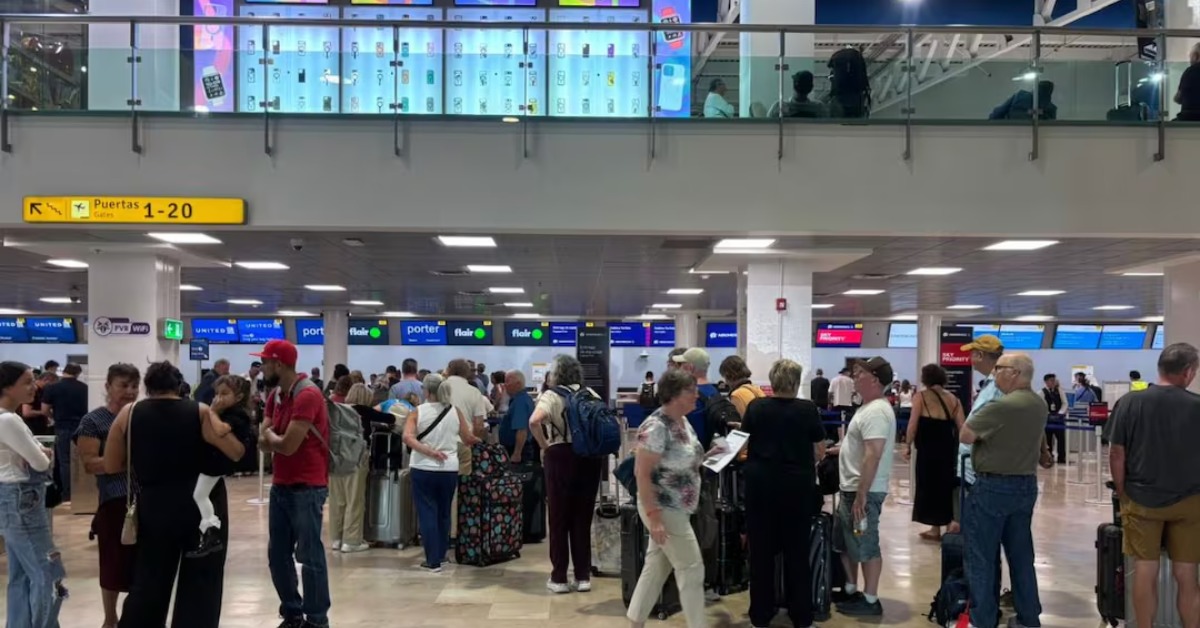
With service returning, the airport became a funnel for travelers who had waited since Sunday to leave. From early Tuesday, taxis, vans, and charter buses formed lines along main routes to Licenciado Gustavo Díaz Ordaz International Airport (PVR). Inside the terminal, departure areas filled as passengers rebooked and moved onto the first available flights. Airport staff reported heavier demand for outbound international flights, especially toward the United States, Canada, and parts of Europe. Several incoming flights arrived with lighter loads, reflecting the imbalance created by the cancellations. Airlines expanded their staffing and opened extra check-in counters to process backlog passengers. Carriers also adjusted connecting itineraries to rebuild links through major hubs. Rebookings often involved new routings through different cities and longer travel days. For residents and expats, the disruption affected planned visits and return trips. By late Tuesday, the flow was steadier, but lines remained common around peak departure banks.
Air Canada and United, among other airlines, paused or canceled routes into Puerto Vallarta as the unrest unfolded. Those decisions left travelers dealing with missed connections and limited seat availability once flights restarted. The recovery depended on more than aircraft availability; road access and local transport also had to normalize. GAP said terminal buildings and access roads were operating efficiently as schedules were rebuilt. Even so, the remaining cancellations on Tuesday showed that the restart was not instantaneous. For passengers, the main pressure point shifted to rebooking lines and baggage processing. Hotel stays were extended for some visitors who could not reach the airport on Sunday and Monday. Others moved between properties as reservations ended and flights were pushed back. Airline customer service teams increased staffing in Puerto Vallarta and at major hubs to handle changes. In Guadalajara, earlier disruptions also produced crowded terminals as passengers waited for updates. The net result was a strong outbound push once seats became available, with fewer passengers arriving than leaving.
Security presence increases as schedules stabilize
Security measures increased in and around Puerto Vallarta as authorities moved to stabilize the region. The Mexican Navy sent 103 marines to the city aboard the ARM Usumacinta, along with vehicles. The deployment was framed as support for surveillance and public safety after attacks and roadblocks. At the airports, Guardia Nacional personnel maintained a reinforced presence inside terminals and on access roads. The operator described both airports as safe for passengers, staff, and service providers. In practical terms, the added security has meant more visible patrols and periodic checks near transportation routes. For expats who travel often, that can translate into longer ground transfers, even when flights are on time. Carriers have continued to rebuild schedules in waves, which can shift departure times during the day. Airlines have told passengers to confirm flight status close to departure and to expect lines at counters. Puerto Vallarta’s rebound now depends on the pace of normal traffic and the confidence of airlines, tour operators, and visitors.
With information from Notisistema, La Jornada, Reuters, Grupo Aeroportuario del Pacífico (GAP)