As sargassum starts showing up early on the Caribbean coast, Quintana Roo is moving ahead with offshore defenses. Officials say more than 6,600 meters of barriers are already in the water. More material is on the way. Crews want wider coverage before the usual peak months. But one of the state’s biggest tourism hubs is not a simple install. In Cancún, currents can undo weeks of work in a day. The next decisions may shape beach season for residents and visitors.
Barrier rollout along the coast
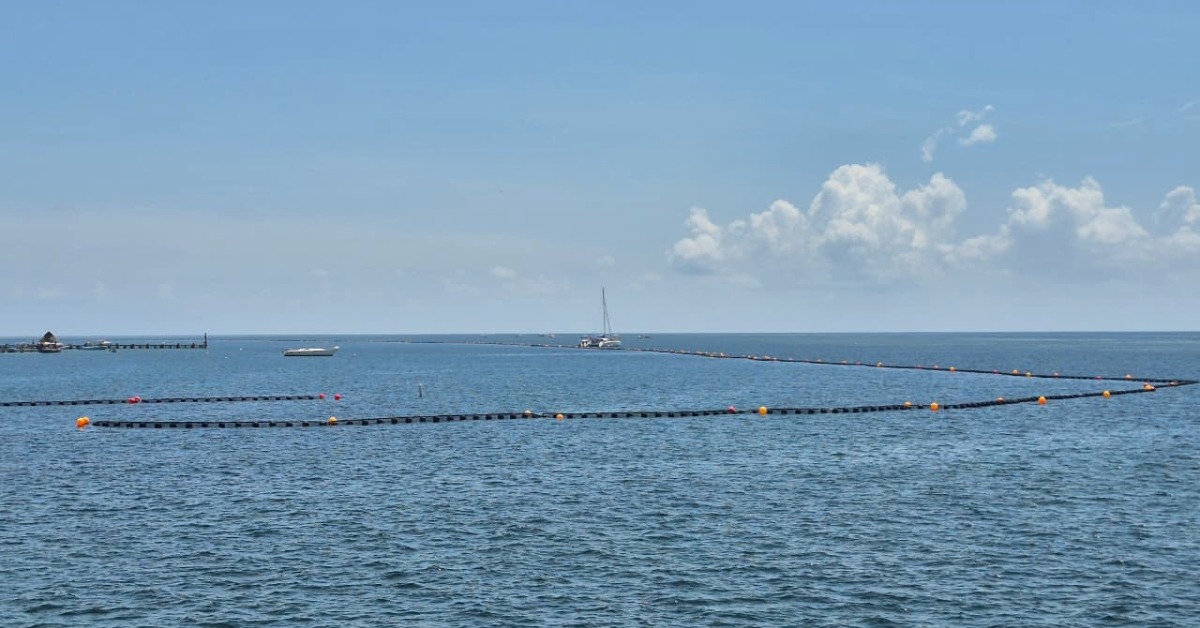
On March 4, Quintana Roo’s ecology and environment secretariat gave an update on sargassum defenses. It said more than 6,600 meters of anti-sargassum barriers are installed along key parts of the coast. The floating booms are designed to corral seaweed offshore, so crews can collect it before it reaches the sand. Officials said the current barrier line covers sections near Puerto Morelos, Playa del Carmen, Tulum, and Mahahual. The state also bought an additional 7,500 meters of barrier material late last year. About 2,500 meters of that new stock has already been placed in Puerto Morelos. The remaining 5,000 meters are expected to arrive soon for deployment at other sites. Installation work is being coordinated with the Mexican Navy, which provides vessels and support for anchoring. The goal is to have more coverage in place before the months when landings usually intensify on the Caribbean shoreline. The season often peaks between May and August. Officials describe the barriers as one layer in a broader response that also includes daily beach cleanup and monitoring.
Why Cancún is harder to protect with barriers
Officials say Cancún presents a different challenge. Strong currents and shifting conditions make barrier lines harder to keep stable. The state is evaluating an extra barrier near Playa Coral. The target range is about one to one-and-a-half kilometers. Playa Coral is a public beach in the hotel zone. It has seen repeated heavy landings in past seasons. Any new line would need careful anchoring and frequent inspection. Crews also need to avoid navigation hazards for swimmers and small boats. In fast-moving water, sargassum can slip under a boom. It can also wrap around anchor points. That is why offshore booms often work alongside collection boats and nearshore skimmers. Officials say the decision will depend on current studies and available equipment. They expect more barrier material to arrive for broader coverage. If installed, the line would be serviced by crews using small boats. The barrier is not a promise of sargassum-free beaches. It is meant to slow arrivals and concentrate algae for faster removal.
Cleanup on land ramps up as arrivals start early
The barrier network is being paired with a land cleanup push. State officials say sargassum has arrived earlier than usual, so they plan to step up beach work in March. Government-funded brigades are set to support coastal municipalities that face the heaviest landings each year. The current plan covers Benito Juárez (Cancún), Playa del Carmen, Puerto Morelos, Tulum, Cozumel, and Isla Mujeres. Teams use manual collection and heavy equipment, depending on beach conditions and access points. The seaweed is then moved to authorized sites for handling and disposal. By late February, officials reported 4,558 tons collected so far this year. Many crews focus on early-morning removal to limit odors and safety risks. Officials say monitoring continues across the coast through the season. For expats who live near the shore, that tally is a reminder of how quickly conditions can change. Wind direction and waves can shift the problem from one beach to another in hours. Barriers can reduce the load, but they cannot eliminate it.
Plans to reuse sargassum instead of stockpiling it
Officials say the state is also trying to change what happens after the cleanup. Alongside containment, Quintana Roo is developing a circular-economy plan to process collected sargassum rather than stockpiling it. They have linked the offshore and beach effort to a planned Centro Integral de Economía Circular in Puerto Morelos. Officials describe the facility as a way to process sargassum gathered at sea. They say it could produce cleaner energy and other usable outputs. Officials say they aim to start operations in the second half of 2026. The timeline depends on engineering and permits. Officials also want a new development zone in Puerto Morelos. The proposed site spans about 38 hectares. They say it can support private and academic projects. Those projects would use sargassum as a feedstock. For residents, the practical impact may take time to see. But officials argue that reuse could lower disposal costs and create steadier work beyond peak months.
With information from Gobierno del Estado de Quintana Roo Coordinación General de Comunicación