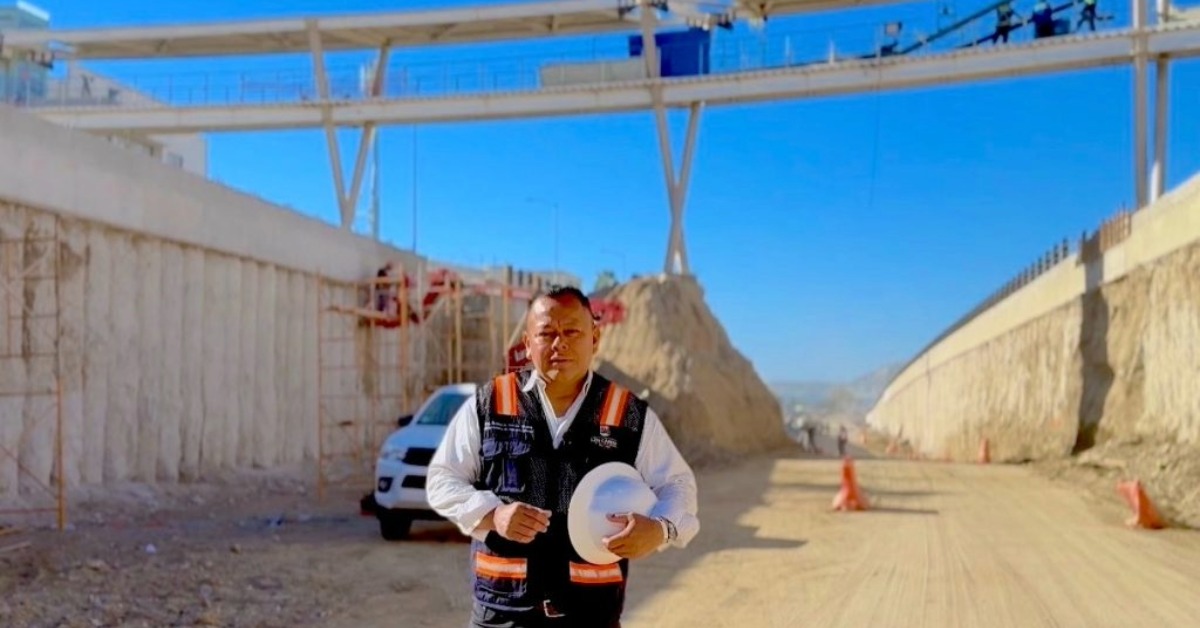
Drivers have one big question about the new San José del Cabo underpass. What happens when the first cyclone-season storm dumps heavy rain in minutes? Municipal officials say the answer is a stormwater drainage system built into the design. They say the plan uses the site’s natural slope to keep runoff moving. A pluvial channel was installed early to guide water away from the lowest point. The next test will be how the system performs during the first truly intense downpour.
Integrated drainage built into the underpass
Municipal officials say the San José del Cabo underpass was designed with water in mind, not just traffic. Roberto Flores Rivera, the city’s director of urban development, said the works include an integrated stormwater drainage system. He said the system was planned from the earliest design stage. Engineers, he added, worked from local climate patterns and the way rain moves across this terrain. The project sits at the junction officially called Glorieta de las Mujeres Libres. Many drivers still identify the spot as the Fonatur roundabout. Flores said the design treats the area’s natural grade as part of the hydraulic solution. Runoff is meant to follow a controlled path rather than pool at the lowest point. Officials say a dedicated pluvial channel was among the first elements built. They say it was installed early to avoid choking drainage paths. They also say the goal is to reduce ponding during heavy rains and cyclone season. The municipality is tracking construction impacts through mobility meetings, while the federal SICT manages execution with the contractor.
Why this junction is sensitive to flooding
Flooding is not an abstract concern in this part of Los Cabos. San José del Cabo sits in an arid zone, yet it experiences frequent flooding when Pacific systems move north. Rain can fall fast, and runoff can concentrate quickly in low crossings and tight curves. When streets and lots replace soil, less water soaks in. More water runs across the pavement, and it reaches drainage points sooner. Researchers studying the San José del Cabo basin have linked higher flood vulnerability to urban expansion and to the alteration of natural channels. That context matters for an underpass, because even shallow flooding can stall vehicles. It can also cut access to the Transpeninsular highway corridor in peak traffic hours. Cyclone season typically brings short bursts that can overwhelm clogged drains and work zones. For many expats, that corridor is a routine route to the airport, schools, and medical care. Officials say the new drainage layout is meant to reduce closures and backups during heavy rain.
What changes for drivers as completion nears
Beyond drainage, the underpass is part of a broader rework of the Fonatur junction aimed at reducing daily congestion. Federal project briefs describe a 1.5-kilometer set of works. It adds a grade-separated crossing and a signalized roundabout. They also describe upgraded pedestrian and cyclist space, including a more accessible footbridge connection. Local updates place the site near kilometer 30 of the Cabo San Lucas–La Paz road. That stretch carries commuter and tourist traffic most days. While construction continues, officials say they are adjusting signage and access based on regular technical meetings. They have also discussed night repairs on rough surfaces to keep lanes usable. For drivers, the practical test arrives when storm runoff and work-zone detours overlap. A drainage plan works best when grates stay clear, and channels remain open. Authorities are urging people to treat any pooled water as hazardous and to follow detours promptly during storms.