The seaweed is arriving earlier, and locals say the smell is arriving first. At Playa 88, decomposing sargassum is building up along the dunes, with business owners warning that winds can carry odors inland. The municipality is expanding offshore barriers and cleanup crews, but residents who lived through last year’s season say timing matters more than promises. Regional satellite monitoring also indicates more sargassum in the western Caribbean. The next few weeks may show whether Playa del Carmen can keep pace.
Playa 88 sees early buildup
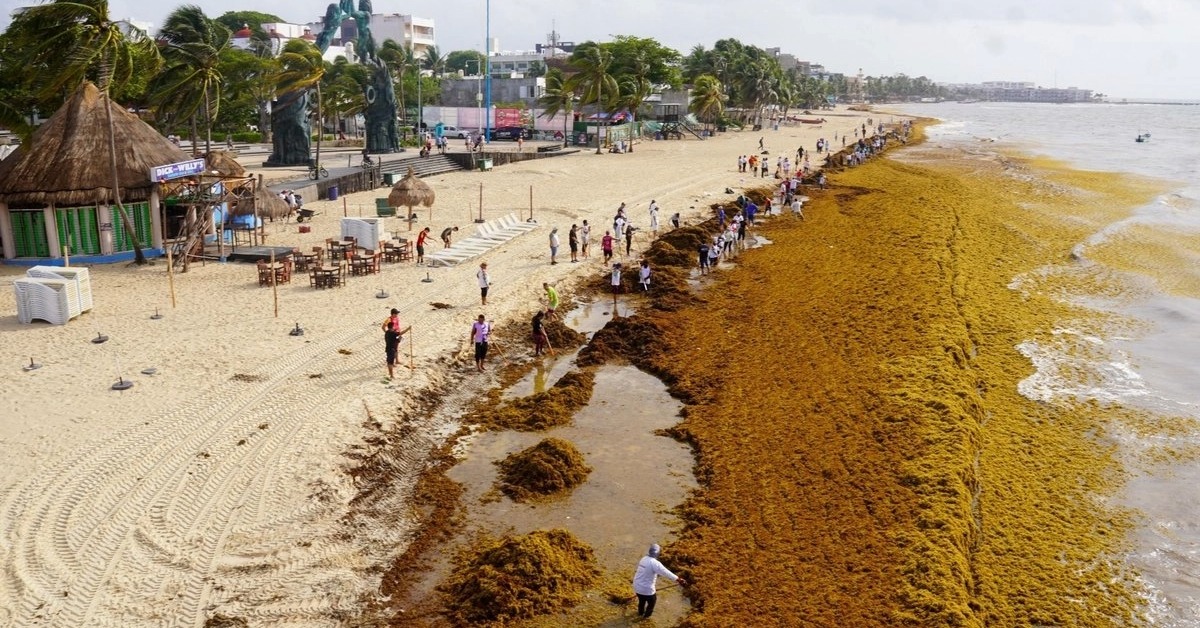
On Playa 88 in Playa del Carmen, sargassum is arriving in thicker bands. Local service providers say piles left on the sand are already breaking down and producing a rotten-egg smell. They describe the odor as strongest along the dunes near the Colosio neighborhood. Jorge Avilés Rodríguez, a local diver who works in the area, says the situation can escalate quickly if the seaweed stays in place. Juan Rosales Méndez, a fisherman, says the scene resembles what the coast experienced in 2025. Noé Salas Pisté, who works with visitors near the beach zone, says the smell can travel inland with afternoon winds. Several workers who rely on beach traffic say the buildup is starting to affect daily business. They are urging the municipality to speed up removal before the next tides add more material. The concern is not only what visitors see. It is also what they smell when the wind shifts.
Odor and cleanup pressure
When sargassum sits on shore, it can begin to decompose within days under heat and sun. That process releases hydrogen sulfide, a gas with a strong odor that can irritate the airways. Public health guidance notes that gas production often increases after about 48 hours on land. Researchers have warned that workers who handle decomposing mats can face higher exposure risk, especially during long cleanup shifts. Public health agencies also note that people with asthma or other respiratory conditions may be more sensitive to odors when they are concentrated. In Playa del Carmen, local workers say the issue is now spreading beyond the waterline. They report that the smell reaches businesses near Quinta Avenida when winds push it inland from the beach. That creates pressure to move fast, because removal becomes harder once seaweed dries into the sand. It also complicates messaging for a destination that markets the shoreline as a daily attraction. For residents, the immediate question is simple: will cleanup keep pace as arrivals intensify?
Offshore barriers and a larger cleanup push
City officials have already started expanding physical defenses offshore. A barrera antisargazo planned at up to five kilometers is being installed along key public stretches. The goal is to intercept floating mats before they reach the sand. Authorities say the barrier is meant to cover the public coastline from Playa Cisne to Playa Esmeralda, while hotel operators add smaller sections nearby. The same plan includes boats that work offshore and machinery that moves collected seaweed off the beach. Municipal leaders have approved a cleanup budget of roughly 45 million pesos. The money comes from an environmental sanitation fund, supported by businesses and hotels. Officials have also pointed to the scale of the problem. They said 2025 collections reached 30,580 tons, and 2026 removals began before March. In recent updates, they said about 15 collection points are operating with around 150 beach workers. They also reported Navy support onshore and three vessels working offshore. Barriers can reduce beaching during certain conditions, but they cannot stop every surge. Shore crews still have to respond when the seaweed makes it through.
Monitoring points to more material offshore
Regional monitoring suggests the wider supply of sargassum is building offshore, even before the typical spring peak. A satellite-based outlook from the University of South Florida reported rising Caribbean sargassum in early 2026. It is estimated that the volume will increase from about 0.45 million tons in December 2025 to roughly 1.7 million tons in January 2026. The bulletin said parts of the western Caribbean should already be seeing beaching events. It included the Mexican Caribbean coast among the areas at risk. It also noted that amounts often rise in the following month. NOAA’s weekly Sargassum Inundation Risk product is also tracking where conditions favor coastal impacts around the Caribbean and the Gulf. The system classifies coastal pixels into low, medium, or high risk based on satellite indicators within a 50-kilometer neighborhood. It does not forecast a specific beach day, but it flags broader areas where nearshore mats can translate into landings. For Playa del Carmen, that matters because small shifts in wind and currents can change a morning’s shoreline. Local operators say they are already seeing that variability at Playa 88.
What residents and visitors can expect
For people who live in town or arrive for a short stay, the most practical change is that beach conditions can vary block by block. A cleaned section in the morning can look different by late afternoon if another band comes in. Local authorities say they are issuing an official sargassum “semáforo” based on on-site checks and satellite monitoring, aimed at residents and visitors. That kind of update matters more when arrivals start early, because expectations are set before the high season begins. Service providers at Playa 88 say they are not asking for perfection. They want faster pickup, clearer scheduling, and enough staff to keep decomposing piles from sitting too long. The smell is a key factor, because it can reach inland streets even when the water looks calm. For expats who host friends and family, the message is to plan with flexibility. The coastline remains accessible, but the daily experience depends on timing, wind, and cleanup capacity.
With information from Por Esto!, NOAA CoastWatch, University of South Florida Optical Oceanography Lab, US EPA, UNAM ICML