The warning from Playa del Carmen’s business community did not come in the middle of summer, when sargassum usually dominates the conversation. It came just as Easter travel was beginning, and hotel demand was expected to stay strong across Quintana Roo. That timing matters. The complaint is not only about seaweed on the sand. It is about image, coordination, cleanup costs, and whether authorities can keep pace with a problem that is arriving earlier and hitting harder.
Business leaders say the problem is already visible
The latest warning from Playa del Carmen’s business sector is simple. Sargassum is no longer a problem that people are preparing for. It is already here. Local businesswomen say the heavy arrivals are affecting the destination’s image just as the Semana Santa holiday period gets underway.
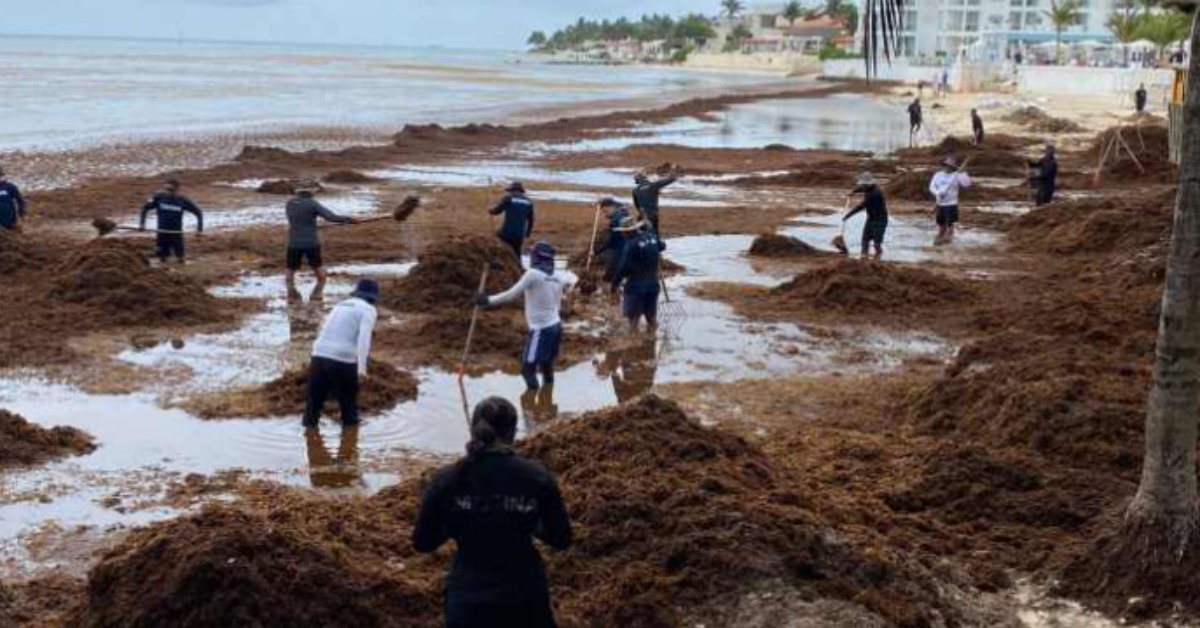
That matters because Playa del Carmen does not sell only hotel rooms. It sells a beach experience. Families, couples, cruise passengers, and day visitors come expecting clear water, usable shoreline, and the visual appeal that defines the Riviera Maya brand. When visitors instead find long brown algae bands on the beach and the smell that often accompanies decomposition, the damage extends beyond one shoreline. It can shape opinions, online reviews, and future booking decisions.
The business community is also making a broader argument. This is not being framed as a one-day cleanup issue or a complaint about slow beach crews. The demand is for a better coordinated response from all levels of government. That includes offshore containment, shoreline removal, transport, disposal, and clearer rules for possible commercial use of the algae after collection.
Why the timing is especially sensitive
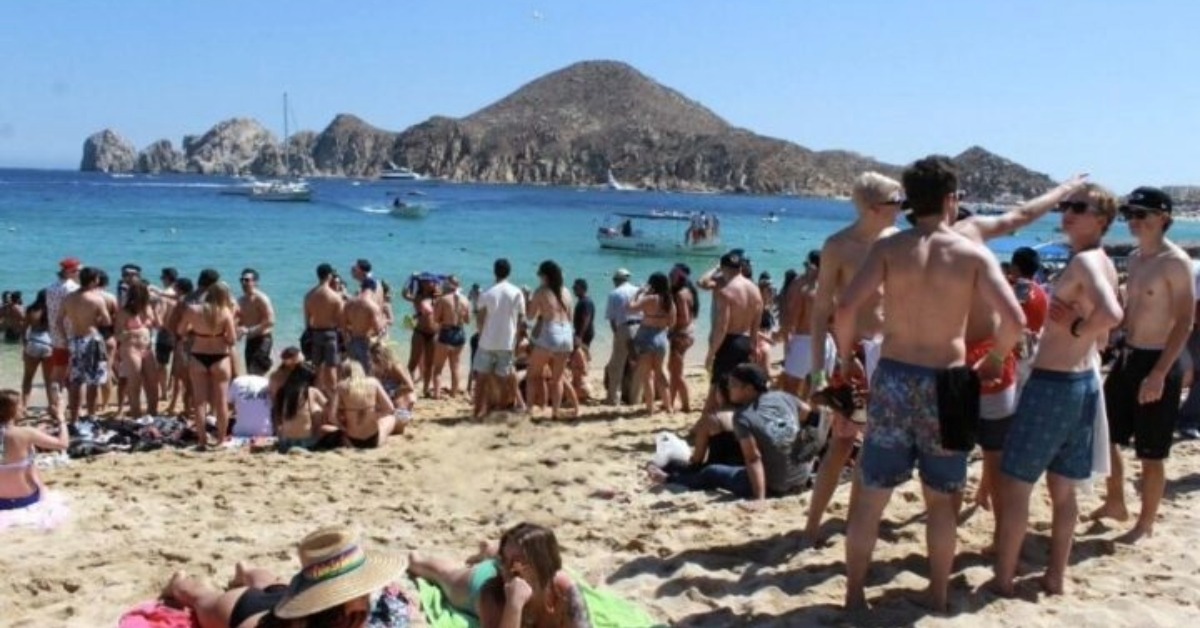
The concern comes at a difficult moment for the state. Quintana Roo has entered one of its most important holiday windows, with state officials projecting more than 1.2 million visitors and hotel occupancy above 82 percent during the Easter period. Separate tourism projections based on federal data placed Riviera Maya occupancy at around 78.5 percent for the vacation period.
Those numbers help explain the urgency. Tourism demand remains strong, which means beaches are under heavier public scrutiny right when the state wants to present its strongest image. A busy season can soften the blow of a bad week, but it can also magnify every visible problem. When the destination is full, more visitors see the beaches, more photos circulate, and more businesses feel the effects.
For foreign readers, this is one of the recurring tensions of tourism in the Mexican Caribbean. The region can post high occupancy and still face a real reputational challenge. Bookings do not erase environmental strain. In fact, they can raise the stakes because the local economy becomes even more dependent on preserving the coastal experience.
Why sargassum keeps returning
Sargassum is a floating macroalga that has become a recurring problem across the Caribbean. In the Mexican Caribbean, the main season typically runs through spring and summer, with peaks often arriving between May and August. But experts and recent monitoring have shown that the pattern has become less predictable, with earlier arrivals and heavier volumes in some years.
That shift matters in 2026 because officials and researchers have already described the season as early. Municipal authorities in Playa del Carmen said in February that unusual arrivals had already been recorded since January, forcing them to move up their response calendar. Recent scientific and media reporting has also pointed to an unusually intense year, with higher offshore volumes and broader beach impacts as the Easter season begins.
The environmental consequences are larger than the brown layer people see from a beach chair. When large quantities pile up and begin to break down, algae can reduce light penetration, alter oxygen levels, and increase stress on reefs, seagrass beds, and other coastal ecosystems. That ecological damage then circles back to tourism, because the health of the sea is part of the product that the region depends on.
What authorities say they are doing
Officials at both the state and municipal levels have said they began 2026 with an earlier response. In late February, Quintana Roo’s environment ministry said 4,558 tons had already been collected statewide and that the state was intensifying work on beaches from March onward. The same release said 6,600 meters of anti-sargassum barriers had been installed at strategic points, including Playa del Carmen.
In Playa del Carmen, the municipal government announced in February that it was expanding its local strategy. Officials said barrier coverage would increase from 2.5 kilometers to five kilometers, with daily satellite monitoring, beach-level alerts, and closer coordination with the Navy, the state government, hotels, UNAM, and Conabio. At that stage, municipal officials said 1,288 tons had already been collected in 2026 before March had even started.
By March 28, Playa del Carmen said local crews had removed 5,538 tons of sargassum so far this year. That number is important because it shows both effort and scale. Cleanup is clearly underway, but significant accumulation remains. Business leaders are essentially arguing that visible effort is not the same thing as a sufficient result.
Why the complaint goes beyond beach aesthetics
It is easy to treat sargassum as a tourism nuisance. That understates the issue. For coastal businesses, this is a question of lost competitiveness, increased labor costs, and a destination image that can erode gradually rather than collapse all at once.
A hotel may stay open, a beach club may keep serving drinks, and tours may still operate. But that does not mean there is no economic damage. The real effect can show up in complaints, discounting, cancellations, lower repeat visits, and a weaker reputation during periods when destinations are competing hard for travelers. For a place like Playa del Carmen, where thousands of jobs depend directly or indirectly on tourism, even a modest loss of confidence matters.
There is also a policy problem underneath the beach problem. The private sector says the response still lacks full alignment among federal, state, and municipal authorities. That matters because sargassum control is not one task. It is a chain. Monitoring offshore, intercepting arrivals, removing algae from beaches, moving it legally, processing it safely, and finding long-term uses all depend on agencies that do not always move at the same speed.
What comes next for Playa del Carmen
The short-term question is whether the current response can keep key beaches usable through the Easter rush. The longer-term question is whether Quintana Roo can move from repeated emergency cleanup to a more stable system that combines early warning, containment, disposal, and industrial use of collected sargassum.
State and municipal officials have been talking more openly about circular economy ideas, including facilities and projects that could process the algae into useful products. That may become part of the answer, but it does not solve the immediate tourism problem. Visitors judge beaches in real time, not by future pilot projects.
For now, the warning from business leaders is less about panic than about timing. They are saying the state cannot wait until summer to act as if summer has arrived. In Playa del Carmen, that distinction may shape how the destination performs during one of the most important holiday periods of the year.