Mexico is signaling that the era of northbound caravans is over, at least officially. President Claudia Sheinbaum says new groups entering the country will be kept in the south, where some may be offered jobs while officials review their cases. The statement sounds simple, but it opens bigger questions about asylum rules, paperwork delays, labor access, and Mexico’s role as U.S. immigration enforcement hardens. Here is what Sheinbaum said, what it could mean in practice, and why the policy matters beyond the border.
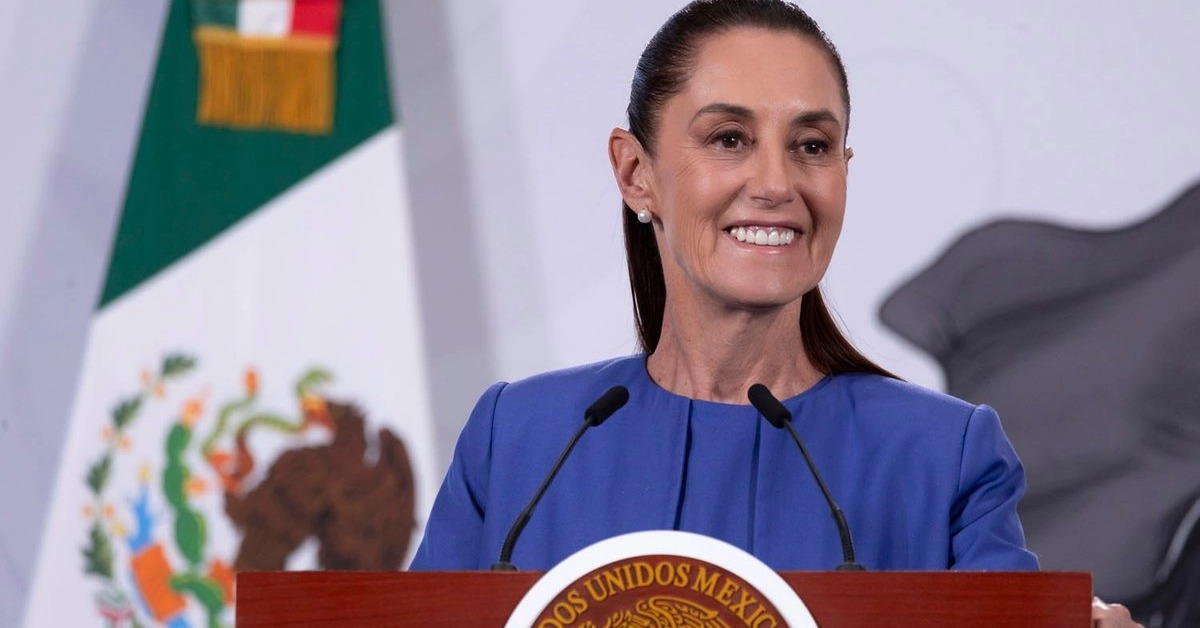
President Claudia Sheinbaum said Wednesday that migrant caravans entering Mexico will remain in southern Mexico, where some migrants may be offered work while authorities review their immigration status.
Her comments came after authorities found 229 migrants inside a trailer in Veracruz and amid reports of a new caravan forming in the south. Sheinbaum said some migrants accept voluntary repatriation. Those who do not can have their cases reviewed and may later be given a chance to work in the south. In the same appearance, she also said Mexico has continued pressing the United States to respect the human rights of Mexicans detained in immigration operations.
Mexico is describing containment with a labor option
The statement matters because it offers a clear summary of Mexico’s current migration policy. The federal government does not want large groups moving north through the country. Instead, it wants those groups processed, contained, or redirected in the south.
That approach blends enforcement with humanitarian language. Officials are not only talking about patrols, detentions, and trafficking networks. They are also talking about shelter, status review, repatriation, and now possible job access. For international readers, the key point is that Mexico is no longer presenting caravans as a route to the U.S. border. It is presenting them as a movement that will be managed inside Mexico, mainly in the country’s southern states.
What the work offer could mean in practice
The promise of work sounds broad, but it has limits. A day before Sheinbaum’s remarks, federal agencies announced Mexico te Emplea, a labor strategy aimed at people in mobility in Campeche, Chiapas, Quintana Roo, and Tabasco. The government says the effort will connect migrants with job listings, employment fairs, workshops, and other hiring tools.
That does not mean every migrant in a caravan will be handed a job, or that they will be free to relocate anywhere in the country. Sheinbaum framed the work as an option that may follow a review of migration status. In other words, the offer appears tied to legal processing and to staying in the south, not to open movement toward the north.
That distinction is important. In public debate, the phrase offered work can sound like an immediate solution. In practice, it may describe a narrower path. Some migrants may apply for refugee protection. Others may seek another legal status. Some may return home. Others may remain in a waiting period that depends on documents, appointments, and agency decisions.
Paperwork is likely to decide whether the policy works
For many migrants, the real issue is not whether jobs exist. It is whether they can prove they are allowed to take them. Mexico’s refugee agency, COMAR, says asylum seekers can access formal employment if they have a temporary CURP and a humanitarian visitor card. People who fear returning to their home country can also request refugee protection in Mexico, usually within 30 business days of arrival.
On paper, that creates a legal route into the labor market. But paperwork delays can turn that route into a bottleneck. Migrants in southern Mexico have repeatedly complained that they wait too long for documents, decisions, or appointments. When that happens, the right to work may exist in theory but remain difficult to use in daily life.
That gap between legal access and practical access is central to Sheinbaum’s announcement. A work-based approach can only function if documents are issued quickly, employers recognize them, and the government can move people from processing centers into real jobs. Without those steps, the offer risks remaining more political than operational.
Why Tapachula remains the center of the story
Much of that pressure sits in Tapachula, the city near Mexico’s border with Guatemala that has become the country’s main migration chokepoint. It is where many people begin asylum or regularization procedures. It is also where long waits often build up.
On Wednesday, a group of about 500 migrants left Tapachula to protest the slow processing of paperwork and seek permission to move to places with better job prospects. That march helps explain why the government’s new message landed when it did. If migrants are being told to stay in the south and consider work there, the state must show that the south can offer more than waiting.
Tapachula has long carried that burden. It is a border city, but also a holding zone. It receives people fleeing violence, poverty, political instability, or failed attempts to enter the United States. It also receives people who have been sent back from the north. That makes it a frontline city for Mexico’s migration policy, even when the pressure originates elsewhere.
The U.S. backdrop is impossible to separate
Sheinbaum’s remarks did not come in a vacuum. Mexico’s migration policy is being shaped by harder U.S. enforcement and by Mexico’s growing role as a country of processing, return, and temporary stay.
Illegal crossings at the U.S.-Mexico border have fallen sharply since Donald Trump returned to office and tightened immigration enforcement. Mexico has also stepped up its own enforcement. At the same time, it has had to absorb more people sent back from the United States, including non-Mexicans. That has pushed the country toward a model based less on transit and more on containment, paperwork, and local integration.
That is why the phrase stay in the south carries more weight than it might seem. It reflects geography, diplomacy, and pressure from Washington. It also reflects a reality that Mexico is increasingly expected to manage migration before people ever reach the U.S. border.
Sheinbaum’s comments also sought to hold on to a second message. Mexico wants to show it is not abandoning the human-rights argument, even as it tightens control. Her demand that the United States respect migrants’ rights fits that balance. Mexico is defending its nationals abroad while telling foreign migrants at home that movement north will be restricted.
The next test is whether the policy can be made real
In simple terms, the government’s formula now looks like this: keep caravans in the south, offer repatriation to those who want it, review cases for those who stay, and connect some of them to jobs in southern states.
That may reduce the visibility of large caravans moving north. It may also help some migrants who prefer stability in Mexico over another dangerous journey. But the plan will be judged on execution, not language. If migrants can get documents, avoid abuse, and reach real jobs, the policy may begin to look workable. If not, many people may remain in prolonged uncertainty in the same southern cities where the pressure has been building for years.
For readers living in Mexico, this is not only a border story. It touches local labor markets, shelters, public services, and Mexico’s diplomatic relationship with the United States. The government is betting that the South can function as both a migration filter and a labor destination. The success of that bet is still unproven.
With information from Secretaría de Gobernación, COMAR